
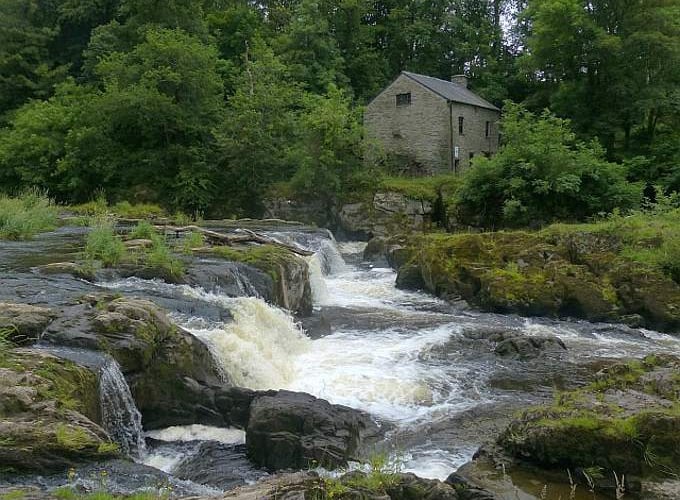
WORK to reduce high levels of phosphates from the river Teifi is an “important focus” for Dwr Cymru, councillors have heard, as Ceredigion council adds the issue to its risk register.
There was disappointment that Natural Resources Wales (NRW) declined an invitation to attend Ceredigion County Council’s thriving communities overview and scrutiny committee on Thursday, 20 January - but Dwr Cymru’s input was welcomed.
The introduction of interim planning advice by NRW regarding phosphate levels in the river Teifi has stalled planning applications, the Local Development Plan review and other development plans in nearly half the county.
Cllr Keith Evans echoed chairman Marc Davies’ disappointment in NRW’s non attendance, and the committee agreed that a letter be sent to the organisation.

.png?width=209&height=140&crop=209:145,smart&quality=75)
“These people need to be held to account,” Cllr Evans said.
“NRW with all the people they employ should have been able to find somebody to come here.”
Councillors heard from Steve Wilson, director of wastewater services at Dwr Cymru, who said the phosphate issue had “caught everybody by surprise” and plans to deal with water discharge were done in five year investment cycles.
The current cycle runs until 2025 and following that there is potential for phosphate stripping works in Tregaron, with one in place in Llandewi Brefi, although the potential for problems to be caused by “chemical dosing” to remove phosphates requiring consideration.
More nature based solutions are being proposed including support for third party wetlands and Dwr Cymru is partnering with Ceredigion and the River’s Trust in Nature Networks Fund with a £500,000 grant on the Teifi, advanced sampling on existing wastewater reedbeds and supporting Gelli Aur Agri College in improving farm slurry polishing reedbeds.
Mr Wilson said Ceredigion was “not far off compliance” in many places.
The committee heard that Ceredigion County Council’s corporate risk register will now include phosphates due to the planning restrictions relating to high levels of phosphates in the Teifi which “will significantly impact the county by preventing building development across 44.6 per cent of Ceredigion.”
Phosphates is one of ten red ‘high risk’ rated subjects the council is monitoring with others including climate change and coastal erosion/flooding, safeguarding, ash dieback and supporting local food businesses, maintain safety.
Comments
This article has no comments yet. Be the first to leave a comment.