

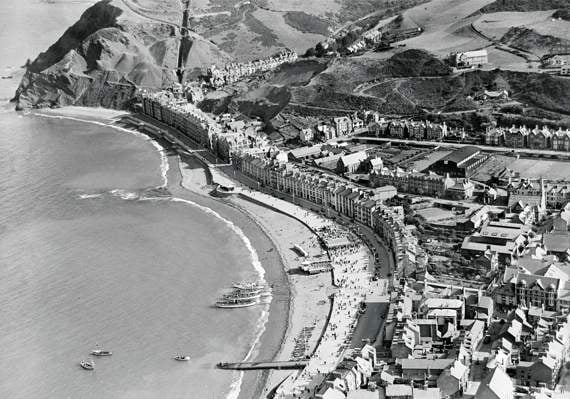
Aberystwyth’s relationship with the sea – from important herring port of the Middle Ages, to the tourist resort – is explored in a new book.
The most comprehensive study of Wales’ maritime history ever commissioned, taking over a decade to research and produce, is published this week.
Entitled Wales and the Sea: 10,000 years of Welsh Maritime History, the volume delves into every aspect of Wales’ connection with the sea, from earliest history to the present day: from archaeology to paintings and poetry, from naval history to seaside holidays.
The volume was commissioned by the Aberystwyth-based Royal Commission on Ancient and Historical Monuments of Wales working in partnership with the National Library of Wales, CADW, Amgueddfa Cymru – National Museum of Wales, and is written by some of Wales’ foremost historians and archaeologists.



Wales and the Sea contains archive photographs drawn largely from the vast collections of the National Monuments Record of Wales, the National Library of Wales and the National Museum of Wales, but also from libraries across the world.
Archaeological finds from Wales – including Bronze-Age boats, Roman ships and their cargoes, the medieval Newport ship and the 17th-century royal yacht Mary – all testify to the long history of Wales as a seafaring nation.
Wales and the Sea brings to life the age of ocean-going liners, the cable-laying ships that connected Wales to the rest of the world, the pleasure steamers, racing yachts and the seaside piers as well as the busy docks that supplied Welsh slate, coal, iron and steel to the world.
Heroes and villains from the book include the buccaneer Henry Morgan, the smuggler William Owen and the infamous Bartholomew Roberts, known as Black Bart, who is reputed to have captured 400 ships in a two-year period before eventually being shot by the Royal Navy in 1722.
See this week’s south papers for the full story, available in shops and as a digital edition now
Comments
This article has no comments yet. Be the first to leave a comment.