

Almost half of young people in mid and west Wales have seen extreme, hateful, harmful or upsetting content online, with a third experiencing bullying and one in four receiving unwanted messages from strangers, a report has revealed.
A new report commissioned by Ceredigion County Council has revealed how online life is shaping the experiences, wellbeing, and behaviours of young people across Dyfed-Powys.
The Life Online – Young People’s Voices report, delivered by ProMo Cymru and the Youth Work Leadership Lab, captures the views of hundreds of young people and youth professionals.
The report heard directly from young people across Ceredigion, Carmarthenshire, Pembrokeshire, and Powys about their online lives, listing “the good, the bad, and what support would actually help.”




The report explores how digital platforms like TikTok are influencing identity, relationships, and mental health.
The findings show that while many young people enjoy positive experiences online, including learning new skills and connecting with others, a significant number also face challenges such as bullying, exposure to harmful content, and unwanted messages.
Professionals working with young people expressed concern about the impact of online life on behaviour and wellbeing and highlighted a need for better understanding of digital platforms and trends.
The majority of responses came from young people in Ceredigion, but young people from Carmarthenshire, Pembrokeshire, and Powys also responded.
The project found that social media dominates young people’s online experience with more than four in five using it daily, with TikTok leading the way.

A report into the findings said that almost half (47 per cent) of young people have seen harmful or upsetting content, while many feel reporting it doesn’t help.
It found that one in three (32 per cent) experienced mean comments or bullying, and one in four received unwanted messages from strangers.
Nearly half (45 per cent) came across extreme or hateful content, while 48 per cent said something online had influenced how they think or act offline.
The report said that young people “spoke about seeing fight clips, graphic animal cruelty, dead animals, and sometimes even violent political content.”
“While some admitted finding fight or police chase videos “funny” or “exciting,” many said they found these images distressing,” the report adds.
“From these conversations, it was clear that repeated exposure to content like big fights, police chases, or riots can make extreme material feel normalised - even if young people don’t always describe it as a big issue themselves.”
The report said that young people said “how easy it is for bullying to spread through group chats, with some describing fights in comment sections or people getting targeted on certain posts.”
“A particular concern was the rise of misogynistic language,” the report adds.
“Several young people spoke about boys copying influencers like Andrew Tate and using sexist slurs.
“Several gave examples of harmful group chats, hate comments, and children sharing inappropriate images.”
Professionals interviewed for the study gave examples of “children being distressed by sexual or violent material, watching porn at very young ages, or encountering extremist content.”
“Young people are watching unsuitable age-related content including violence and sexual content… algorithms will show unsuitable content based on something they’ve clicked, which can lead to exploitation and radicalisation,” one professional said.
An earlier study by The Alan Turing Institute in 2023 found almost nine in 10 young people have seen harmful content online, but Ofcom found last year that only 17 per cent report harm “because they don’t think platforms will act.”
Despite the risks, the new report finds almost half (47 per cent) of those who responded said being online makes them feel mostly good, valuing creativity, humour, and connection.
Young people are spending a huge amount of time online, the report finds, with 67 per cent saying they spend more than three hours a day, and nearly half (43 per cent) spending over five hours. Social media dominates that time, with 75 per cent using it more than two hours a day, and 44 per cent spending more than three hours every day just on socials.
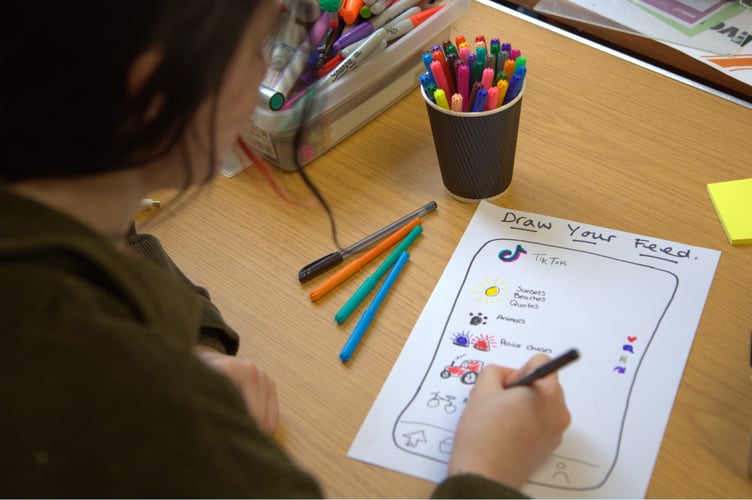
“In focus groups, TikTok stood out as the most talked-about platform,” the report found.
“When asked to “draw your feed,” the majority sketched their TikTok feeds, filled with viral trends, creators, and memes.
“Instagram was also mentioned, and Snapchat too, but currently TikTok clearly drives the biggest share of attention and cultural influence.”
The report added: “Professionals also raised concerns about the sheer number of hours young people spend online - often several hours at a time.
“They linked long screen time to poor sleep, low mood, and difficulty concentrating, and pointed to short-form platforms like TikTok as especially time-consuming.”
Around seven in 10 young people said online content has influenced how they think or act - or thought it might have.
“This shows that young people themselves recognise that what they see online can affect their behaviour, and that they actually feel the effects in their offline lives too,” the report said.
But the report found that online usage “isn’t all negative” with just one per cent of young people saying it made them feel mostly bad.
One in two young people said spending time online makes them feel mostly positive, and “for LGBTQ+ young people especially, online spaces were described as life-changing in terms of finding community and support,” the report added.
“Professionals also recognised these positives, noting that online platforms can boost communication and confidence, and offer a sense of safety when young people can reach out to friends and family,” the report found.
Arielle Tye, Head of Digital for ProMo Cymru, said: “It’s great to see Ceredigion Youth Service deepening its understanding of young people’s online lives and using their voices to shape future services.
“If we want youth work to stay relevant and effective, we need to be active in digital spaces and design support where young people are".
Councillor Alun Williams, Deputy Leader and Ceredigion Cabinet Member for Through Age and Wellbeing, said: “It is encouraging to see so many young people describing their time online as creative, fun, and beneficial.
“This report reminds us that the internet is where they can connect, learn, and grow.
“These positives are what we must build on.
“At the same time, we can’t ignore the very real harms some experience.
“This report gives us a balanced understanding, and a clear mandate to design services that amplify the good and address the risks.”
Gethin Jones, Corporate Manager for Ceredigion Youth Service, said: “The Life Online report gives us a good picture of how young people experience the digital world in our region, both the positives and the challenges.
“We are very grateful to the Office of the Police Crime Commissioner, Dyfed Powys Police for funding this important work and we are now building on it through a holistic, youth work–led approach to prevention.
“We are eager to continue this work to embed media literacy, to provide mentoring for practitioners on safe social media use and establish a youth-led advisory group to help shape future digital wellbeing initiatives.”
ProMo Cymru said that the work “forms part of a wider strategic response with the Dyfed-Powys Serious Violence and Organised Crime Partnership and supports Ceredigion Council and its Youth Service’s aim to recognise that what happens in digital spaces can spill into real life, and to make sure young people get the right support early on.”
“Working across the Dyfed-Powys area, we spoke with hundreds of young people about their everyday online lives – from TikTok and gaming to learning, friendship, and mental health – as well as the professionals who work with and support them,” ProMo Cymru said.
“We took these insights, analysed them, and brought them together in a Discovery Report.
“Online spaces are central to young people’s lives, shaping how they learn, communicate, and express themselves.
“Most said they spend the majority of their online time scrolling on social media – with TikTok leading the way – and many described it as a place for creativity, humour, and connection.
“Nearly half said being online makes them feel “mostly good”, and one in five said online content had changed their behaviour in a positive way, from learning new skills to developing healthier habits.
“But it isn’t always positive.
“Almost half (47 per cent) had seen harmful or upsetting content, one in three had experienced mean comments or bullying, and one in four received unwanted messages from strangers.
“Many said reporting harmful content doesn’t help, and 45 per cent had come across extreme or hateful material.
“Professionals saw the picture differently.
“While young people recognised both positives and risks, not a single professional described the impact as “mostly positive.”
“Over a third said the online world was mostly negative for wellbeing, and a quarter said the same for behaviour.
“Many also told us they need more support to understand platforms, algorithms, and online trends – reflecting the gap in understanding between generations.”
ProMo Cymru said the insights in the report are “helping Ceredigion Council and partners design better responses to online harms and digital wellbeing.”
“The findings show that adults need to stop treating online life as all bad – for young people, it’s also where they learn, grow, and connect,” ProMo Cymru said.
“Our recommendations focus on bridging that gap.
“We call for co-designed solutions that bring young people’s lived experiences together with professional expertise, and for a digital youth work offer that takes trusted support to the platforms young people already use.
“We also recommend making media literacy an ongoing part of learning, helping both young people and adults build critical thinking about algorithms, misinformation, and online influence.
“And we need to equip parents, teachers, and youth workers with the training and confidence to have open, judgement-free conversations about life online.
“These insights lay the groundwork for future work to strengthen digital wellbeing and positive online experiences across Dyfed-Powys.
“The solution isn’t to tell young people to stop using social media or see it as all negative.
“What really makes the difference is adults listening, understanding, and developing the same critical thinking skills with young people.
“That way, both young people and adults can navigate life online with more confidence — making it safer, kinder, and more positive for everyone.”
The report says that Governments are “starting to respond”, with the UK having an Online Harms plan, and in Wales the Online Safety Action Plan (2024) means digital literacy lessons in schools and funding for local projects.
“But research says the best solutions come when young people are involved in designing them - and when adults listen, learn, and share responsibility,” the report added.
“Trusted adults, creative spaces, and balanced approaches are key to making online life safer while keeping the positives that matter to young people.”
A Welsh Government report (Time to Deliver for Young People in Wales, 2021) said there should be a national online youth work offer, so young people can get the right info, advice, and support wherever they live.
“The latest draft guidance (Youth Work in Wales: Delivering for Young People, 2024) also makes it clear that youth work should include digital and hybrid spaces, not just in-person ones,” the report said.
“This matters because almost every teenager in Wales now has access to a smartphone and uses it to go online.”
The report found that young people living in poverty are at greater risk of online harm as “young people can’t always afford to join youth clubs or go out with friends, so they spend more time online.”
In Ceredigion (32.2 per cent), Pembrokeshire (30.8 per cent) and Carmarthenshire (29.5 per cent), child poverty levels are higher than the Welsh average.
The project was commissioned as part of the Dyfed-Powys Serious Violence and Organised Crime Partnership.
The report is the “first step” in the process of “listening, learning, and building understanding” before designing solutions.
It recognises that what happens online can spill into real life, and aims to ensure young people get the right support early on and will inform future service design and early intervention work led by Ceredigion Youth Service.
Comments
This article has no comments yet. Be the first to leave a comment.