
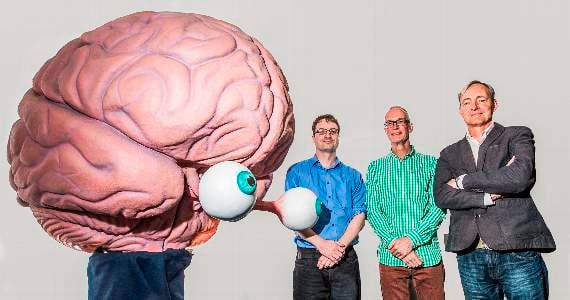
NORTH Wales neuroscientists are researching the effects of brain-stimulating computer games in the treatment of Parkinson’s disease.
The study is being led by researchers at Bangor University’s School of Psychology with experts in Parkinson’s at Betsi Cadwaladr University Health Board and the Walton Centre in Liverpool.
Several people from across Gwynedd are taking part in the groundbreaking research which hopes to control the effects which Parkinson’s victims can suffer.
They are studying the effects of touch screen “spatial reasoning games” on the part of the brain used to control movement in people with Parkinson’s.




Early research involving 16 people with Parkinson’s suggests the computer games, which require users to perform tasks like using mental imagery to rearrange shapes to fit a physical space, could help stimulate one of the impaired areas of the brain affected by Parkinson’s and improve motor function.
The research comes as national charity Parkinson’s UK calls for new treatments, including non-drug therapies, to give patients better control of their movements.
Led by Dr Charles Leek, Prof of Cognitive Neuroscience at Bangor University’s School of Psychology, the initial study showed some evidence that Parkinson’s patients were able to move faster and initiate movement more easily following a period of “cognitive stimulation” on the computer games.
Read the full story in this Thursday’s north editions of the Cambrian News
Comments
This article has no comments yet. Be the first to leave a comment.