

A rule that forces Welsh patients to wait longer for surgeries than English patients has been branded a “false economy”.
Ten months after Powys announced it couldn’t afford to keep up with the speed of English treatments, Welsh patients are now facing more conditions than when they began.
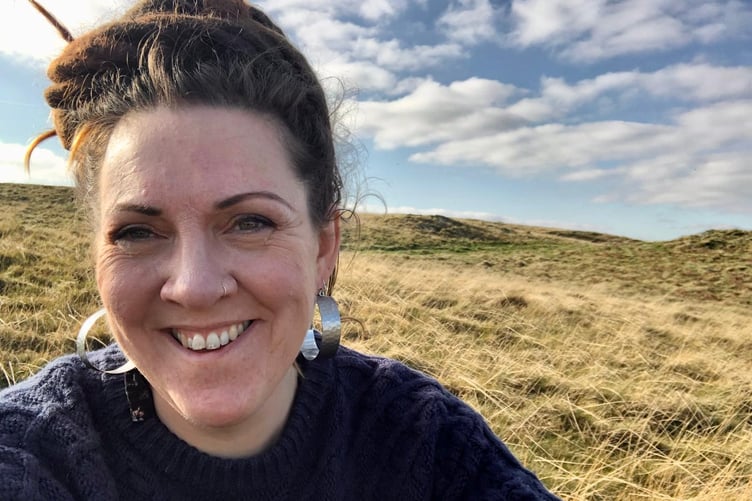
Sara Archer from Machynlleth has waited a year for a hip replacement, and is due to wait another year in “agony” - being told hers wasn’t urgent as her joint hadn’t yet “collapsed”.
She has since developed a foot issue requiring surgery, arthritis in her other hip and knee, and high blood pressure due to being unable to exercise.




Sara is one of countless Powys patients due for hip and knee operations in nearby English hospitals, whose surgeries are being artificially slowed to match Wales’ wait times.
This is despite English hospitals having the capacity to do them earlier.
The rule, which came into force on 1 July last year, was due to budgetary constraints, with Powys Teaching Healthy Board (PTHB) unable to afford the cost of how quickly operations across the border were being carried out.
Alice Thomas (pseudenym), also from Machynlleth, was told by a doctor at the Oswestry hospital, Gobowen, that she would need to wait eight months for surgery on her knee that was causing her “constant pain” - she said this was “just about bearable”.
However, the doctor then saw on her notes that she lived in Powys, and because of this, would need to wait 2 years.
The 55-year-old, who is unable to carry her grandson or go on daily walks due to her knee pain, said: “I almost didn't believe him, surely PTHB can't do this?
“I'm living in constant pain with a significant impact on my daily life that could be remedied in eight months, except that Powys has cost-cutting measures saying I have to wait two years?”
Powys does not have its own district hospital, with 40 per cent of its budget spent across the border in England.
Patients are now expected to wait up to 104 weeks for treatment, whilst the average treatment at one of the England border hospitals is 29 weeks.
MS for Montgomeryshire Russell George called out this “two-tier” system in Senedd in January, describing it as “indefensible” in the face of the Welsh government’s own target to tackle treatment times across the country.
In response, First Minister Eluned Morgan cited an average wait of 19 weeks for treatment in Wales, which puts the 104-week wait into stark contrast.
A resident-led action group Better Lives in Powys (BLIP) has described the 104-week wait as “discrimination”, calling for transparency, fairness and action to address this issue that is “pushing people into hardship and suffering”.
The new wait time rule will supposedly save £16.4m for the health board annually, but PTHB must still find savings of an additional £10.4m.
However, Sara says this move will cost the health board more in the long run.
The single mum of two said: “It’s a domino effect of health issues - if I’d had the hip replacement when I needed it I’d be active now, I wouldn’t have high blood presure, I wouldn’t need surgery on my foot, I wouldn’t have arthritis on the right hand side, I’d be able to do things with the kids - I’d be cleaning and shopping.
“I’ve referred them to CREDU as young carers, as they’re doing so much for me now.
“I want to be active, but I’m not able to be - it’s impacted every aspect of my life because I can’t move around.
“The NHS will have to address this in the future.
“My hip joint isn’t going to fix itself - it's not going to spontaneously improve. What’s the point of making people endure suffering when it could be rectified?
“It’s agony.”
The 48-year-old isn’t able to do her job working on complex homelessness cases, as she can’t drive without pain.
Worried about her worsening condition and livelihood, her friends have since fundraised over £7,600 to send her for private hip surgery in Lithuania.
MS George has called for the Welsh government to ensure the health board is funded adequately to meet English wait times for Powys residents who are transferred.
The Welsh government has already intervened in the health board’s strategy and budget to address serious concerns.
A spokesperson for Powys Teaching Health Board said: “Our goal is to provide the best possible care within the resources available to us.
“But these are very challenging financial times. The gap between the funding we receive and the money we spend each year delivering healthcare services to the people of Powys is growing year on year. Action must be taken to stabilise our financial position so that we do not build up much bigger financial difficulties for the future.
“The waiting time measures form one part of a much wider recovery programme. This includes continuing to bear down on back office expenditure, reducing agency costs, action to reduce the impact of pathways of care delays, and managing costs associated with continuing health care and prescribing of drugs.
“These are not decisions we took lightly, and were based on careful and considered impact assessment.
“As we continue our planning for 2026/27 we anticipate bringing forward an underlying deficit of £44.7m in addition to inflationary pressures and further demand and service growth of over £20m.
“It is therefore already very clear that financial pressures will continue, and further decisive action will be needed to bring the organisation back to financial balance. All options must therefore remain on the table so that we can best meet the essential healthcare needs of all people across Powys.”
BLIP has launched a survey to collect experiences of others like Sara and Alice - if you’ve been impacted by the new wait times, share your experience via their survey here - https://shorturl.at/SjYCa
Comments
This article has no comments yet. Be the first to leave a comment.