

ON 11 November this year we celebrate the centenary of the end of the Great War.
Many men and women from our country and colonies lost their lives or were wounded during this terrible period.
They are commemorated on memorials in cities, towns and villages throughout the land.
Hundreds from the district of Eifionydd and north Meirionnydd were killed including at least 60 at sea.

Porthmadog Maritime Museum will commemorate these men by holding events during the summer season leading up to Remembrance Sunday.
The events form part of a project which has been put together in partnership with three organisations – the Royal Commission on the Ancient and Historical Monuments of Wales (Royal Commission), Bangor University and the Nautical Archaeology Society.
The Royal Commission is the lead partner, at the centre of the network of museums and archives around the coast of Wales hosting a travelling exhibition, plus youth, service personnel, and social care charities.
A programme of marine geophysical survey undertaken by the Centre for Applied Marine Sciences, School of Ocean Sciences, Bangor University, during the spring and summer of 2018 will capture high resolution multi-beam data for the project’s chosen 17 wrecks.
Additional survey work, involving the Nautical Archaeology Society, will include the capture of underwater video footage on five of those wrecks, which will be combined into 3D inter-active digital models for use in the project website and a travelling exhibition which will visit 18 Welsh maritime museums from July before closing in December 2019.
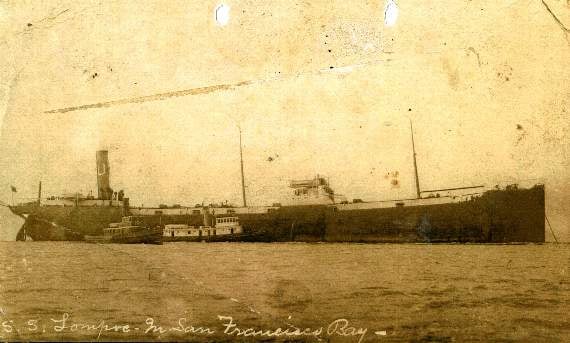
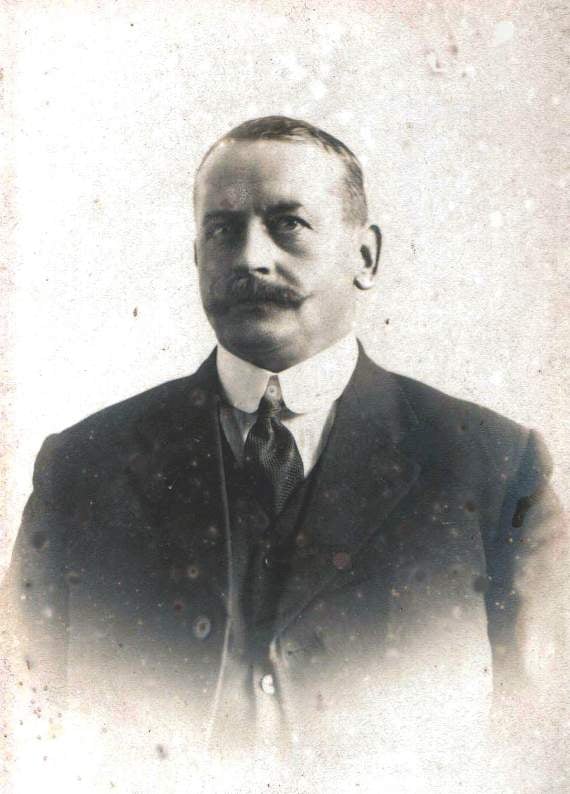
The Porthmadog museum will be hosting the travelling exhibition and delivering a programme of community engagement activities, where volunteers of all ages and backgrounds will engage with this heritage to explore, reveal and tell the stories of the people who served at sea such as the lucky escapes of Captain John Richard Williams whose ship the SS Lompoc was torpedoed on two separate occasions but still managed to get his vessel safely in to port.
During repairs a piece of one of the torpedoes was found amongst the damage and this can be seen at the museum.
Six schooners still owned and manned by men of the district were sunk by the enemy and the sinking of one, the Miss Morris, was filmed by the German submarine that attacked her.
These clips featured in two programmes by the late historian Aled Eames during the 1980s where one of the survivors is interviewed. It is hoped to get permission to present showings of these.
Many residents have heard about the German submarine that was scrapped at Porthmadog after the war had ended. Pieces of her remain to this day, scattered around the district. You will learn more about this.
The first event will be a talk and presentation by Drs Rita Singer and Helen Rowe of the Royal Commission at the Madog Yacht Club at 7.30pm on 23 May.
During the autumn, building up to Armistice Day, an open day will be held at the museum when local people are invited to bring in any old photos, documents and memorabilia that have been handed down from relatives that served at sea during the First World War.
Robert Dafydd Cadwalader, secretary of the museum, said: “I am sure many items are being carefully treasured or hidden in attics around the district.
“These will be scanned and photographed to be safely archived for future generations.
“We can receive any relevant articles at any time or by emailing images to [email protected].”
The Welsh government has designated 2018 The Year of the Sea so the museum will also have displays on other aspects of our coastline and maritime activities.
The museum is open 12pm-4pm every day until November.
Comments
This article has no comments yet. Be the first to leave a comment.