

A stroke survivor from Lampeter is sharing their story ahead of World Stroke Day, as part of a national campaign to spotlight the fragility of the brain and the life-changing impact a stroke can have on people of all ages.
Mererid Olivia Rees, known as Mez is raising awareness of stroke as part of the Stroke Association’s ‘Survival Is Not Enough’ campaign.
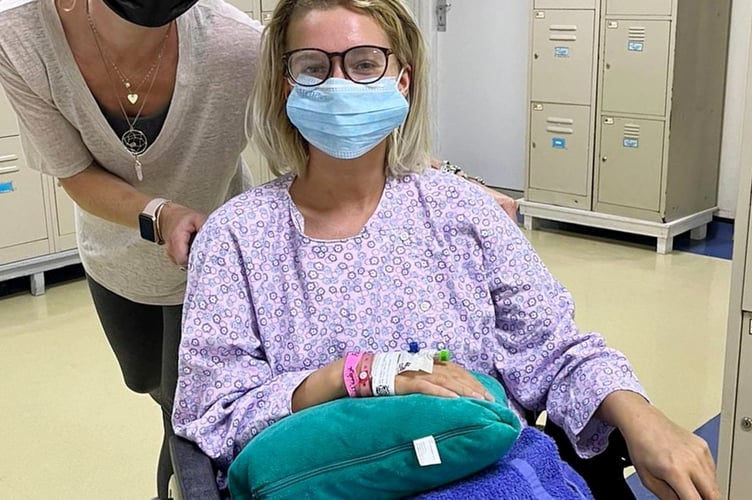
Mez was living in Dubai and working as a dancer, street performer and costume character performer when she had a stroke on the 16 November 2021. She was young, fit and had experienced no warning signs, so stroke was not suspected when she suddenly collapsed at work. “I was a dancer and a performer,” she says. “So nobody thought it was a stroke.”
Doctors discovered that Mez’s stroke was caused by an arteriovenous malformation (AVM), an abnormal tangle of blood vessels in the brain. She spent around a month in hospital in Dubai before returning to Wales, where she faced a long recovery. “The stroke left me with right side weakness, no feeling in my right side, drop foot and fatigue alongside others and my vision changed post radiotherapy too.”

Although Mez often looks well, the effects of stroke continue to shape everyday life. “People look at me and think I’m okay,” she says. “They assume everything is fine.” With support from her family and rehabilitation, she has gradually rebuilt her strength and confidence, moved into her own flat and returned to work as a social media manager.
Now Mez is planning an event to raise awareness of stroke in young people. She hopes her experience will challenge the idea that stroke only affects older people and help others understand that recovery can continue long after hospital discharge. “I’m still me,” she says. “Stroke changed my life, but it hasn’t taken away who I am.”
In the UK, someone has a stroke every five minutes, with 1.4 million people currently living with a brain injury caused by stroke.
Despite the life-changing impact of stroke, awareness of its severity and the long-term challenges survivors face remains worryingly low amongst the general public.
Although one in four strokes happen to people of working age, nearly a third (28%) of Brits surveyed by the Stroke Association believe they mainly affect people over-65s. While a third of those aged 18-34 (34%) and almost a quarter of 35-44 year olds (24%) believe they’re too young to have one.


Katie Chappelle, Associate Director for Wales at the Stroke Association, said: “A stroke is a devastating brain injury, leaving behind life-changing trauma. In an instant, a stroke can steal away the things that many of us take for granted, such as walking, talking, eating and living independently; the things that make you, you.
“For so many stroke survivors, the fight doesn’t end when their lives are saved, yet every day survivors and their families are left traumatised and without the long-term rehabilitation and support they need. After everything a stroke takes, no-one should have to fight for essential support to recover and live a full life again.”
Comments
We've recently changed our login process. If you have an account for commenting, you will need to re-register on the login window.
This article has no comments yet. Be the first to leave a comment.