

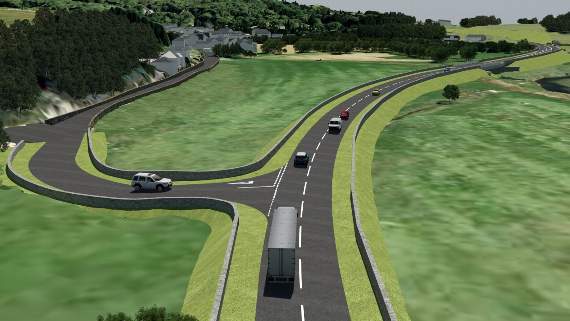
Long-awaited plans for a new Llanbedr bypass could finally be approved, after national park planners were advised to give the scheme the go-ahead.
Snowdonia National Park Authority’s planning committee will meet today (Wednesday), to decide the future of the proposed 1.5km bypass.
The road had been given permission by the park authority back in 2018 and plans were subsequently approved by Gwynedd Council.
However, an unhappy landowner submitted an application for a judicial review, raising concerns that the due process was not fully compliant with the Habitat Regulations Assessment.


-(1).png?width=209&height=140&crop=209:145,smart&quality=75)
.png?width=209&height=140&crop=209:145,smart&quality=75)
Gwynedd Council decided not to contest the review, meaning the application will now be heard again by the park authority.
Snowdonia said it had now addressed the issues around the HRA, and plans have been recommended for approval by planning officers.
Congestion has long been a problem on parts of the A496, which runs through Llanbedr, due to the volume of traffic heading towards Shell Island.
Calls for a solution to the problem date back over 60 years, with outline plans drawn up but not taken forward in 1992.
The new road, which has divided public opinion, is also hoped to improve access to Llanbedr Airfield as a spaceport is developed at the site.
Objectors raised fears the bypass would hurt the economy of the village, with concerns raised including flooding risk, increase in noise, and the effect on wildlife and safety.
Llanbedr Community Council said that while it was in favour of the new road it “recognises” that other measures are needed to support a “lively, lived in village”.
The report, to be put before members, says: “As with most major infrastructure proposals, the construction phase of this proposed new access road will have the greatest adverse effect on the landscape, biodiversity, visual amenities and residential amenities.
“These adverse effects will, however, be temporary - only lasting the duration of the construction phase.
“The evidence submitted with the application shows that the traffic passing through the centre of Llanbedr will reduce by around 90 per cent.
“The significant benefits of this to the health and wellbeing of the residents of Llanbedr, it is considered, cannot be overstated.”
Comments
This article has no comments yet. Be the first to leave a comment.