
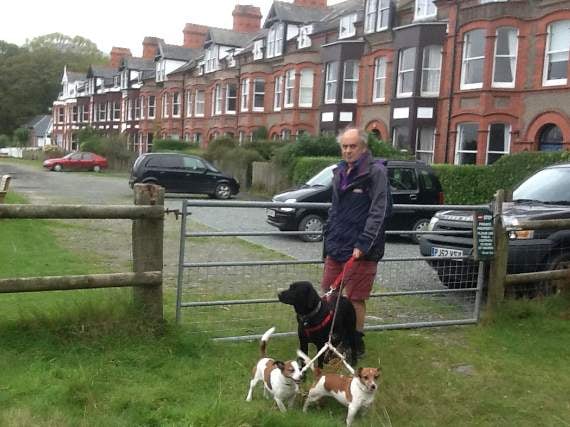
A DISPUTE over a much-loved walkway is due to be discussed by Gwynedd Council’s planning committee on Monday.
The dispute surrounds a ‘path’ in front of Mawddach Crescent, near Arthog, on the south bank of the river, not far from Barmouth Bridge.
Residents claim that walkers are treading across their front garden, but campaigners claim they have been using the scenic path without obstruction for decades, ever since a tramway ran along the estuary in the very early 20th century.
If the campaigners’ claims are proven to be true, then a strong claim can be made that the route should enjoy legal status as a right of way.


-(1).png?width=209&height=140&crop=209:145,smart&quality=75)
.png?width=209&height=140&crop=209:145,smart&quality=75)
However, planning officers believe that landowners at Mawddach Crescent have done enough to stop walkers from using the disputed pathway, therefore the claim for ‘unhindered access’ would be void, so the application has been recommended for refusal.
If denied, walkers will be forced to detour behind the waterfront properties, along a muddy lane where Mawddach Crescent residents keep their bins.
The claim had been due to go before committee earlier this year but the case was delayed after local residents asked for more time to submit evidence.
The Cambrian News understands that 120 statements claim unrestricted use of the path by the public going back over 90 years.
Huw Roberts, who grew up in Arthog but now lives in Scarborough, first submitted the application to Gwynedd Council in August 2014 to have the “beautiful” route added to the Definitive Public Rights of Way map which is controlled by Gwynedd Council.
Asked about the report and the recommendation to refuse the application, Mr Roberts was not convinced the report was thorough enough.
“The most disappointing aspect is that the council’s officers and others have worked very hard to bring evidence forward but some evidence is tucked away in over 100 pages of text and photographs and not joined up to come to obvious conclusions,” he said.
Residents and former residents have given evidence to the contrary saying that it has always been common practice to turn walkers away and four sets of signs indicate the land is private property.
According to the Planning Committee’s report, planning officers believe that the proof of signs placed on the footpath restricting public right of way in the last 90 years constitute a “contrary intention to negate the long user claims”.
Comments
This article has no comments yet. Be the first to leave a comment.