


Council leaders in Ceredigion and Gwynedd are calling for changes to grant aid so second home owners don’t have access to coronavirus funding.
Plaid Cymru Gwynedd is calling on the Welsh Government to change the business grant guidelines, so that owners of second homes who have deliberately converted to business rates to avoid paying taxes, do not have access to business support grants of £10,000 or up to £25,000.
The Welsh Government announced financial support for small businesses in Wales following the Covid-19 outbreak.
As part of the support aid, a grant for non-domestic tax is available to retail, leisure and hospitality businesses that own a property.



But as county council leaders across Wales discussed the grants, Plaid Cymru Gwynedd contacted the minister, Julie James, to highlight the fact that it is unethical that wealthy second home owners who have cynically played the system have access to the public purse to line their own pockets.
In Gwynedd alone it is estimated that between £15m and £18m could be made available to second home owners through the erroneous gap in the financial support package for small businesses from the Welsh Government.
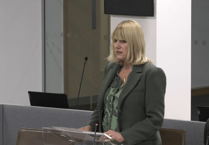
Gwynedd Council leader Cllr Dyfrig Siencyn (pictured) said: “It is unethical that wealthy individuals who own second homes have access to this financial aid package from the government.
"It goes against the whole ethos of the support aid, a package to ensure a viable economy in an uneconomic period due to this disease outbreak that is spreading through the country.
“This grant should assist small rural businesses in Gwynedd that have been directly affected by government laws that prevent companies and businesses from trading.
“That is the reason I have asked Gwynedd Council’s legal department to look at a specific clause within the business guidelines, so that it differentiates between a legitimate rural business and second home owners."
Leaders of other county councils across Wales are supporting Gwynedd’s calls, including Anglesey, Conwy, Ceredigion, Carmarthenshire and Pembrokeshire county councils, where a high number of second homes exist. Numerous discussions have also taken place within the Welsh Local Government Association in recent days.
“We welcome the response of the minister, Julie James, within this debate. It has been positive and constructive. But unfortunately, civil servants are dragging their feet with the details,” according to Cllr Dyfrig Siencyn.
The business note guidance Gwynedd has submitted to the Welsh Government states: “In relation to self-catering accommodation, a business will not be eligible for the grant if the property was at any time, since 1 April 2010, a domestic dwelling.
"However, self catering accommodation will be eligible for the grant if the property has a specific planning permission for such use.
"Evidence of planning permission must be submitted to support the application for the grant if requested by the administering authority.”
Cllr Siencyn added: "By adding this clause to the business guide it would omit those who have let their second home for a period to avoid paying council tax, from receiving the grant, but at the at the same time, ensure that those legitimate businesses that have converted a dwelling into a business, receive it.”
A Welsh Government spokesman said: "Business support grants are available to self-catering businesses as they fall within one of the sectors most immediately affected by the pandemic and they make an important contribution to our tourism economy.
"However, local authorities have discretion about awarding the grant and can also require business owners to provide additional evidence to support their claim.
"Second homes are liable for council tax and may be subject to additional premiums of up to 100 per cent. The premiums are set by individual local authorities.”
Comments
This article has no comments yet. Be the first to leave a comment.