

ON 30 January,from 10am to 4pm, at the National Library of Wales, the public can play their part in collecting the history of Wales, by transcribing the names of the fallen in the First World War or recording the peace heritage of Wales on Wikipedia.
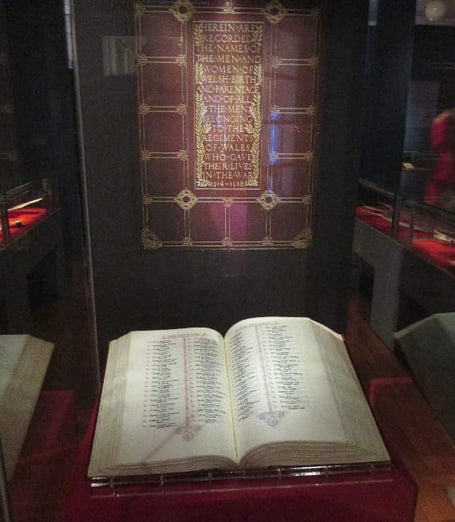
The open day, arranged by Wales for Peace, coincides with the launch of the Remembering for Peace Exhibition at 3pm, which displays and presents the special story of the First World War Book of Remembrance.
There will be an opportunity from 10am onwards, to see the First World War Book of Remembrance exhibition and select from a range of free public workshops:
• Searching and transcribing the digital copy of the Book of Remembrance – to enable future generations to search for names digitally.

• Discovering more about on-line resources to help uncover histories from the First World War.
• Putting Wales’ peace heritage on the map: learning how to search and edit relevant Wikipedia entries.
• Searching and adding to the online People’s Collection Wales, by using the resource and by scanning family pictures and archives.
To reserve a place on the free workshops, registration is possible online (click here) or by calling Ffion Fielding or Fi Gilligan on 029 20821051.
At 3pm, the official launch will be held, with an opportunity also to appreciate the contribution of volunteers who are central to the Wales for Peace project’s success. It will be held until 16 April and tells the story of the Welsh National Book of Remembrance, which holds the names of 35,000 men and women who lost their lives in the First World War. It explores the story of some of the people listed, and considers how the Book has been used in remembering for peace. The treasured Book is normally kept under lock and key in the crypt of the Temple of Peace in Cardiff. For those unable to travel to Aberystwyth, scanned copies of the pages can be seen on the People’s Collection Wales site http://www.peoplescollection.wales/discover/query/book%20of%20remembrance .
The exhibition will also begin to explore some of the further themes of the Wales for Peace project, in particular the key question: in the hundred years since the First World War, how has Wales contributed to the search for peace?
To coincide with the exhibition in Aberystwyth, a series of Wednesday talks will be given on themes relevant to WW1, starting with a lecture on Belgian Refugees by Christophe Declercq 17-2-2016, followed by a lecture on Wales’ Conscientious Objectors by Aled Eurig 2-3-2016.
Further information is available on www.walesforpeace.org.
Comments
This article has no comments yet. Be the first to leave a comment.