

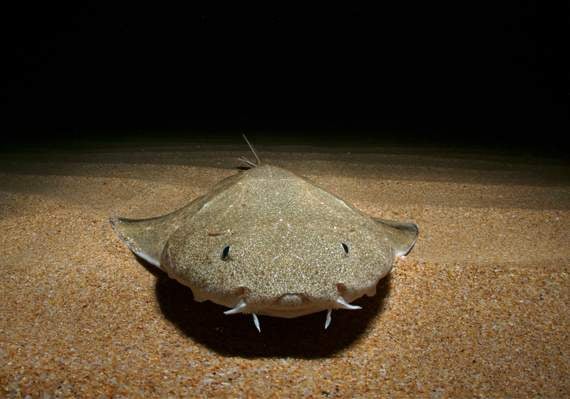
A SCIENTIFIC project aimed at protecting one of the world’s most endangered species of shark has visited Nefyn to speak with locals.
A project has been set up for people to share stories, memories and photographs of the critically endangered angelshark at international conservation charity Zoological Society of London and Natural Resources Wales’ first-ever Angelshark History Roadshow.
The unique roadshow not only highlights the importance of the charismatic angelshark, but also seeks information from local communities to better understand the species, which is known to have a population in Cardigan Bay.
The knowledge will be used by ZSL and NRW scientists to identify important angelshark habitats and investigate how their numbers might have changed over time.


.jpeg?width=209&height=140&crop=209:145,smart&quality=75)

Angelsharks (Squatina squatina) are ‘flat sharks’ that spend most of their time camouflaged on the bottom of the seabed ambushing fish. They were once common across the east Atlantic and Mediterranean seas, with historic records suggesting the importance of the Welsh coast for the species.
However, angelshark numbers declined in the 20th century due to a range of threats, including habitat disturbance, pollution and incidental catch in fisheries.
Angelsharks are now classified as critically endangered on the IUCN Red List of Threatened Species, but recent sightings suggest that a small population still resides throughout Welsh waters.
Joanna Barker, angelshark project manager at ZSL, said: “We are asking people across Wales to help us understand more about this important shark’s historic range and its Welsh cultural connection. Someone might have an old photograph in the drawer, a memory of their grandfather fishing or possibly even be able to tell us about a recent sighting of an angelshark.
“Even if people haven’t ever heard of an angelshark, we’d love them to come along and tell us about the local area – changes in local industry, fishing practices or infrastructure could all help us to fill in the blanks of the angelshark’s history and create the best plan of action to safeguard them into the future.”
Comments
This article has no comments yet. Be the first to leave a comment.