

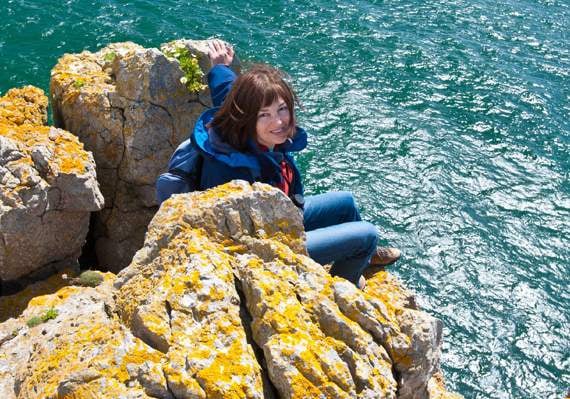
LIFE in Barmouth is brilliant, but it couldn’t be more different to the 10 years Rosanne Alexander spent living on Skomer.
The beautiful island nature reserve just off the Welsh coast presented a dramatic change of lifestyle for Rosanne, a student, who, at the age of just 20, faced the prospect of leaving behind everything that seemed essential to modern life.
It was her boyfriend, Mike, who had fallen in love with the island as a child, but the job of warden required a married couple.
“When we applied (with no expectation of success) we were told on the day of the interview that job could be ours if we could be ready to start in 10 days and if we would get married in the meantime...” Rosanne recalls.

When contemplating island life, the lack of telephone contact with the outside world seemed almost inconsequential compared to the absence of electricity, which meant, among other things, no deep freeze, washing machine, television or electric light.
“Fortunately, Skomer seemed to compensate for everything I had left behind on the mainland, and I never felt lonely. The wooden, cliff-top house, which at first sight had the appearance of a garden shed, proved to be a magical place to live, surrounded by wildlife,” said Rosanne.
On her first night on the island she discovered the Manx shearwaters, as she explained.
“The nocturnal seabirds that nest in their tens of thousands in the honeycomb of burrows surrounding the house, emerged in the darkness, filling the sky with their insistent calling, so loud that, at first, I wondered if I would ever sleep again.
“The house was also in the middle of one of the island’s largest puffin colonies. These startlingly colourful birds, scattered themselves across the sea just below the kitchen window and gathered on the roof of the house, often fighting noisily.
“Spring brought the most spectacular change to the island. The battered, windswept landscape was covered with flowers, the most beautiful being the bluebells that covered the island from coast to coast so that the air smelt of flowers.
"When the summer was over and the birds had left, the island could seem quite bleak, but those came to be the times that I loved the most.
"With a small, open boat as their only link to the mainland, the couple could be cut off for weeks at a time when storms battered the island, and they often ran short of food.
"The isolation, though, had its own compensations, and the seals that arrived in autumn to give birth to their white-coated pups on the island’s beaches were a constant source of fascination.”
See this week’s north papers for the full feature, available in shops and as a digital edition now
Comments
This article has no comments yet. Be the first to leave a comment.