
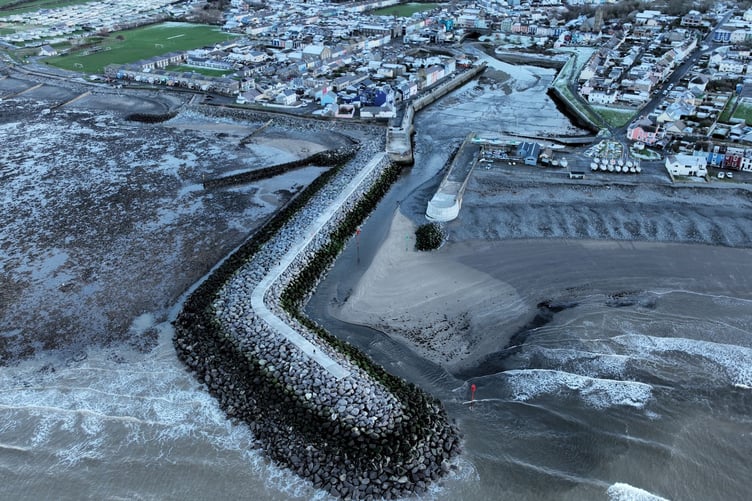
The five-figure cost of repeated dredging at Aberaeron harbour has been revealed, as Aberaeron Town Angling Club continue to pursue the council on planning consent issues.
Ceredigion County Council has dredged the newly narrowed harbour entrance twice already since the completion of works in October 2025.
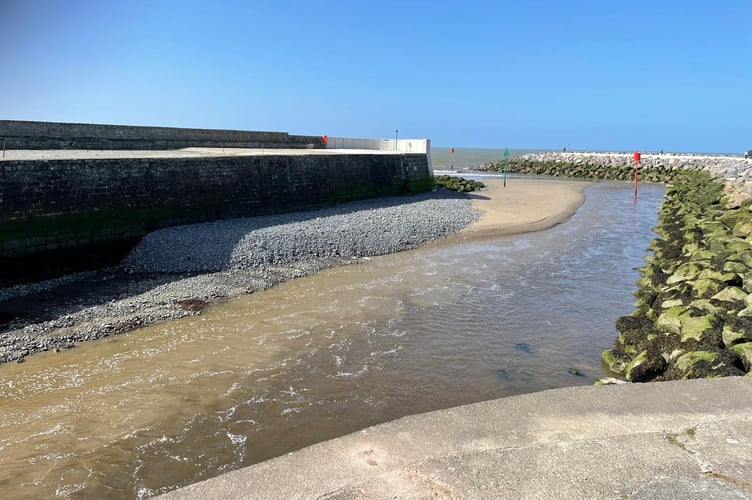
Silt and shingle build-up in the harbour entrance has caused issues for harbour users trying to navigate the entrance, causing the council to dredge the entrance in February at the behest of mariners before their boats returned to the marina ahead of the start of the season.


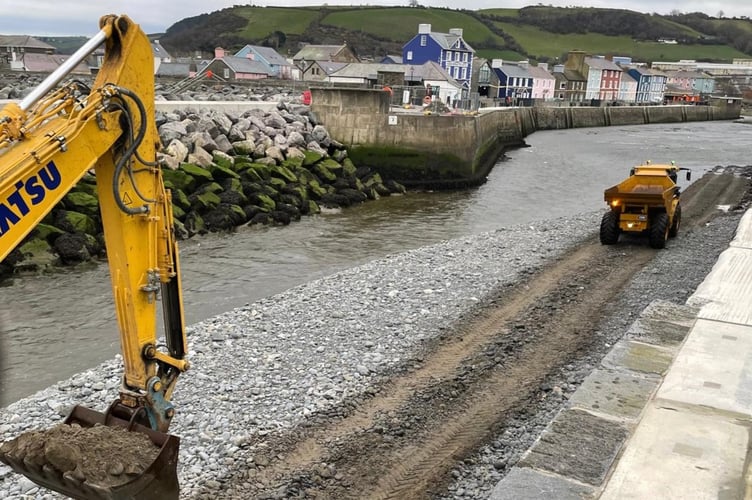
However in less than two months the mouth of the entrance filled again, caused by the south to north longshore drift, which pushed silt and debris from the ocean floor into the south-facing harbour entrance.
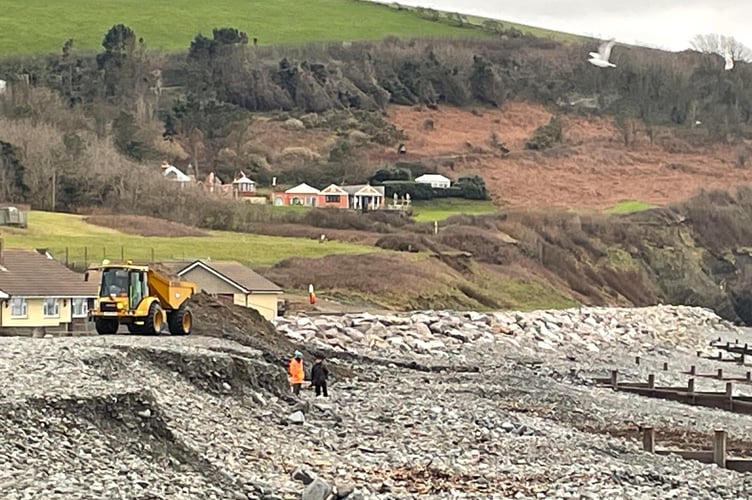
In April, the council dredged the same section again, along with some “temporary improvement works” to prevent the build-up whilst the council explored what to do to fix the issue more permanently.
The cost of dredging the harbour in February set the council back £15,211.78, paying for the machinery and labour to scrape out the shingle build-up and return it to South Beach.
The final bill for the April dredging and improvement works has not yet been written, but the combined total is likely to be higher than February’s £15k.
The council would also not yet share estimates on how much a long-term solution to the problem would cost, on top of the £36m Aberaeron coastal defences project, which ran over budget by £4m.
Welsh government agreed to foot 85 per cent of the bill for the project, however the overspend is likely to be footed by the council.
The £30,000+ cost of this year’s dredging has come out of the council’s own budget, with a spokesperson for the council stating: “February's dredging of the harbour entrance was funded from existing coastal defence budgets.
“We are expecting the cost of dredging the harbour entrance in April to be similar, which will also come from existing coastal defence budgets.”
They added that whilst they “are working with our engineering partners to assess long-term options”, they didn’t share what those options might be or how much it may cost the taxpayer.
It comes following long-term scrutiny over the costly Aberaeron Coastal Defence Project, with many stating the new hockey-stick-shaped breakwater installed as part of the works is facing the wrong way - bending southward, when it should face northward to avoid silt and shingle build-up.
However, the council’s defence to this criticism is that it was designed to shelter the town and harbour from the worst storms and consequential flooding, with the worst storms historically hitting the coastal town from the west/ north west; therefore, placing the breakwater to face south-east does just that.
This explanation does not account for having made the harbour entrance all but unusable without regular dredging, which many suggest could have been avoided if residents and mariners had been listened to, having predicted this would be the case the entire way through the building works.
A spokesperson for the council said sediment build-up was predicted at the design stage, but that any intervention needed to be done after the new features were allowed time to settle.
Aberaeron Town Angling Club aim their hook at the council
Aberaeron Town Angling Club are also taking the council to task over planning consent issues, which they state could be negatively contributing to the shingle build-up.
Concerned that the shingle build-up and the disturbance caused by the repeated dredging may upset their fish supply, the club chose to investigate the issue themselves.
They noticed in the planning application that there was no mention of a wooden groyne being removed during the works, which used to extend out on the south side of the harbour entrance.
They argue that this may be a cause for planning enforcement as a potential breach of planning consent.
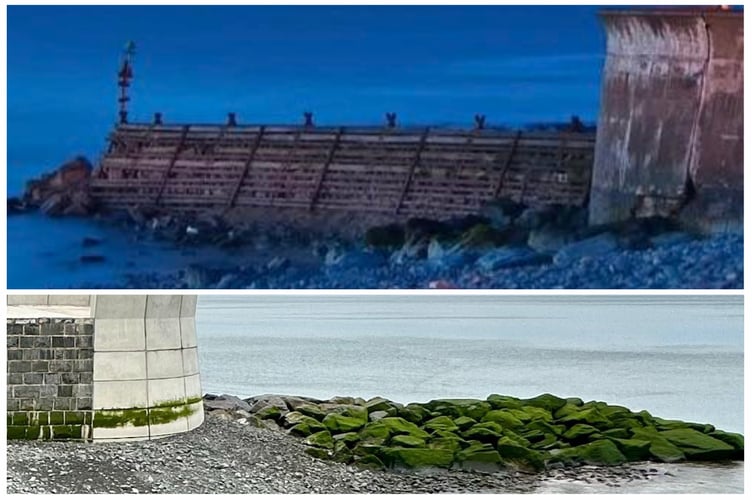
The club also pointed out that the wooden groyne is potentially listed as part of the listed South Pier.
Having reported the potential planning and listed building consent breaches to Ceredigion Council’s Planning Enforcement department, the department confirmed that no amendment of the planning documents was made to include the wooden groyne and confirmed that the wooden groyne had been removed and replaced with rock armour.
Planning Enforcement however closed its investigation, stating that whilst the removal of the groyne may have influenced sediment movement, other factors could also have influenced this, including severe weather events, substantial beach renourishment works, increased shingle volumes along South Beach, and alterations to the pier head, adding that the works require time to settle and for the renourished beach to establish a “natural profile”.
The letter from the planning enforcement officer added that regular monitoring would be undertaken “to understand longer-term sediment behaviour” and that dredging would continue “as and when required to maintain safe navigation… under appropriate supervision”.
The Angling Club has requested that the investigation be reopened to establish whether the deviation from the approved plans “justifies enforcement action” and requested Cadw investigate the deviation from listed planning consent.
Responding to the Cambrian News, Cadw stated that “works to remove the groyne did not require listed building consent as it is a separate structure to the listed South Pier”.
Commenting on the Planning Enforcement decision, a Ceredigion County Council spokesperson said: “As noted in the [planning enforcers] letter, Ceredigion County Council recognises the need for a measured, evidence-led approach, taking account of the scale and complexity of the works and the range of factors influencing coastal processes.”
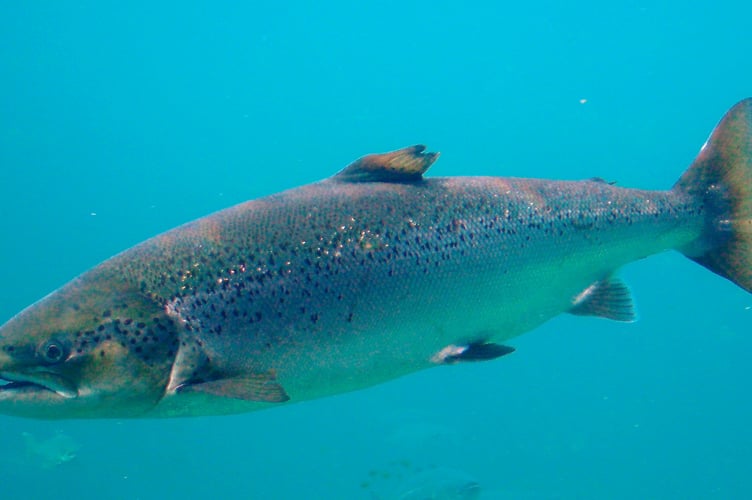
The club added in a letter response to the enforcement officer: “As an Angling Club with a direct interest in the nigratory passage of Atlantic salmon, sea trout and European eel through the River Aeron [which ends at the harbour] - all of which are protected species ] we respectfully request confirmation of the environmental supervision arrangements in place and whether Natural Resources Wales has been formally consulted in respect of both the completed works and the ongoing dredging programme.”
Comments
This article has no comments yet. Be the first to leave a comment.