
At the beginning of the twentieth century, photography still felt like something a bit special.
Cameras were becoming more affordable, but taking the photograph was only the first step. Plates and films still had to be developed, prints made and chemicals handled carefully.
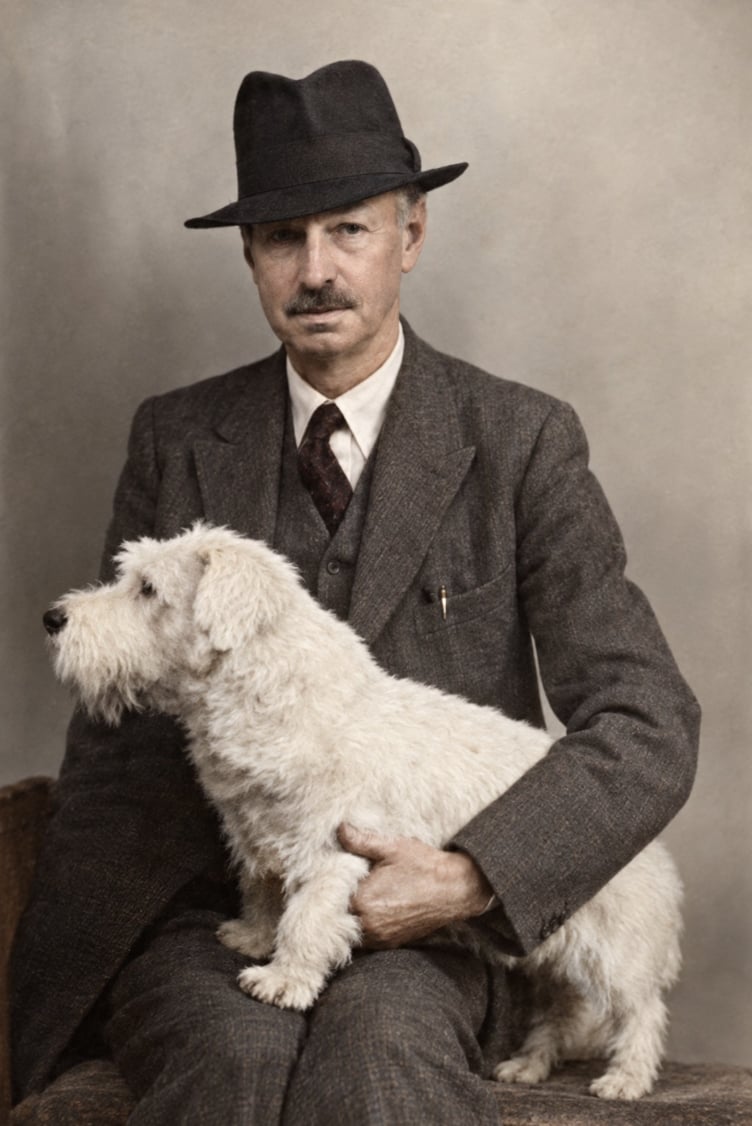
In Aberystwyth, one of the people helping local photographers through that process was Bertie Taylor Lloyd.
By 1904, he was working as a dispensing chemist at 3 Bridge Street. Medicines may have been the everyday business of the shop, but photography had clearly become an important part of it too.
His advertisements offered photographic plates, papers and other supplies. More unusually, he also made a darkroom available to amateur photographers.
Few people would have had a suitable darkroom at home, so here was somewhere in the centre of Aberystwyth where a keen amateur could buy what they needed and develop their own photographs.
The business later moved to 20 Great Darkgate Street, where Taylor Lloyd became a familiar name. Over the years he was described not only as a chemist, but also as an optician and chiropodist. Photography remained part of the business.
Then the First World War intervened.
Bertie Taylor Lloyd served with the Royal Field Artillery and saw active service on the Western Front. He rose to the rank of captain and was awarded the Military Cross.
-from-Aberystwyth-Arts-Centre--Ph.jpeg?width=209&height=140&crop=209:145,smart&quality=75)

When the war was over, he came back to Aberystwyth and returned to the profession he had left behind.
His service to the community continued in other ways. He became a magistrate and Deputy Lieutenant, was appointed High Sheriff of Cardiganshire in 1939, and in 1950 received the CBE for his public and community work.
There is another connection to photography in the family too.
His daughter, Jane Marjorie Lloyd, married Gwyn Martin, whose own story was extraordinary. During the Second World War, Martin served as an RAF navigator, flying 50 bombing missions over Europe and receiving the Distinguished Flying Medal in 1941.
In October 1942, the day after his 21st birthday, his Wellington bomber was shot down over Norway. He survived, but spent the next two and a half years as a prisoner of war in Stalag Luft III.
After the war, he became a partner in Bertie's business and later became well known for his photography of Aberystwyth.
Bertie himself seems to have shared that interest. Some of his own photographs of the town survived, including views of the promenade and everyday scenes that might otherwise have disappeared.
For years, people went into Taylor Lloyd's shop with exposed films and photographic plates and came back for pictures of holidays, families, children, friends and ordinary days that probably didn't seem important at the time.
Many of those people are gone now. Shops have changed, familiar buildings have disappeared and generations have walked the same Aberystwyth streets since.
But some of those faces remain.
And in helping other people hold on to their memories, Bertie Taylor Lloyd left a small part of his own story in Aberystwyth as well.
Comments
This article has no comments yet. Be the first to leave a comment.