
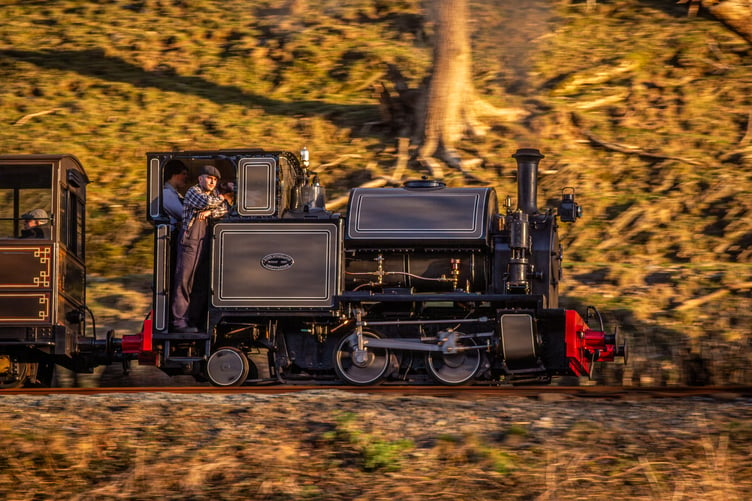
The Talyllyn Railway is marking 75 years since it became the world’s first preserved railway, after a group of railway enthusiasts came together in 1950 to save the historic line from closure.
What began as an attempt to keep a seven-mile narrow-gauge railway running in the Welsh mountains would become the starting point for a worldwide movement dedicated to saving historic railways.
Today, the Talyllyn still operates along its original route between Tywyn and Nant Gwernol, carrying passengers through the Fathew Valley and into the foothills of southern Eryri, while preserving the railway's connection to the area's industrial past.
The railway itself dates back to the 1860s, when it was built to transport slate from Bryneglwys Quarry to the mainline at Tywyn. It also carried passengers, connecting the quarrying community of Abergynolwyn with the coast.
By the middle of the twentieth century, however, the railway's future was uncertain.
When the line's owner, Sir Henry Haydn Jones, died in 1950, the railway faced closure. Rather than allowing it to disappear, railway enthusiast and author Tom Rolt and a group of fellow enthusiasts set about finding a way to preserve it.
The Talyllyn Railway Preservation Society was formed in 1950, taking over operation of the line and establishing what would become a blueprint for heritage railway preservation.
Unlike a conventional museum, the aim was not simply to save the railway's locomotives and equipment. The railway itself would continue to operate.
That decision proved significant.
The Talyllyn demonstrated that historic railways could be preserved as living, working railways, operated by volunteers and maintained for future generations. The idea would go on to inspire countless other preservation projects across Britain and beyond.



Seventy-five years later, much of the Talyllyn's historic character remains.
Original locomotives and rolling stock continue to form part of the railway's story, while historic stations, buildings, track and infrastructure survive along the route.
The railway's industrial heritage has also been recognised internationally.
In 2021, the Talyllyn became part of the UNESCO Slate Landscape of Northwest Wales World Heritage Site, which recognises the significance of the region's slate industry and the network of transport infrastructure that connected the quarries with communities and the wider world.
The Talyllyn route provides a particularly tangible connection to that history, running from the coast at Tywyn towards the former quarrying community of Abergynolwyn and the mountains beyond.
For the volunteers and staff who continue to operate and maintain the railway, preservation remains an active responsibility rather than something that happened 75 years ago.
Talyllyn’s General Manager Commercial, Lorraine Simkiss said: “When the preservation movement began at the Talyllyn in 1951, there was no blueprint for what was being attempted. The idea of taking on an historic railway and keeping it running was genuinely pioneering.
“Seventy-five years later, the Talyllyn is still doing exactly that. The railway remains a working part of the landscape, and the contribution of generations of volunteers has ensured that people can continue to experience this remarkable piece of Welsh railway history.”
Comments
This article has no comments yet. Be the first to leave a comment.