

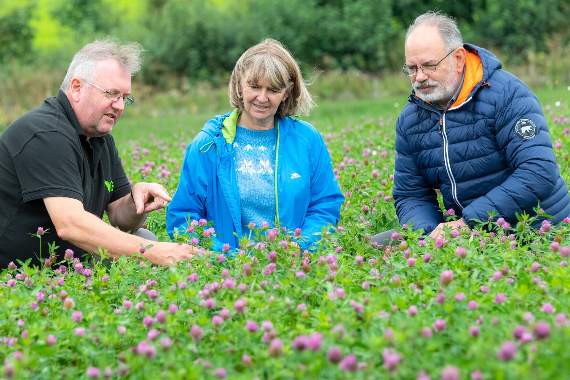
ABERYSTWYTH University researchers are exploring how an eco-friendly crop could be bred to reduce the need for soya feed imports and nitrogen-based fertiliser.
A new project at Aberystwyth University’s Institute of Biological, Environmental and Rural Sciences is looking at new uses of the red clover plant to both tackle climate change and support the nation’s health.
Red clover is a high-quality, protein-rich forage feed for cattle and sheep.
It could help replace imported soybean feed, over two million tons of which was imported into the UK in 2017/18.




The project is looking at bio-refining red clover forage to provide a source of home-grown protein for farm livestock, mainly poultry and pigs.
Professor Joe Gallagher from Aberystwyth University, who leads the project, said: “Red clover can be grown across the whole of Wales and the UK.
“We will select and cross-breed the plant to introduce beneficial traits and enhance its existing ones.
“The outcome of this breeding scheme will be bespoke red clover varieties specifically for biorefining with protein and high value compounds.
“Improving the protein quality of red clover through innovative plant breeding can be a key long-term strategic driver to reduce our reliance on imports.
“Extracting protein from red clover can also bring direct economic benefits to farmers as a ‘cash crop’ by producing protein for animal feed.
“It has the added benefit of reducing the growing UK protein deficit and can fix atmospheric nitrogen - reducing the need for mineral nitrogen fertiliser.”
The project is funded by Welsh Government through SMART expertise and benefits from the expertise of the BEACON biorefining team at Aberystwyth University in a partnership alongside Germinal Holdings LTD, and Blue Sky Botanics.
Comments
This article has no comments yet. Be the first to leave a comment.