
AN ANCIENT ice sheet once covering Britain and Ireland disappeared more rapidly than previously thought, experts at Aberystwyth University have discovered.
Published in the journal Boreas, the research studied the last British-Irish ice sheet, which contained enough ice to raise global sea-levels by almost two metres when it melted.
The researchers wanted to know how long it takes for such large ice sheets to disappear.
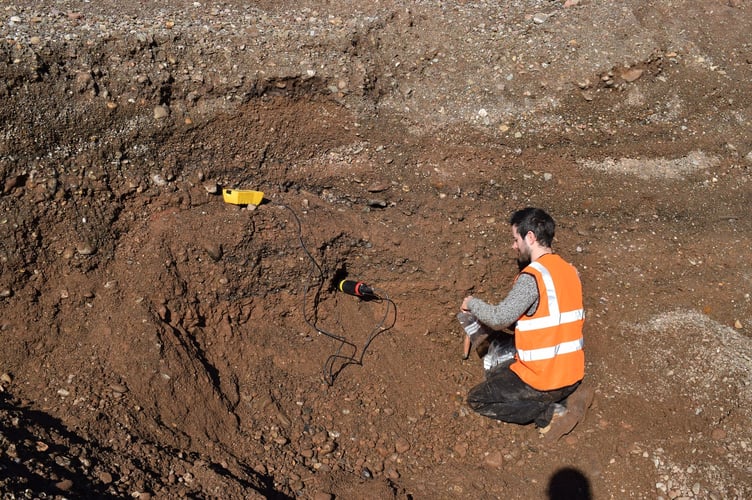
As part of the £3.7 million BRITICE-CHRONO project, funded by the Natural Environment Research Council, experts at Aberystwyth University used their luminescence dating techniques to track the advance and retreat of the ice sheet between 31,000 years ago and 15,000 years ago.




The data reveal that the ice stream that flowed through the Irish Sea reached as far south as the Isles of Scilly about 26,000 years ago, but then retreated rapidly in marine areas, such as off the coast of Wales and Ireland.
The rapid retreat could have major implications for how we view the current risks of climate change and the retreat of the world’s remaining ice sheets.
Professor Geoff Duller from Aberystwyth University said: “This research is ground-breaking in many ways, and Aberystwyth University’s dating methods are central to these findings.
“Using our luminescence dating methods, we can now measure far more accurately the age of these glaciers and when they grew and decayed.
“These findings suggest that there was, in geological terms, a rapid retreat of the ice sheet off the coasts of Wales and Ireland – a matter of a thousand years – which is faster than previously thought.”
Comments
This article has no comments yet. Be the first to leave a comment.