

A magnificent new book on wall paintings in Welsh churches has been published by the Royal Commission on the Ancient and Historical Monuments of Wales.
Painted Temples by Richard Suggett is introduced by Rowan Williams, former Archbishop of Canterbury, as "a welcome and treasurable survey of a long-neglected area of Welsh cultural history".
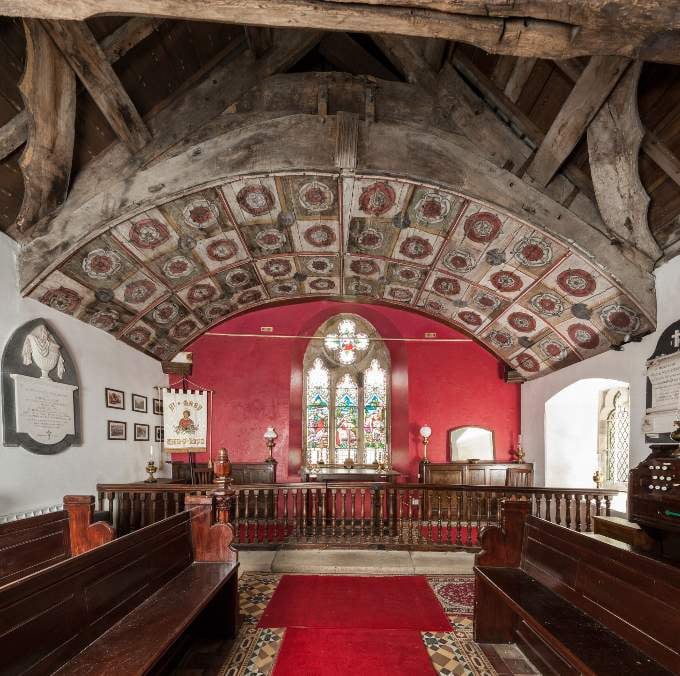
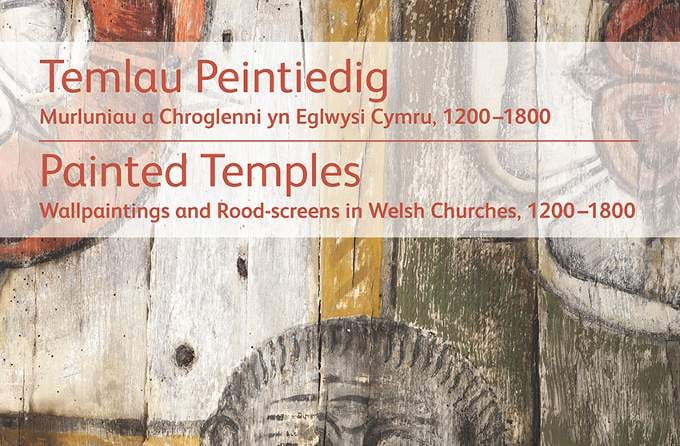
It draws the reader into the world of late medieval churches which were painted from roof to floor with figures, patterns, and instructive scenes, sometimes with humour as well as piety. This authoritative book gives a fresh sense of the vibrancy of medieval Welsh church interiors. There are case studies of paintings in churches across Ceredigion and Gwynedd; the painted grotesques over the chancel at St Mary’s Church, Talyllyn that feature on the book cover are surprising and unforgettable.
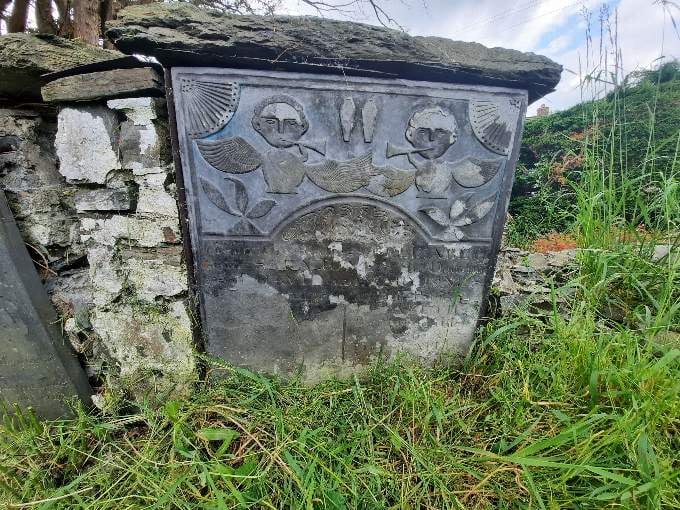
At Llangeitho, Ceredigion, there is a picture of the old screen lost when the church was rebuilt, and at St Michael’s Church in Llanfihangel-y-Creuddyn there survives a rare example of a painted gravestone. This gravestone is a splendid example of funerary folk art with trumpet-blowing angels, probably originally having golden wings, flanking two coffins set against a striking, blue-painted heavenly firmament. The gravestone commemorates two unfortunate sisters, Elizabeth, 19 and Sara Jones, 17, of Penpompren, who died within weeks of each other in April and May 1835.


.png?width=209&height=140&crop=209:145,smart&quality=75)
.png?width=209&height=140&crop=209:145,smart&quality=75)
The extraordinary painted interior recently discovered at St Cadoc’s Church, Llancarfan (near Cardiff), and the wall paintings rescued from St Teilo’s Llandeilo Tal-y-bont and painstakingly recreated at St Fagans open-air National Museum of History also feature.
And readers will want to make a special pilgrimage through the narrow, leafy lanes of the Vale of Glamorgan to view the newly discovered and exceptionally large and detailed painting of St George and the Dragon at Llancarfan by an unknown master.
Llanelieu Church (now in the care of the Friends of Friendless Churches) buried in the countryside near Hay-on-Wye uniquely preserves the painted screen and boarding between nave and chancel. At the Reformation churches were visually transformed with the obliteration of wall paintings, which disappeared under coats of limewash. As the painted image was supplanted by the painted word, so the polychrome church interior became predominantly black and white, apart from the few splashes of colour provided by painted monuments and the Royal Arms - a forceful visual expression of the new relationship between church and state.
Post-Reformation inscriptions unmistakably show the increasing status of the Welsh language. Inscriptions were less visible in the later 18th century as churches became a more cluttered social space. Walls and ceilings became increasingly bleached of colour as limewash was applied liberally inside and outside the church. The rediscovery of the colour of the medieval church by antiquarian-minded parsons in the mid-19th century was a revelation, though not without controversy, as high churchmen and low engaged in battles over the propriety of colour and imagery in churches.
Painted Temples: Wallpaintings and Rood-screens in Welsh Churches, 1200-1800 is available to now from all bookshops and the Royal Commission’s online shop. Author Richard Suggett is senior investigator (historic buildings) at the Royal Commission.
Comments
This article has no comments yet. Be the first to leave a comment.