

Councillors were “shocked” by the speedy rise in home education numbers in one Welsh county last month.
Powys County Council now has 473 children electively educated at home, equivalent to the size of a small secondary school, trebling from 159 children pre-pandemic.
These numbers broadly reflect the trend across Wales, but Cllr Angela Davies was “really concerned - what are we doing about prevention?”
But should there be “prevention”, or is this a sign of a growing acceptance that attending schools isn’t right for all children?
In 2009/10 when records began, the entire of Wales had 747 children registered as home-educated.
The most recent figures show there are now ten times (7,176) the number of registered home-educated children - it is currently not a legal requirement to register your child as home-educated, so the reality is likely higher.
Ceredigion has consistently topped the charts for the highest rates of home-educated children per 1,000 (32.6), with Wales’ overall at 15.3 per 1,000, up from 1.6 in 2009/10.
That is a staggering growth, with many asking why.
The answer, as always, is a number of factors, including the internet.
With information at our fingertips, home education as an option is becoming more known. There is more help available online in the form of resources, online tutorage, and community support.
 Parents of Llandinam pupils should be given cash for new uniforms, councillor says
 Aberystwyth woman will skydive this week to raise money for Motor Neurone Disease
 Gwynedd Council accused of compensation pay out delay
 Experts urge MPs to address lead contamination causing unknown damage to human health
Others felt forced into it.
Overstretched schools can’t offer every child what they need
We all remember the child in class who couldn’t sit still, becoming disruptive and eventually being sent out by an exasperated teacher.
That child’s ability to learn was being hampered by the conditions they were in, with teachers' hands increasingly being tied by limited resources, funding cuts and a ballooning number of children diagnosed with Additional Learning Needs (ALN).
With more understanding of conditions like ADHD and Autism, parents and children are understanding better what’s needed, but struggle to get it from schools.
Ina de Smet had been a teacher before she decided to home-educate her sons.

The 49-year-old single mum from Machynlleth said: “I saw the school system from the inside and how children with differently wired brains usually don’t fit in.
“I didn’t want that for my children and could see from early on that Nathan was quite different, so instead of sending him to school when he couldn’t even sit still for a meal, I decided to hold off and home educate with what started as a temporary solution.”
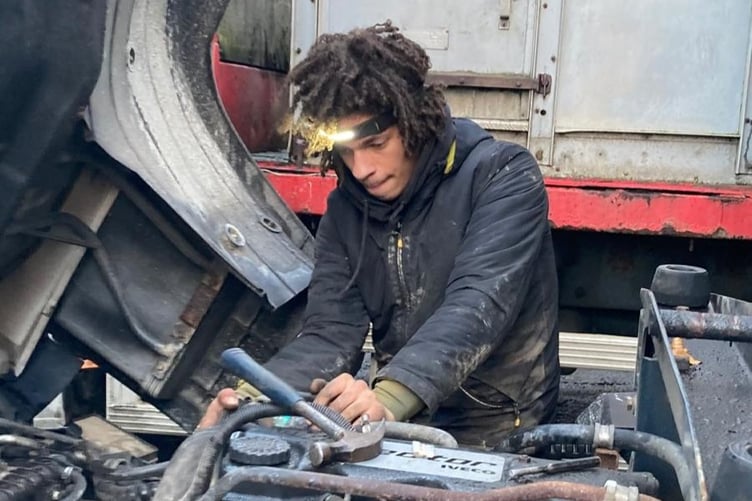
Her eldest Nathan, 17, who is severely dyslexic, is currently travelling Europe with Ina competing in mountain biking World Cups, previously represented Team GB, his best result placing him 15th in the world.
Ina said being home-educated meant they could focus on his interests, taking advantage of their surroundings as a world-class mountain biking area and training as a car mechanic when not competing.
At times they contacted schools to explore entering mainstream education, “but when you’re being told by the schools that there’s no budget to support children with ALN then there’s not really any point.”

This is something psychotherapist and parent coach Morwenna Lewis from Aberaeron sees a lot: “Parents of neurodiverse kids are struggling to get the adaptations to be effective in schools.
“Resources are stretched thinly. We know so much now about helping neurodiverse brains to learn, but it’s almost impossible to apply in a school setting with one teacher and over 30 children.
“Children being expected to sit still for a long time, struggling with encroachment on personal space, germs and sharing equipment, the lack of predictability, disciplinary responses to behaviours they can't really control, behaviour being shamed rather than accommodated for and understood.”
Only last week the school leaders’ union NAHT Cymru criticised the Senedd for not ringfencing ALN funding, with union secretary Laura Doel describing demand having “increased significantly in recent years, with costs more than doubling over the last decade, rising significantly faster than available funding”.
Morwenna said the decision to home-educate often isn’t taken lightly: “I see a lot of parents in real anguish about it, feeling anxious about their children losing out socially, about not getting a formal education, the implication on their income and ability to home-educate. For people who find their child doesn’t fit in a school, considering home educating is a big leap for them.”
The Covid generation
The number of children registered as home-educated across Wales doubled after the pandemic, going from 2,626 in 2018/19 to 5,330 in 2022/3.
One mid-Wales school counsellor said: “[During lockdown] it was a critical time where young people lost their social confidence and their ability to be with people in big spaces, not being able to cope with overwhelm and overstimulation.
“There’s a lack of confidence that arose from it.”
Whilst lockdown for some families made them realise home education was possible, another school counsellor spoke of a lack of resilience amongst young people, feeling unable to cope with the overwhelm of school.
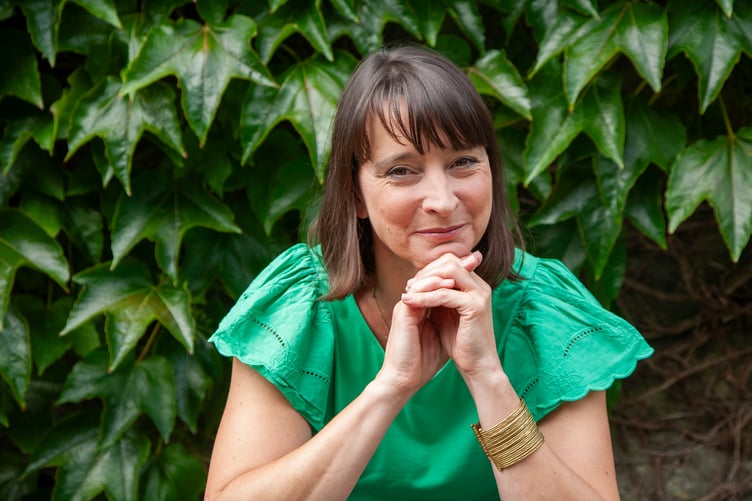
But is it fair to compare children now to the pre-internet era?
Morwenna argues: “Being a child nowadays is infused with anxiety and worry, awareness and overstimulation that wasn’t there 40 years ago.
“The nervous systems of children are being raised in a higher stimulating environment making them more anxiety-prone; screen time overstimulation isn’t great for a little brain.
“The world in which children are developing now is not the same world, and it’s manifesting in our children which is heartbreaking.”
Safer at home or school?
Not being able to cope with school is one thing, but what awaits children at home?
The concerns expressed is Powys’ committee in June may have had something to do with the high-profile cases of neglect and abuse which emerged in the 2010s from home-educated households.
In 2021 Wales’ watchdog for child welfare, the Children’s Commissioner for Wales, criticised the Welsh government for failing its legal duty to protect the rights of home-educated children and that lessons had not been learned a decade after a home-educated boy died of scurvy.
Dylan Seabridge was eight when he died of a cardiac arrest in 2011, a post-mortem finding he was anaemic with several loose teeth and a longstanding Vitamin C deficiency.
Living in a secluded rural community in Pembrokeshire, he was described as “invisible” to authorities, having not been seen by any agencies or services for seven of his eight years.

Since his death, other cases emerged including a group of home-educated siblings in mid-Wales who endured severe physical and emotional abuse, a report stating their parents had manipulated the rules of home education to keep control over access to their children, one of the siblings telling investigators, “education officers should come to the house”.
Since Dylan's death, there have been repeated calls for the Welsh government to introduce tighter regulation for home education, being criticised for being “too tentative”, lacking “pace”, and being “ultimately ineffective in creating meaningful reform”.
Pembrokeshire County Council said to address the increase in home-educated children it has increased staff capacity to ensure they maintain the appropriate level of “contact, guidance and oversight”, supporting learners in accessing formal qualifications, further education, training and employment.
One change being implemented across the UK will make it a legal requirement for parents to register their children as home educated.
The concern for many responsible for the wellbeing of children is that those outside of mainstream education will have significantly less contact with services, making it harder to spot welfare concerns.
But are schools a safer option?
Reports of student-on-student sexual assault have risen by 40 per cent across England and Wales, with an 81 per cent rise on school grounds.
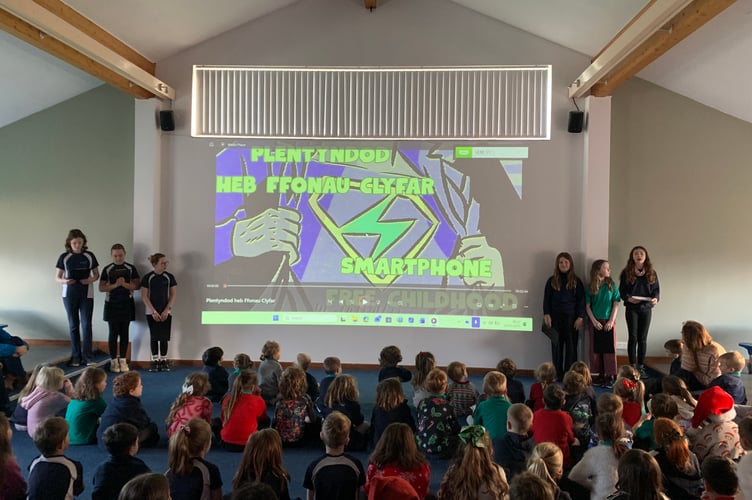
Access to violent pornography and misogynistic content on smartphones is blamed for the rise, and it was this access to technology that pushed Laura (pseudonym) to pull her young daughter out of school.
Laura from west Wales was appalled by the level of screen time use in her six-year-old's school, but her concerns were dismissed with the Welsh curriculum being used “as an excuse”: “I was told a requirement is for kids to be computer literate.
“I’m in support of that; I want her to be able to code, but I do think that’s a bit different to sitting and watching cartoons.
“Screens were being used as a babysitter or a reward.
“She doesn’t have this level of access at home – why are they doing it at school?”
Feeling disappointed by the realities of the education system, including the use of disciplinary methods such as isolation for five- and six-year-olds, she made the difficult decision to quit full-time work as a single parent to home-educate her daughter.
Though Laura could only afford to home educate for two years before she ran out of savings, she said they both “loved those two years: “I wanted her to track the curriculum but still be led by her interest so we’d do math's in the woods or up mountains so the education was embedded into life, we’d do writing tasks about subjects she was interested in and loads of outdoor learning.”
There’s no one way to home educate children – the only legal requirement is to offer a full-time education until 16 - some follow the national curriculum, forest schools, do flexi-learning where they’re in school part-time, whilst others like Ina offered her children engineering skills from age 8.
The reasons for going into home education are as vast as the number of home-educating families, however two themes emerged from every interviewee.
There is a common stereotype of the home edder sitting at home alone with their books, not knowing how to talk to the kids playing outside.
Laura said access to local home education groups allows them to socialise with young people of all ages, stating the home-educated children she’s met are some of the most socially eloquent children she’s met. Ina puts this down to having the opportunity to educate them within an intergenerational community as opposed to being stuck in classes of one age group.

Many home-educating families declined to talk to the Cambrian News or wanted their names changed due to the fierce judgement placed on home-educating parents.
Part of this has to be down to a perceived cultural difference between those whose children attend schools and those who choose, or are forced by circumstance, to do it differently.
For Hannah Johns from south Gwynedd, it never occurred to her to put her son in school, stating that “schools as we know them formed as part of the industrial revolution”, arguing that they “haven’t really got any better”.
The artist and educator who also works as a learning support assistant said she witnessed schools fail children who were told they were “too difficult to teach”: “Why would we give the best hours with him away?
“Why would we give someone else influence over our child when we don’t know them? It seems ridiculous.
“The most important thing is health and wellbeing of young people, when we get that wrong, the learning becomes secondary. We make them all jump through the same fiery hoops at the same time, and it’s never been fair.”

The responses of local authorities were invariably that they respect parents’ right to choose.
Every authority has Elective Home Education officers on staff aiming to foster “open communication and collaboration” to promote the wellbeing and educational progress of all home educated children.
Wales’ Children’s Commissioner Rocio Cifuentes said: “My office has called for Welsh Government policy on home education to meet three tests; that all children in Wales can be accounted for and that none are invisible; that every child receives a suitable education and their other human rights, including health, care and safety; and that every child is seen and their views and experiences are listened to.
“For children who want to attend school but who potentially face barriers to do so, focus should be on strengthening support in schools through resourcing and funding, which in turn ensures that every child is visible, supported, and getting the education that they need.”
Comments
We've recently changed our login process. If you have an account for commenting, you will need to re-register on the login window.
This article has no comments yet. Be the first to leave a comment.