
At Pembroke Mill Pond, beneath the walls of one of west Wales’ best-known castles, swans, ducks and other birds have long been part of the landscape. Families stop to watch them from the path, residents check on them as part of a daily routine, and visitors often see the pond as part of the town’s character as much as its medieval keep.
But this summer the familiar scene has been disturbed by a more troubling suspicion: that some of the wildlife found dead around the pond may not have been victims of algae, disease or natural causes, but of deliberate attacks.
Pembroke Town Council said it had received comments and enquiries from concerned residents after dead wildlife was found at the beauty spot. While some speculation had focused on water quality, the council said its monitoring programme was continuing and algae levels had been reduced by about 45 per cent over seven years. After representatives retrieved some of the dead animals, the council said around five appeared to have suffered injuries consistent with being intentionally targeted using a catapult.
The matter has been referred to Wildlife Crime Officers. The council called the apparent attacks “an extremely distressing and cruel act against wildlife” and urged anyone with information to come forward, including anonymously through Crimestoppers.
The Pembroke case is not isolated. In Ceredigion, residents in Bow Street have complained to Cambrian News that nesting rooks close to the Cambrian Line railway, near the bridge to Clarach, were being targeted with an air rifle.

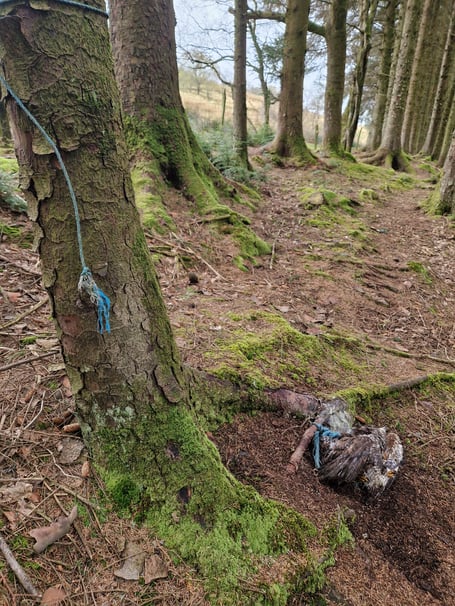
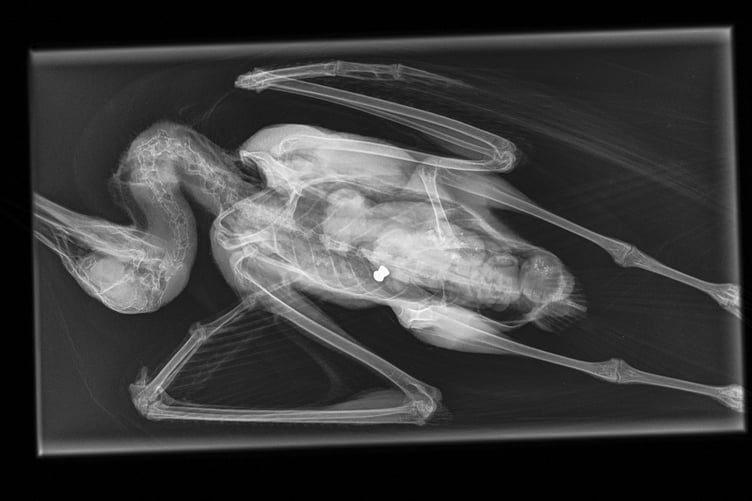
In Powys, the RSPCA recorded the case of a buzzard found dead in woodland after being tied to a tree root with blue rope secured around one wing. Evidence at the scene suggested the bird had struggled before dying. In Merthyr Tydfil, an adult gull was found dragging a wing and repeatedly collapsing after being shot; an X-ray later revealed an airgun pellet inside the bird’s body, alongside a fractured wing.
Gwynedd, Pembrokeshire, Ceredigion, Powys and Carmarthenshire all recorded at least two incidents of serious wildlife attacks, according to the report.
Together, those Welsh incidents form part of a wider pattern being highlighted by animal welfare campaigners and police forces across the UK: wild birds are increasingly appearing in the firing line of catapults, air weapons, slingshots, darts and even crossbows.
Latest figures from the RSPCA show that 359 incidents involving wild birds were reported during July and August 2025 — almost double the 179 reports received during the same period in 2024, and the highest summer total recorded in the past five years. The charity said almost half of all reports of cruelty towards wild birds last year were received during the summer months, when longer days and more time spent outdoors may increase both contact with wildlife and opportunities for deliberate attacks.



The trend appears to be continuing. The charity has already received 474 reports involving cruelty to wild birds so far in 2026 — more than half the total number of reports of this nature recorded in 2025, when there were 876.
Birds most commonly targeted include pigeons, corvids such as crows, magpies and ravens, gulls, swans and ducks. The reported weapons range from airguns and catapults to slingshots, darts and crossbows. In many cases, the injuries are not instantly fatal, leaving birds to starve, collapse, be taken by predators or struggle for days before being found.
Mike Scargill, Wildlife Partnerships Manager for the RSPCA, said the charity was “deeply concerned” by the number of reports involving deliberate cruelty towards wild birds.
“Day after day, our frontline officers and animal centres see the sickening consequences of weapons being used on animals — causing awful suffering, severe injuries and often leading to death,” he said. “These figures are likely to represent only a fraction of the true scale of the problem because a lot of cruelty goes unseen and unreported.”
The RSPCA has released the figures as part of its Cruelty Hurts, Love Rescues campaign, which highlights the pressure placed on frontline animal welfare teams during warmer months, when cruelty reports typically peak. The charity says it is not suggesting there is one simple cause for the rise. Instead, it points to a combination of factors, including the misuse of catapults and air weapons, copycat behaviour, exposure to harmful online content and a lack of understanding about animal welfare.
At the heart of the issue is the accessibility of relatively cheap weapons. Air weapons are regulated, but many types do not require a firearm certificate in England and Wales, although buyers must be over 18. Catapults, meanwhile, are widely available and not subject to the same restrictions as air rifles. Animal welfare groups have repeatedly warned that modern catapults, combined with metal ammunition, can be lethal to birds and small mammals.
In Chipping Norton, a crate containing the bodies of 25 pigeons was found abandoned beside a litter bin. Many of the birds had injuries consistent with being shot using air weapons, including pellet wounds and broken wings. Evidence suggested some had not died instantly.
In Lea Valley Park, Waltham Cross, three birds were found with darts in their bodies and a gosling was reportedly hit with a catapult during a series of attacks in May. A Canada goose was taken to the Swan Sanctuary after being found with a dart through the chest; rescuers were able to remove a dart from another goose’s wing at the scene. There was also a report of a greylag goose with a dart through its chest, though the bird could not later be found. Some of the darts recovered were reported to be seven inches long.
In Kent, the RSPCA received reports that a duck had been killed in a catapult attack and two ducklings injured at Sheerness. Kent Police launched an investigation after the incident at The Fleet near Hawthorn Avenue. In Dorset, a gull was seen in Weymouth with a crossbow bolt embedded in its body. Because the bird was still mobile and able to fly, the charity advised the public to monitor it and appealed for information about whoever was responsible.
There are also cases involving birds that survive but are left with long-term damage. A swan rescued near Woodbridge after being found unable to stand or walk was discovered to have been shot in the leg with an air weapon. The injury had become badly infected, leaving the bird in significant pain and unable to feed properly. Although she was transferred to a specialist wildlife rehabilitation centre, she was left with lasting nerve damage.
Welfare campaigners say such attacks are often difficult to investigate because the victim may fly or crawl away before dying, and because offences often happen in parks, ponds, riverbanks, railway corridors, woodland edges and other open spaces where witnesses may not immediately realise what they have seen. A bird found days later may show only the end result: a pellet, fractured bone, puncture wound or unexplained collapse.
That hidden nature of the crime is one reason the RSPCA believes official reports are likely to understate the true scale of the problem. A member of the public may see a youth with a catapult and assume it is harmless. A walker may find a dead gull and think it died naturally. A homeowner may hear an air rifle but not know whether wildlife has been hit. By the time an animal is examined, the person responsible is usually long gone.
All wild birds are protected under the Wildlife and Countryside Act 1981. It is illegal to deliberately kill, injure or take a wild bird except under licence, and any lawful control must be carried out within strict rules. Those found contravening the Act can face up to six months’ imprisonment and an unlimited fine. Cruelty offences may also fall under animal welfare legislation, depending on the circumstances.
The law around weapons can be less straightforward for the public to understand. In England and Wales, most lower-powered air weapons do not require a firearm certificate, but purchasers must be over 18. Anyone using an air weapon must ensure pellets do not leave the boundary of land where they have permission to shoot, and it is an offence to fire one within 50 feet of the centre of a public highway if doing so endangers, interrupts or annoys road users. Catapults are not prohibited in themselves, but carrying one in public without lawful excuse may attract police attention, and using one to injure wildlife is illegal.
Police and welfare organisations have increasingly focused on partnership working. Operation Lakeshot, originally developed to tackle illegal catapult use and other wildlife crime, brings together police forces, conservation organisations and animal welfare bodies. The RSPCA says such cooperation is essential because offences often cross boundaries: antisocial behaviour, weapon possession, wildlife crime, animal cruelty and youth intervention can all overlap.
The charity also stresses that most people would never deliberately harm an animal. Its concern is with a minority whose behaviour can escalate if ignored. Adults worried about a young person’s behaviour towards animals are encouraged to seek advice through the RSPCA’s early intervention referral service, where support can be offered before cruelty becomes entrenched.
For communities in Wales, the issue is not abstract. Pembroke Mill Pond is a civic space. Bow Street’s rooks are part of a local soundscape familiar to residents living near the railway and fields. Buzzards circling above mid Wales roads and gulls along the valleys and coast are ordinary sights — until one is found injured, tied, shot or dead.
The summer rise in reports also comes at a time when many birds are more visible. Young birds are fledging, waterfowl gather in public parks and ponds, and longer evenings bring more people into outdoor spaces. That visibility can help rescue efforts when responsible members of the public notice injuries quickly, but it may also increase opportunities for deliberate targeting.
Campaigners say prevention depends on public awareness as much as enforcement. People who see birds being targeted should avoid putting themselves at risk, record details where safe, report active incidents to police, and contact the RSPCA or local wildlife rescue if an injured animal is found. Information about suspicious behaviour, weapons, vehicles or repeat locations can help investigators build a picture.
There is also a role for schools, parents, youth workers and online platforms. The RSPCA has warned that harmful online content can normalise cruelty or frame attacks as entertainment. In the same way that communities have learned to report fly-tipping or antisocial driving, welfare groups want attacks on birds to be treated as serious early warning signs rather than dismissed as childish mischief.
Mr Scargill said wild birds “feel pain, fear and distress, and deserve our care and respect”. Deliberately harming them, he said, causes immense suffering and can have consequences not only for individual animals but for local wildlife populations.
In Pembroke, the council’s message was rooted in that same concern. It thanked residents for raising the alarm and for their “continued care and concern” for the Mill Pond and the wildlife that calls it home. That concern is now shared by communities from Ceredigion to Powys, from Merthyr Tydfil to Kent, Dorset, Oxfordshire and Hertfordshire, where the details differ but the pattern is similar.
A rook colony near a railway bridge, a gull on a town street, a swan at a pond, a buzzard in woodland, a crate of pigeons beside a bin: each incident may appear local and isolated. Taken together, they suggest a broader problem that welfare bodies say is growing, underreported and difficult to police.
The immediate priority is to identify those responsible for current attacks and rescue injured birds where possible. The longer-term challenge is harder: to stop weapons being used for cruelty before another summer’s figures set a new record.
Comments
We've recently changed our login process. If you have an account for commenting, you will need to re-register on the login window.
This article has no comments yet. Be the first to leave a comment.