
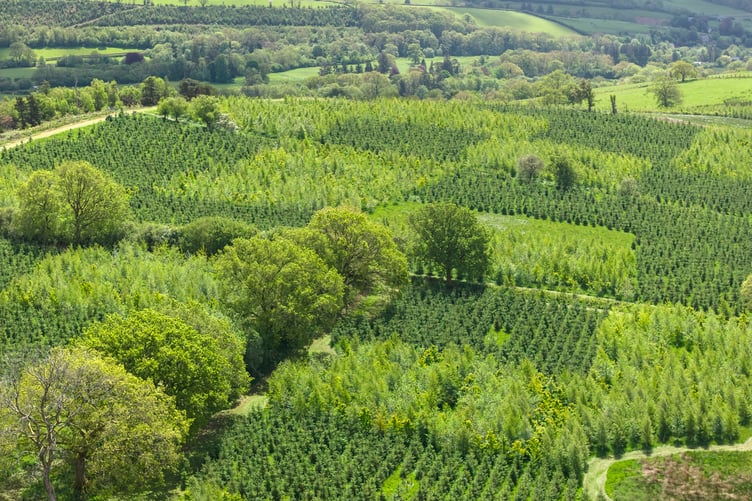
Over the course of four years different tree-growing techniques were studied in Glandwr Forest in Carmarthenshire.
Two simple nature-based techniques were found to increase the carbon storage of the young trees by up to 27 per cent in the largest field trial of its kind.



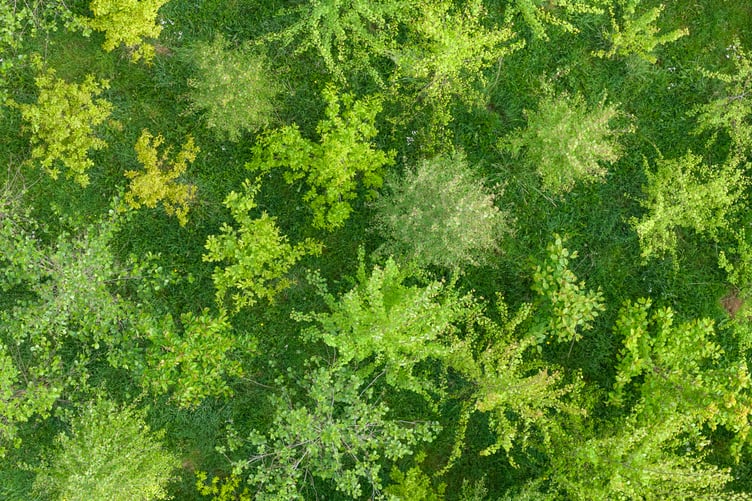
The study involved 72 individually managed plots across 11.5 hectares of Welsh hillside, the equivalent of 18 football pitches.
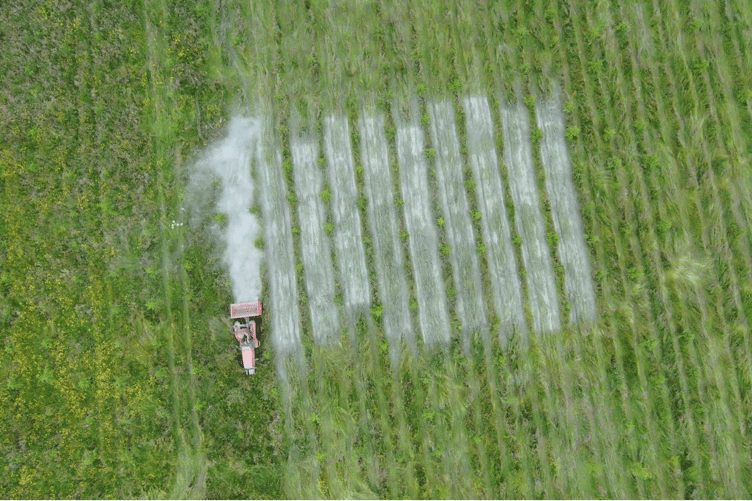
Researchers found that trees grown in soil that had crushed basalt rock, a byproduct from a nearby quarry, stored 27 per cent more carbon in their leaves, trunks and branches than trees grown without the minerals, in a technique called ‘enhanced rock weathering’.
Adding beneficial microorganisms to the soil also increased above-ground carbon storage of trees by 13 per cent over four years compared to trees without intervention, in a technique called ‘microbial enrichment’.
Dr Bonnie Waring of Imperial College London, who did the research alongside science-based charity - the Carbon Community - said: “What makes this study scientifically striking is not only the potential for carbon removal, but also its unprecedented scale, and the high level of citizen science involvement.
“We all need our new woodlands to thrive, for biodiversity, our wellbeing, and our climate efforts in the UK and beyond.
“After just four years, we can demonstrate how each of these simple, nature-based interventions effectively supports the early years of tree establishment and the carbon uptake capacity of new woodlands.”
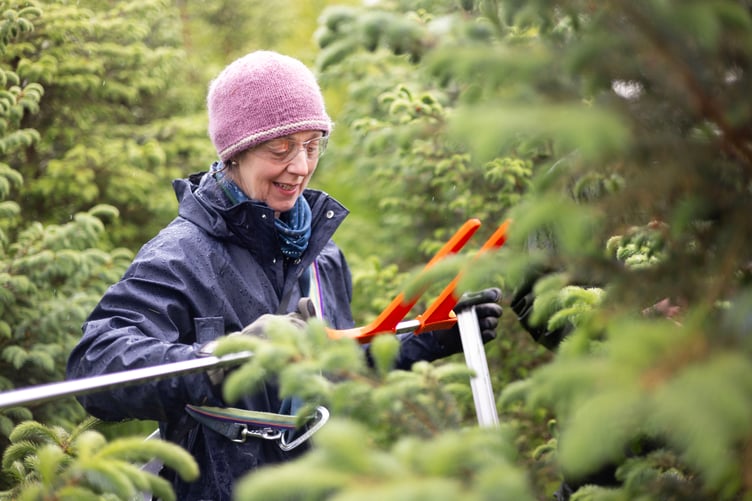
The research involved 200 volunteers working alongside researchers to collect data from 6,400 individually monitored trees annually as part of the ‘Big Tree Measure’.
The study looked at both broadleaf and conifer forests, applying the nature-based techniques on their own and in combination.
The researchers explained that the crushed rock released calcium and increased the soil pH, making existing nutrients such as nitrogen and phosphorus more available to trees.
Trees also depend on a diverse community of root-associating soil fungi and bacteria to help them access nutrients - this means that actively introducing beneficial microorganisms to the soil can support the growth and carbon uptake of trees, especially when planted on land being repurposed for forestry.
Charles Nicholls, co-founder of The Carbon Community, said: "These findings come at a critical time when we must rapidly invest in effective solutions that can tackle both the climate and biodiversity crises.
“These two simple, but promising nature-based interventions could help transform restoration efforts, allowing us to improve tree survival and increase the amount of carbon captured by every tree planted.
“It’s a scientific breakthrough with significant practical implications for the UK’s national carbon removal strategy.”
The findings of this study provide a blueprint for forestry organisations and governments to achieve greater benefits for nature restoration and climate mitigation in future reforestation efforts.
However, the researchers state more support is needed to extend these studies to understand the long-term implications, as well as the impact on below-ground carbon storage.
Comments
We've recently changed our login process. If you have an account for commenting, you will need to re-register on the login window.
This article has no comments yet. Be the first to leave a comment.