
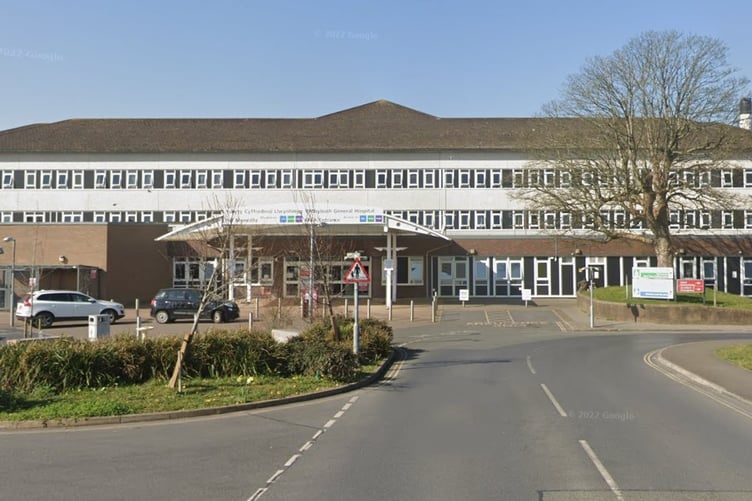
As we all know, the Stroke Unit as Ysbyty Bronglais is under threat. Hywel Dda Health Board want to adopt a ‘treat and transfer’ model, forcing patients and their families to travel to specialist centres in Haverfordwest or Llanelli, both about 65 miles away from Bronglais.
Bronglais has a massive catchment area, covering much of southern Gwynedd, most of Ceredigion, and vast areas of western Montgomeryshire. It is the only general hospital which is north of Carmarthen and south of Wrexham. Critically important for tens of thousands of people in mid Wales.
Despite this, we are always first in line for service cuts.
The median age in Bronglais’ catchment area (outside of Aberystwyth itself) is well over 50. For comparison, the median age was 34 in Cardiff, 41 in Swansea and 42 in Wrexham, at the 2021 census. And these numbers aren’t coming down.



.jpeg?width=209&height=140&crop=209:145,smart&quality=75)
A recent report from Hywel Dda Health Board projected a 15 per cent fall in working-age population in Ceredigion in the next 14 years, and an increase in the population aged 65 and over from 27 per cent today to 32 per cent in 2040. As local young people leave rural Wales in droves and retirees from elsewhere move in, demand for almost all health services will keep going up.
With the obvious worsening in average general health that an ageing population brings, it’s only logical that healthcare provision in Ceredigion should be improving, not being axed and centralised to areas where the average age is much lower and general health is better!
Unfortunately, as which most things in Wales today, common sense is not common.
Services at Bronglais are limited as it is. I am currently on an ENT pathway, and there is simply no ENT at Bronglais, so I have had to make multiple trips to Carmarthen and will eventually need to go to Cardiff. Inconvenient, but not catastrophic. Downgrading the stroke unit is a different story.
Of course, it makes sense that some services will not be available where the demand for it is low. No one is expecting a small district hospital like Bronglais to handle every single unique, niche and rare condition, but strokes are not rare.
They are the fourth most common cause of death in Wales, and the Welsh Government estimates around 7,400 people experience a stroke each year. According to the Stroke Association, almost 10,000 people in Hywel Dda Health Board area, 3,700 in Powys and over 15,000 people in the Betsi Cadwaladr area are stroke survivors, many with serious, permanent physical damage.
The distress of travelling 65 miles - and in many cases further to visit a relative recovering from a stroke is unthinkable.
Imagine an elderly spouse of a patient, unable to drive, having no way to get to the hospital other than spending hours navigating the abysmal public transport network or spending big on a taxi.
It is very warming to see cross-party support for saving Bronglais’ stroke services, but it does raise some questions about why every service cut hits mid Wales first. Our population is ageing and our healthcare needs are expanding, more so than elsewhere, so what explains it?
Is it political? Maybe we’ll find out after May.
Stroke survival rates have, thankfully, improved over recent years, with Wales having had 2,316 deaths from cerebrovascular diseases in 2013, dropping to 1,802 in 2024, but we can’t squander this progress, and we must not risk creating a mid-Wales void where stroke survival and recovery are reduced.
Comments
This article has no comments yet. Be the first to leave a comment.