

There are a lot of similarities between Welsh and Irish. I'm talking about the language here, not the people or the fact that both take delicious delight in Italy's first beating of England (long may it continue) in Six Nations.
Besides, it'd take more than one little forward pass for us neighbours across the Irish Sea to really fall out.
I don't speak Welsh. I speak Gaelic, beaten into me decades ago by priests and nuns.
There's a lot in common between the two tongues. Sure, it seems as if every 'l', 'f' and ‘w’ was taken up by the Welsh in putting their dialect together, with none left by the time the root language made its way west across the Irish Sea.



But there are many similarities and common words. Peil, tan, ffeirm, or ball, fire and farm are just some examples off the top of my head.
And like Wales, a lot of time and effort has been spent on keeping Gaelic alive, making it relevant, and making sure it isn't lost as all of us on the planet seem to be rushing toward a uni-cultural future shaped by AI, algorithms, and quick video clips.

There is a danger when those in power, or those aspiring for it, place hard numbers such as having half of the population of Wales speaking Cymraeg by 2050. As the old saying goes, you can lead a horse to water, but you can't make him drink it. You can force Welsh down people's throats, but you can't make them speak it. It has to come from within, as a source of pride, a common cultural denominator that sits alongside distinctive pillars of culture such as history, food, music, literature, and sporting prowess - that forward pass aside.
A bugbear of mine is that there is a distinct lack of Welshness when it comes to promoting Wales as a holiday destination.
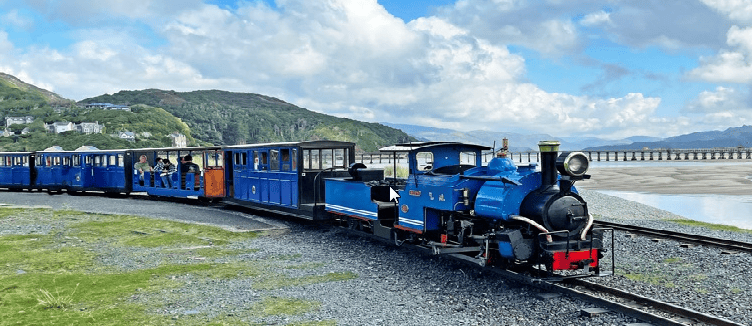
If you took away all of the market money spent by Cardiff Bay on promoting castles or steam trains, just that for which else does it advocate?
Drive the road between Caernarfon and Cardigan, or travel from Pwllheli to Pembroke and you'll be hard pushed to find local restaurants that feature farm-to-fork food. Chances are that most pubs or cafes along the way have foodstuffs supplied by Castell Howell or coming from Bookers.
When was the last time you picked up a menu in a Welsh eatery and the steak was listed as coming from a field five miles away, the fish from the local harbour or the spuds from the village?
Has the idea of launching a West Wales Way along the coat, promoting local hotels, small bed and breakfast homes, farm stays and sampling local Welsh food ever been thought or talked about in Cardiff? What seems to pass in west Wales as holiday spending is squeezing the last pounds from the caravan parks over bingo, buffet, and beer. As long as we keep seeing Borth or Barmouth as Brummies on Sea, the unimaginative folks running Welsh tourism can keep plugging the steam puffers and castle ruins.
As a matter of curiosity, can you remember reading a menu that was actually bilingual, posted half in Welsh, half in English? Imagine, if you will, a holidaying family trying to order “dau fys a sglodion a nôgêts cyw iâr plentyn os gwelwch yn dda.”
The entertainment and education factor in that incident would last a lifetime. They might even come back for more.
When was the last time a local restaurant served you Welsh lamb or mutton? Sure, you can have thirty courses of a tasting menu for £500 that will include unicorn tears from Machynlleth and two Michelin stars but that's a once-in-a-lifetime experience for most of us. Besides, the thought of paying £500 for food simply sticks in my throat.
Natural Resource Wales committed one of the environment crimes of this century when it decided to shut down its three visitors’ centres at Bwlch Nant yr Arian, Ynyslas and Coed y Brenin.
Where was the foresight in the Welsh Government that actually looked at these closures and said: “hang on here a minute, we’re missing a trick to promote mid and west Wales as a real tourism destination, with mountains and beaches, nature and activities.”
But of course, Wales tourism is only steam trains and castles and stepping in might mean having to do a bit of work.
For that matter, Gwynedd and Ceredigion councils missed a trick there too, as did Aberystwyth and Bangor universities too.
Language and culture have to be lived, not learnt. That’s why those Welsh language quotas are dangerous. Or Ceredigion spending nearly £6 million on a Ysgol Gymraeg centre seems foolhardy.
Would £6 million not be better spent on promoting Welshness and all things Welsh? Food, culture, music, literature, tourism.
There might even be jobs in it.
Comments
This article has no comments yet. Be the first to leave a comment.