

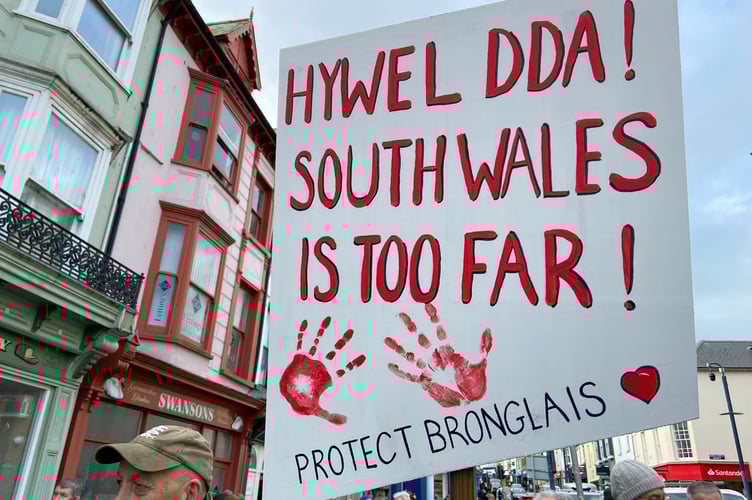
MABON ap Gwynfor’s betrayal is exposed by his own words.
On 4 February, just three months before May’s Senedd election, he spelt out with unprecedented precision Plaid Cymru’s position on safeguarding Bronglais Hospital’s stroke unit.
By then, everyone had been clear - or thought they were - about Plaid’s rock solid opposition to the health board’s lethal plan to downgrade this stroke facility. The reasonable assumption had been that, if the party won the election, the plan would quickly be scrapped. It hasn’t been.
Plaid won, and nothing changed. A solemn inferred pact over the unit, forged between party and electorate, sealed at the ballot-box, is in shreds. This is treachery.
Echoing the anger of thousands, including deeply worried health professionals, the party had by February repeatedly and vehemently opposed proposals to force highly vulnerable stroke victims to travel hundreds of miles for treatment currently available on their doorsteps. Everyone understood that lives would be endangered.
Ap Gwynfor, then shadow health minister, now minister, had spoken of his “grave concerns” that patients would be exposed to “real harm” if the unit was downgraded to the notoriously risky ‘treat-and-transfer’ model. He demanded Bronglais be developed into a regional centre of excellence.
Ceredigion MS Elin Jones, now finance minister, had unwaveringly backed retention of a fully-fledged stroke unit. Bronglais should become a “hospital of rural excellence” with a “full range of life-saving services” she told trusting supporters in an election message.
Plaid’s position could hardly have been clearer. So that, while ap Gwynfor’s statement of 4 February might have looked like simple reiteration, it wasn’t. It went further than any expression of support made up to that point. And the difference was that it promised concrete action if the party came to power.
“If Plaid Cymru is in government after May’s election,” ap Gwynfor told me, “then this will obviously be an issue that a Plaid Cymru health minister would wish to raise immediately with the health board.”

All the indications are that he has broken his promise.
Last week, I asked his office: “Has the minister done as he said he would and raised this issue with the health board?
“If he has, what was the outcome?
“If he hasn't, is it his intention to do so and, if it is, when will he act?”
I was told: “I don’t think we’ll have anything to add to our previous statement.”
To remind readers, that’s the one that responded to my earlier question: “Will the new government now act to ensure that downgrading (of the Bronglais stroke service) does not happen?”
The reply had been: “This is a decision for Hywel Dda University Health Board as they are responsible for the planning and delivery of services for their local population.”
Wrong. This is a decision that demands to be taken out of the hands of the health board because this unelected grouping is on the verge of ceasing to deliver a service, and one that is of vital importance.
Despite being minister, Mabon ap Gwynfor evidently does not know that the Welsh government itself makes clear that one of the laid-down “responsibilities” of health ministers is to deal with “health inequalities”. If he was aware of this, he presumably would not stand by while a frankly brutal health board prepares to pitch an entire region of Wales into an extreme, and dangerous, position of gross inequality. Or is that an over-generous assumption?
What does Andy Burnham stand for?
THE OUSTING of Keir Starmer continues as a nagging worry.
Mainly because his ejection is a slap in the face for an electorate which, less than two years ago, chose him and Labour’s manifesto to see them through till 2028 or 2029. Like it or not, that’s what Starmer, backed by a heavy 174-seat majority, was obliged to reckon with. His thwarting is unjustified.
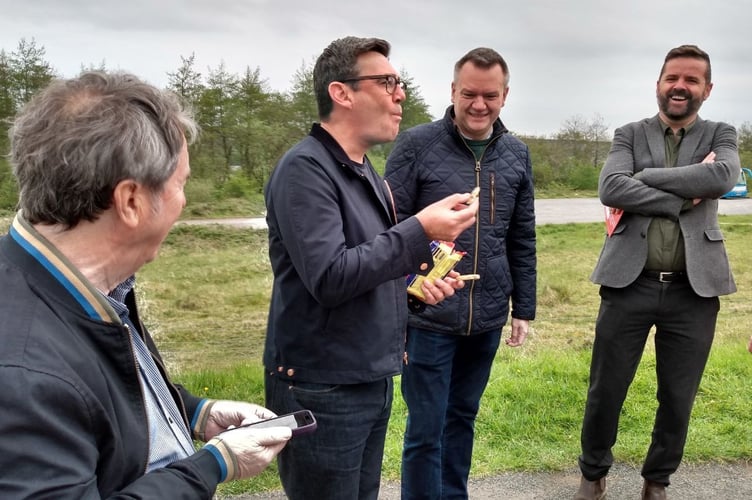
Voters’ choice has been usurped by Labour MPs given to salivating over the twists and turns of engineered Westminster conspiracies. Ostensibly, they clamoured for Starmer’s removal because, above all, they thought Andy Burnham, not Starmer, was the only hope of defeating Reform UK or, for that matter, the extreme-right Restore, at the next general election.
It’s just possible they have stage-managed Labour’s post-2028 survival. It’s also possible that, if Starmer hadn’t been hounded out, time would have allowed his government to build on its achievements and Nigel Farage, his Barbour and flat-cap brand increasingly unattractive, simply fizzled out.
For the time being, Labour fear of Farage, and the voting preference of a depressed town in Lancashire, may have achieved a Downing Street coup.
But that’s only a perhaps. Because yet to be explained, with real conviction, is the reported deep and widespread dislike of Starmer. Certainly, there was the Peter Mandelson appointment, he was muted over Gaza when he should have kept raising the roof and he was taken to task over his winter fuel u-turn, although such a manoeuvre is a sign not of weakness but the opposite.
But there were no grossly damaging charges. Without being labelled a conspiracy theorist, it should be possible at this stage to at the least cautiously suggest the possibility of a social media campaign of animosity orchestrated by forces interested in political instability, and aided by the herd instinct. Confronted by an apparent unanimity of opinion on any issue, the individual can find it hard not to conform.
There’s also a basic level unease. Voters are having foisted on them someone who hasn’t been an MP for 19 years and whose main qualification for entry to Downing Street is that he’s improved the Manchester bus service. I know we’re all obliged to love buses, but the unofficial Commons No10 appointments board currently in session should expect from the winning candidate more than a public transport gold star. Even if that’s augmented by Buddy Holly glasses and a set of dazzling white teeth.
Comments
We've recently changed our login process. If you have an account for commenting, you will need to re-register on the login window.
This article has no comments yet. Be the first to leave a comment.