
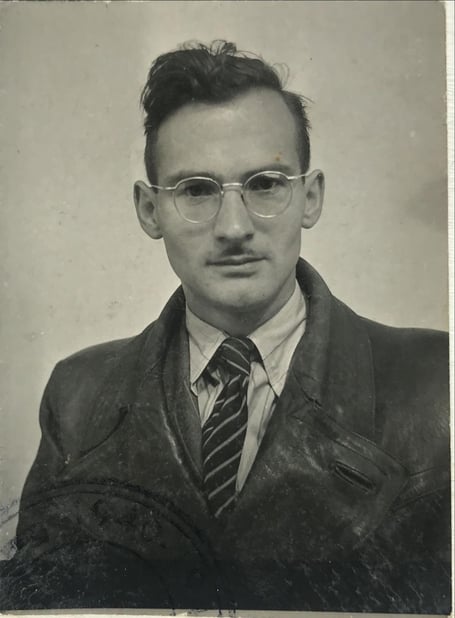





My grandfather was incarcerated by the nazis, surviving only by luck or grace. His brother was co-founder of the National Fighting Squads, one of the leaders of the Dutch resistance. He was tortured and executed, along with my great grandfather. My grandmother, a nurse, smuggled guns and ration coupons in her bicycle paniers under the pretence of tending to infectious patients.
My grandparents saw Britain as a country of freedom and sanctuary, harbouring hundreds of thousands of refugees during the world wars, including the Dutch queen Wilhelmina. If they were alive today, they would be horrified that Nigel Farage — someone whose school peers recall chanting Hitler youth songs and bullying black, Asian, and Jewish pupils whilst saying “gas them all”— could come close to leading Britain.
In nazi Germany, those who didn’t have the right ethnicity were scapegoated for society’s ills and eventually rounded up. It didn’t start with genocide, but with nationalistic symbols and slogans, and dehumanising rhetoric describing Jews as parasites and animals. The next steps were legal separation and provoking mass violence. Only then came the camps and deportations, and eventually the “final solution” for the “Jewish problem”.
In Britain, the same kind of dehumanising rhetoric is becoming commonplace, with immigrants described as “swarms” or “hordes” of aliens who are “invading” Britain, somehow “replacing” white people, coupled with displays of flag waving, vigilante patrols intimidating immigrants, and extremist riots. One of my university colleagues, a young researcher of Nigerian descent living in the north of England, a dad to two young children married to a student nurse, was chased in his own street after the Southport riots by far-right thugs. Police instructed them to stay away from their home for months because of death threats.
Further down the slippery slope, legal separation, camps and deportation are Reform’s official policy. Reform would abolish the Equality Act, ending equal rights for women, disabled people and minorities. Permanent immigrants like me – I have studied and worked here since 2007; I have a child who speaks fluent Welsh – would lose our settled status. An ICE-style immigration agency would be deployed to hunt down thousands of people without the “right” papers. Families risk separation, wrongful deportation, or indefinite detention in camps when their country of origin refuses to take them back. Similar policies in the US have already led to deep suffering, chaos, deaths and intense social conflict and polarisation.
These are extremist policies, yet Farage is a master storyteller, presenting an alternate reality where somehow his ideas appear reasonable. This alternate reality is a less complex world, with simple problems and solutions, where we can trust good old British common sense, where government does not mean difficult trade-offs.
This world does not exist. Reform councillors who recently took control locally are already forced back to earth, flabbergasted that the millions wasted on useless diversity officers and trans toilets that could be redirected to tax cuts and potholes did not exist after all. Four of five Reform-controlled councils in England, despite promising cuts, had to raise council tax by the maximum last year, with Worcestershire raising it by 9 per cent, far more than any Welsh council.
What about the reality on migration? Over the last ten years, UK has had around 200,000 people in total arrive “irregularly” via small boats: about 0.3 per cent of the population of the UK. Most of them have real cause: the vast majority come from war-torn countries like Afghanistan and 68 per cent is granted asylum because of a well-founded risk of persecution or serious harm in their home country.
Right-wing tabloids paint a picture of vast numbers of parasitic asylum seekers living a life of hotel luxury. In reality, there are about 30,000 people housed in asylum hotels – roughly the same number of people as the population of Aberystwyth in term time. Rooms are often small and shared by multiple individuals or families, lacking privacy. Food quality is often poor. You are not allowed to work. Asylum seekers feel isolated, families are sometimes split up. You are not eligible for Universal Credit but receive an allowance of £9.95 per week, or £49.18 if you are not provided with meals. Nobody wants asylum hotels to continue. It is government policy to close all of them by 2029 while refugee organisations have presented plans to close them more quickly.
Reform also says that wider immigration is out of control, pointing to the high levels of net migration after the pandemic, hitting 906,000 at its peak. There was a mix of reasons for this, including labour shortages and hundreds of thousands of Ukraine and Hong Kong visas. Also, a large proportion of visas are study-related, boosted by a 2019 government target to recruit 600,000 lucrative international students per year. They’re hardly freeloaders, each paying tens of thousands of pounds in tuition fees every year. These targets have now been scrapped, and study-related visas have come down by a third.
Recent policies have also made it much harder for both students and workers to stay, and the UK now has some of the most restrictive immigration policies in Europe. Net migration has come down by 80 per cent since 2023, to 204,000 last year (again about 0.3 per cent of the population of the UK), and is expected to fall further. Most people do not experience migration to be a big issue locally. A recent YouGov poll found that while 50 per cent think it is an important national problem, only 26 per cent of people thought it was an important issue in their area.
Reform says there is a wave of violent crime caused by asylum seekers and migrants. This is a far-right fairytale. Studies and official statistics show that immigration waves have no effect on violent crime rates and that migrants, including asylum seekers, generally have similar or lower arrest and conviction rates compared to British citizens. Local differences in crime are linked to social deprivation and inequality rather than ethnicity. In general, violent crime is at its lowest for decades, with the number of homicides in England and Wales less than half of what it was in 2000.
What about migrants unfairly taking advantage of the NHS and the benefits system? Like asylum seekers, those on work, study, or family visas typically do not qualify for benefits like Universal Credit, but they do have to pay an NHS surcharge of £470 per year on top of tax and national insurance. People like me, with permanent residence, have the same entitlements as British citizens, but on average we contribute more tax than we cost in benefits, the NHS and other services.
In fact, stricter migration policies are an important reason why public finances are under stress. Migrants benefit not just the businesses and public services they work for and contribute to, but their economic activity also generates new jobs and income. According to the Office for Budget Responsibility, the recent drop in migration costs us £62 billion of national income a year – the same amount as the entire defence budget.
In rural Wales, these economic challenges hit even harder as we are already facing net out-migration and a big loss of young people. For example, since 2011, Ceredigion has seen a dramatic 28 per cent drop in the number of 15 to 19-year-olds. Aberystwyth University has gone down from around 15,000 students in 2012 to 8,300 students in 2024. Population decline threatens schools, hospital wards, buses and other local services, while hospitals, care homes and schools struggle to attract staff.
This is far greater challenge to Wales than immigration. Yet Reform’s Welsh manifesto does not mention rural depopulation and has no meaningful strategy. The best they can come up with is supporting existing plans for an Aberystwyth-Bangor dental school. What about increasing affordable housing through shared ownership, co-operative schemes and long-term investment in social housing, supporting young people to start new businesses, community wealth building initiatives and social and cultural enterprises, making land more affordable for young farmers by stopping the sell-off of farmland for investment assets, and, dare I say it, supporting refugees, international students and migrant workers and entrepreneurs to settle here and strengthen local economies and public services?
So what interests does Reform serve? Just follow the money. The party is heavily backed by a crypto billionaire private jet dealer, more dodgy crypto money, and fossil fuel bosses. Research by the New York Times shows Reform bags millions from oil and gas interests and polluting industries, more than half from non-doms in tax havens. The Financial Times revealed that Reform actively targets potential fossil fuel donors in places like Dubai who are “very disillusioned” with UK taxes on the industry’s profits. This explains Reform’s attacks on green policies and bizarre denials of climate change. Plus, after Brexit, without the EU to blame, a new bogeyman is needed.
Scapegoating migrants and net zero serve as useful distractions, taking advantage of people’s feelings of powerlessness and frustration about fairness and the cost of living. Behind this sits the same agenda that sits behind Trump – that of the super wealthy: deregulation, getting rid of protections for workers and the environment, tax cuts for big companies, privatisation of public services, stripping public assets for profits. No wonder so many hard-right Tories are flocking to Reform – it’s the new nasty party, now with extra nasty.
It’s not migration that is out of control. It is scapegoating, stirring up hatred and dividing communities in times of crisis and uncertainty. When this hate is, as in the 1930s, coupled with stereotyping and describing human beings as animals without dignity, when governments ignore basic rights, threaten judges and journalists, disregard international law, and denounce political opponents as traitors –mas happened in Russia and is happening in the US, Israel, Italy and elsewhere – there is a dangerous and terrifying erosion of democracy and freedom. Hopefully, in Hungary this erosion can now be reversed.”
Do not be fooled by his carefully cultivated amicable public persona. Farage is in his own words, an “unwavering” Trump-supporter, supporting the Iran war until he realised that it was just him and Kemi Badenoch. He is an apparent nazi-sympathising glorifying teenage bully. He has shown sympathy for Putin and extremists far and wide. He is deeply embedded in the far-right international movement and would take this country in the same direction. We must never forget where that can lead.
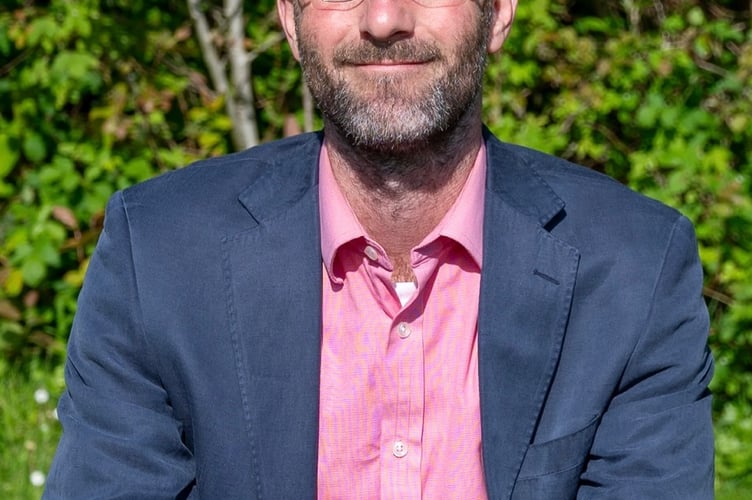
The author is a Professorial Research Fellow at Aberystwyth Business School and ordained One Spirit Interfaith Minister. He emigrated to Ceredigion in 2007. He is not affiliated with any political party.
Comments
This article has no comments yet. Be the first to leave a comment.