
As his Captains rose from dinner on the eve of battle, Nelson gave them one parting thought. “No Captain will go far wrong if he lays his ship alongside one of the enemy’s”. Much is made of Nelson’s tactics at the Battle of Trafalgar (October 21, 1805). But his secret weapon was his young sailors, mainly in their early twenties or younger.
Teamwork, a keen sense of purpose and an environment which recognised and valued their contribution, was combined with relentless realistic training. The gunners could reload fast. The Royal Navy’s superior training meant the French and Spanish ships received three incoming rounds, before they fired their second. It was an overwhelming difference, leading to an overwhelming victory.
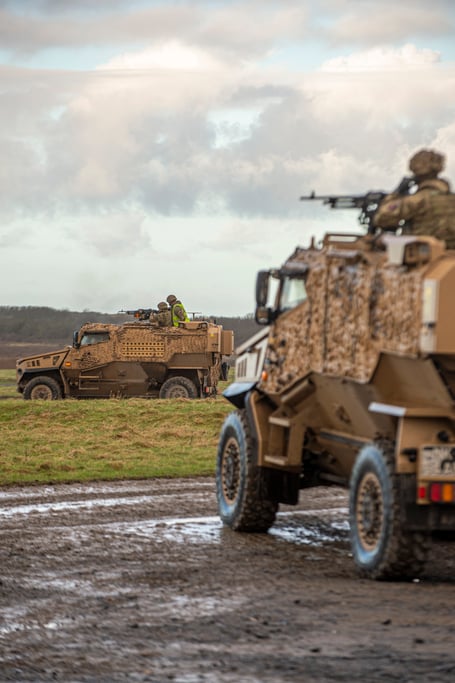
The doctrine of “train hard, fight easy” remains as true today as it was 221 years ago. So we should be incredibly worried that to save a relatively small amount of money the Ministry of Defence has curtailed live firing exercises for the Army. Anyone with an ounce of military experience will tell you that this will reduce the fighting readiness of our soldiers. In very blunt terms, if they go into battle only partially trained, it is like asking them to fight with one hand tied behind their back. Inevitably there will be a price to pay in blood.

In the Falklands War, our soldiers could put down a rate of fire which convinced the Argentinians they were up against far bigger units than they actually were. It encouraged early surrender, saving lives on both sides. If you have to fight, firepower matters.
So when our Prime Minister said in the House of Commons on September 9, that National Security “can’t come at the expense of Social Security” it is hard to figure out what on earth is going on inside his head. Clearly neither he, nor Foreign Secretary Ed Miliband or Defence Secretary Wes Streeting have any service experience between them. But apparently they are very clever; it all goes to show that an Oxbridge degree doesn’t necessarily confer any common sense.
Just last week I was at a conference addressed by Yehor Cherniev a Ukrainian MP, Lord Sanders, retired head of the British Army, and historian Niall Ferguson. They reminded us that every day, Ukrainian civilians (including children) are being killed by Russian drones and missiles. This is happening just three hours flight time from us. As Ferguson asked, why is it that most politicians along with many of us, seem unable to imagine what Shahed Drones would do to British cities. The Blitz occurred within living memory.
It is increasingly clear that Putin’s ambitions stretch far beyond Ukraine, and with the backing of the despots in Iran, China and North Korea he may well try to pursue them. Some of our politicians appear to trust in the Force of (international) Law. The world’s hard men only understand the law of force.
Here is the irony: our young people Not in Education, Employment or Training (NEETS) are the same age as Nelson’s gunners. There are twelve times as many of them as there are soldiers in our army, with a cumulative cost to the economy of £125 Billion a year (Milburn Report). We only need a modest portion of that money and human resource, to put our armed forces back on track. The added win is the hight tec jobs that will come with increased defence procurement , not least in West Wales.

.jpeg?width=209&height=140&crop=209:145,smart&quality=75)


Before being fatally wounded, Nelson sent his last and to me his greatest signal; “Engage the enemy more closely”. He died, confident that his young sailors would do the rest.
Comments
We've recently changed our login process. If you have an account for commenting, you will need to re-register on the login window.
This article has no comments yet. Be the first to leave a comment.