

The 42nd Barmouth to Fort William Three Peaks Yacht Race had some fast and challenging sailing conditions, and the event rolled the clock back, with a multi-hull category for the first time in 20 years.
The winners this year showed that the race is well suited to cruising yachts, with a Bavaria 36 claiming the monohull title and a Broad Blue Rapier Catamaran the new multihull category.Both beat faster racing yachts as they carried their runners up the west coast from Barmouth to Fort William, stopping to complete their runs up Snowdon, Scafell Pike and Ben Nevis.
The monohull winners were The Dougie Dalzell Memorial Trust team, who were raising money for a foundation set up in memory of a friend killed in service in Afghanistan, finishing the race in a handicap adjusted time of 2 days 22 hours 1 minute.
With strong and consistent south-westerly winds for much of the race it was the fastest time for many years and the Bavaria finished ahead of a Reflex 38, Pogo 405 and Beneteau First 40.7 among others.

.jpeg?width=209&height=140&crop=209:145,smart&quality=75)
.jpeg?width=209&height=140&crop=209:145,smart&quality=75)
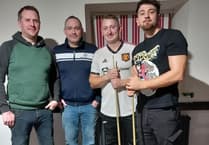
They not only won on handicap, they took line honours and were first over the finish line ahead of the quickest multihull.
It was in the hazardous Menai Strait, trying to push through against the tide, and taking a risky line among the rocks, that the boat opened up a lead after a fast time up on Snowdon from their runners.
From there the team handled the strong winds, and the heavy cloud and rain on the summits, the best. They made the right tactical choices and the least mistakes in a race, which always rewards team work and good navigation, as well sailing skill and running endurance.
The boat was skippered by Robert Morris, who was sailing with his father and cousin Toby, and the runners on board were Daniel Ayers and Ben Zeman.
They were also the youngest team in the race this year, and their runners were the second fastest over the three summits.
The ‘Kings of the Mountains’ this year were Lawrence Eccles and John Hunt, racing in Team Peak Performers (Sunfast 3200). The pair set a time of 14 hour 54 minutes over the three peaks, with a total distance of 54.8 miles on foot and 40 miles on bikes, with 16,500 feet of ascent.
It was an impressive performance as the faster sailing this year gave runners much less time to recover between each peak - and more opportunities to be seasick!
Eccles, a member of the Penny Lane Striders club from Liverpool, admitted he had never even been on a yacht before.
In the new multihull category the first over the line was the trimaran ‘Wandering Glider’, skippered by Michael Thorneloe (78) but on MOCRA handicap the winner was the Peaky Blinders team, on the Rapier 400 catamaran, owned and skippered by Chris Ross.The trimaran suffered a catalogue of gear failures in the high winds, including the bobstay failing three times, shredding the spinnaker, and snapping the tiller and try as they might they could not put enough distance on Peaky Blinder to take the win. The final winning time was 3 days 8 hours and 58 minutes.
Alongside the winners the most prestigious trophy in the race is ‘The Tilman Cup’, named after the legendary sailor/mountaineer who inspired the event. To win this, a team has to put four people on a summit and the team Fat(ter) Boys in won it in 3 days 20 hours 25 minutes.
The team were a group of friends who were sailing on Richard Colley’s Hallberg Rassy, and skippered by Jon Whitley.
The team also claimed the ‘Last Inn Cup’, which was named and given by a quayside pub in Barmouth, as the final full course team to make the finish line.
At the final count all three of the multihulls competing reached the finish line, and six of the monohulls completed the race with two teams dropping to the Challenge class after using their engines.
Comments
This article has no comments yet. Be the first to leave a comment.