
Madam,
I went to Blaenau Ffestiniog on Saturday, 12 March, with my husband, Ian MacIntyre, Dwyfor Merionnydd Labour Party Welsh Assembly candidate, to try to find out what issues most concerned the people there (rather as we did in Tywyn the previous Saturday.) The weather was against us but we did manage to speak to some residents, and for them the issue of greatest concern was the closure of their much-loved Memorial Hospital, dedicated to the dead of both world wars.
I understand that it was funded in part by slate quarry miners who raised £795 in 1925 with a silver sixpence collection from their wage packets. By my calculations, that amounts to over 30,000 silver sixpences, each one given by a miner from their meagre weekly wage! Other contributers included the Red Cross, local private donations and local quarry owners.
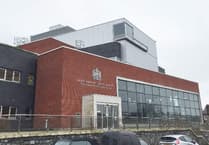
It is a beautiful Art Deco building, with views across the valley from the windows so exquisite they offer the breath of life itself.I learnt that the people of Blaenau voted in a referendum to keep it open and that, of the 52 per cent of the population who voted, only five voters wanted it closed.

I was told that ‘consultation’ comprised three meetings, in each of which just 60 people were allowed in.
The argument used by those insisting on closure was that life-saving and emergency medicine is now so complicated and expensive that it can only be offered in a few specialist hospitals, and hospitals like the Memorial Hospital, which used to have 11 beds, one acute, must be closed and replaced with a health centre with no beds at all.
I wondered, when did this building stop belonging to to local community? At the inception of the NHS? In which case, what a dreadful betrayal is this in the name of efficiency.The people we met accept the argu-ment about specialist medicine. That is not how they see the Memorial Hospital now. For them, the hospital, built by the sacrifice of the slate miners in the heart of the town, indeed the heart of the town itself, is the place where residents needing respite care could be taken, or where the very old, and those beyond the help of modern medicine, can spend their last days. It was described to me by one of the residents as the place the Blaenau terminally-ill can ‘come home to die’.There is still hope that this view will prevail. There is a public meeting with the experts and decision-makers on Tuesday, 15 March at 10am in the town.
This community needs its little hospital. Care and concern and compassion do count, and these 11th-hour deliberations should find a way to ensure the speedy reopening of this vital facility.
Yours etc
Deborah MacIntyre Arthog Terrace
Arthog.
Comments
This article has no comments yet. Be the first to leave a comment.