

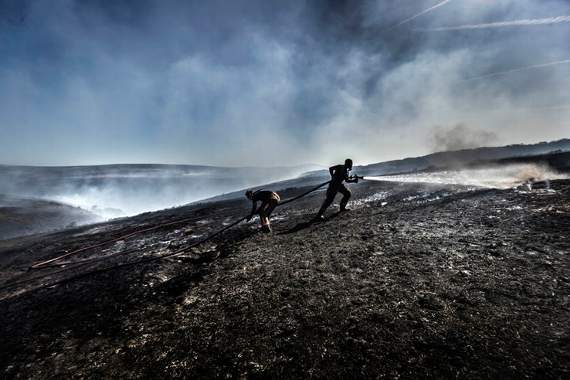
THE number of summer wild fires in north Wales more than tripled this year, as the Fire Brigade Union warned its staff are under-funded and ill-equipped to deal with such an increase.
Between May and July, the North Wales Fire and Rescue Service tackled 446 grass and wild fires.
This was more than three times the summertime yearly average from 2014 to 2017, Press Association analysis found, as the summer’s soaring temperatures and weeks without rainfall turned grasslands into tinderboxes.
The figures show July had the highest number of fires in the joint hottest summer on record, according to the Met Office.


Across the UK, the number of grassfires increased by 157 per cent in 2018, with almost 25,000 call outs over the three-month period.
Responding to the figures, a spokesman for the Fire Brigade Union said: “The growing risk of grass fires represents another strain on the dwindling resources of fire and rescue services, who are currently experiencing severe budget cuts across the country.
“Fire services do not receive enough funding to respond to an increase on this scale.”
The North Wales Fire and Rescue Service did not provide data whether fires were accidental, however nationally 70 per cent were started deliberately, where a motive was included.
The north Wales figures did not specify a cause. However in the national data where a cause was stated, 38 per cent were caused by a naked flame, such as candles or matches.
In 17 per cent of cases, smoking materials, such as a lighter or cigarette, were the source, and 11 per cent started naturally.
In north Wales the most common place for a blaze was heath or moorland, with 37.2 per cent of fires.
In 36.8 per cent of incidents, fires were on grassland, while 6 per cent were reported in scrub land.
Chris Lowther, operations lead at the National Fire Chiefs Council, called the summer’s weather “exceptional” but added “we can’t ignore the longer-term impact of climate change on fire services”.
“We have seen an increase in the number of fires in recent years alongside a 21 per cent reduction in the number of wholetime firefighters since 2011. It is vital the communities fire services represent have confidence in their emergency services,” he said.
A Home Office spokesman said: “The tireless efforts of firefighters to contain wildfires this summer have been astounding. We have made sure fire and rescue services have the support and equipment required to successfully fight these types of fires.
“We support FRSs by providing specialist capabilities for the largest emergencies, including high volume pumps and the National Resilience team of specialist experts. Soldiers have also been deployed to tackle these incidents.”
Comments
This article has no comments yet. Be the first to leave a comment.