

An Aberystwyth student’s tuition fundraiser has become the target of a fake social media campaign scamming thousands of pounds.
Last summer, Gladys Garcia from Venezuela launched an online GoFundMe fundraiser after her mum cut her off from all financial support for her university education.
In the autumn, scammers replicated Gladys’ TikTok and Instagram accounts she used to promote her fundraiser, directing viewers to a fraudulent fundraising page.
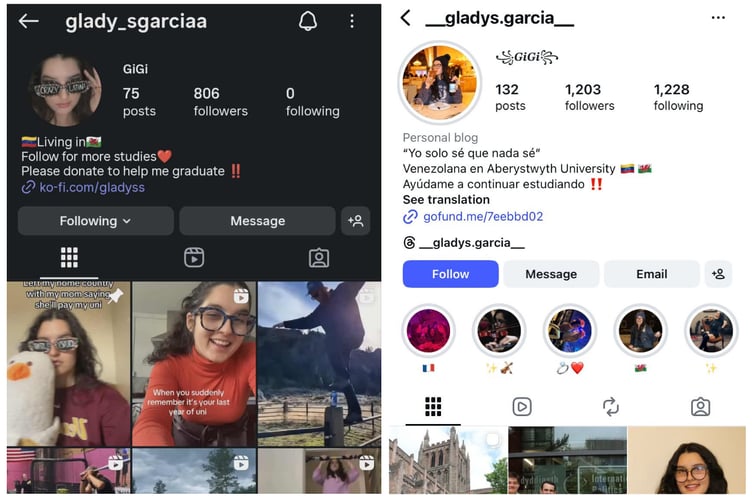




The fraudulent Ko-fi page raised over £2,000 before Gladys realised what was happening and reported the page.
She has since stopped posting to stop the fraudsters from making any more money from her story.
Gladys, 20, who is in her third year of Politics and International Relations, said: “It gave me a lot of anxiety, not because they were pretending to be me, but because they were using my story to scam people.
“I was so worried and so stressed about it, and part of me felt guilty.
“I never imagined something like this could happen.”

She first noticed something was wrong in October when someone shared her story on a Venezuelan Facebook group, but the fundraising link didn’t go to her GoFundMe page, but to a different platform she’d never heard of.
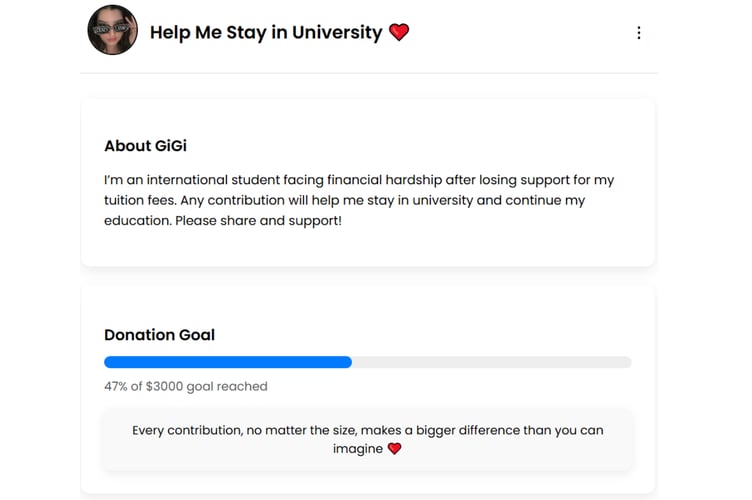
The Ko-fi fundraiser was under her name and profile photo, and featured most of the updates from her GoFundMe page copied onto it.
After inquiring, Gladys found that the Facebook poster had been in conversation with the fraudster over direct message: “Someone was and still is pretending to be me online.
“They have been downloading my videos and placing text over mine, directing people to the fraudulent fundraiser - some of the videos they’ve used are with my friends and partner.
“It has been very frustrating; it’s just another thing that I cannot fix on my own.
“I have stopped posting content to avoid giving them any more material to use, but they still reuse my old content nonstop.”
The original fake fundraiser was taken down, but the fraudster is now directing people to a new fundraising page, which states it has raised approximately $1,500.
Dyfed-Powys Police referred the case to Report Fraud, the national reporting service for cybercrime and fraud.
A Report Fraud spokesperson said: “[The case] was assessed by the Report Fraud Analysis Service at the City of London Police, but has not been passed to a police force for investigation at this time.
“Over 850,000 reports are made every year.
“These reports are assessed against several criteria, unfortunately not every case will be sent to law enforcement for investigative opportunities.
“There are different ways a report can be dealt with when it isn’t passed to a police force.
“These include the Report Fraud Victim Services supporting victims of cyber crime and fraud with specialist advice and helping victims to recover losses.
“Every report helps the police develop an accurate intelligence picture and take disruptive activity like working to take down websites, telephone numbers and email addresses linked to fraud, preventing others from becoming victims.”
Comments
We've recently changed our login process. If you have an account for commenting, you will need to re-register on the login window.
This article has no comments yet. Be the first to leave a comment.