

.jpeg?width=455)
A record-breaking sheep shearer from Aberystwyth and brain tumour survivor, is supporting a new manifesto for Wales by leading charity Brain Tumour Research.
The manifesto demands urgent action to transform outcomes for brain tumour patients in Wales.
Llyr Evans, 24, from Aberystwyth was just 16 years old when he was diagnosed with a brain tumour. He was a fit, healthy teenager with no warning signs that anything was seriously wrong, other than some breathing problems, particularly at night.
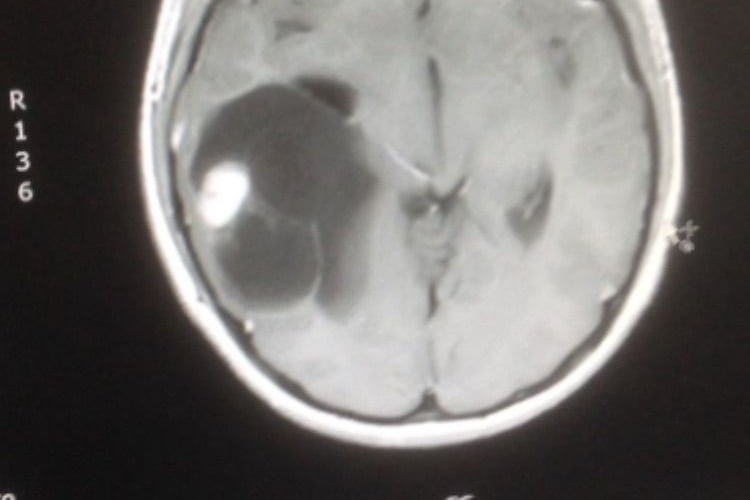
It was only when a paediatric doctor requested an MRI scan that the truth was discovered, a parietal pleomorphic xanthoastrocytoma, a decision Llyr’s mother, Gaenore Evans, believes saved her son’s life.


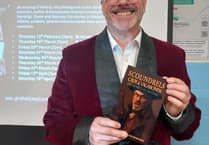

Gaenore said: “That MRI changed everything. They found a tumour and he was rushed to the University Hospital of Wales in Cardiff. One minute we thought he had breathing problems, then seizures, and suddenly we were being told he had a brain tumour, and surgery had to happen immediately. It was shocking. We never would have imagined this would happen to us. Llyr was young, fit and healthy, there was no warning at all.”
Brain tumours are the leading cause of cancer death in people under 40 in Wales. Despite this, the disease has received just 1% of UK cancer research spending since 2002. Survival rates remain devastatingly low, with only 17.2% of patients in Wales surviving five years or more after diagnosis, compared to 61.5% across all cancers.
The manifesto, titled Time to Do Things Differently: A Plan for Change in Wales, sets out three urgent priorities:
- Increasing access to clinical trials in Wales
- Ending inequalities in access to innovative genomic testing technology
- Increasing investment in research into brain tumours
At present, research activity into brain tumours is heavily centralised in Cardiff, creating geographic and practical barriers for patients across West and North Wales. Brain Tumour Research is calling for greater access and uptake for clinical trials across Wales. There are currently zero clinical trials being offered to brain tumour patients in Wales. To ensure Welsh patients do not face travel burdens, Brain Tumour Research is calling on the Welsh Government and NHS to increase recruitment from 0% to at least 10% over the next parliamentary term.
Whole genome sequencing (WGS) can transform diagnosis and treatment by mapping a tumour’s full genetic profile, opening the door to targeted therapies and global clinical trials. Yet adult brain tumour patients in Wales do not routinely receive WGS, with some forced to travel across the border to England.
.jpeg?width=752&height=500&crop=752:500)
The manifesto calls for WGS to become standard care in Wales, including investment in fresh-frozen tissue storage - the technique required to harness genomic data from tissue taken during surgery – and to improve awareness of the importance of genomic testing among patients and clinicians.
The charity launched its manifesto during Brain Tumour Awareness Month, a time dedicated to raising awareness and support for everyone affected by this devastating disease. During this month alone, more than 1,000 people will be told they have a brain tumour.
The first sign that something was wrong was when Gaenore noticed Llyr’s snoring.
Gaenore said: “I took him to the doctors and was told it was fine. Then it happened again in his sleep and it sounded like he had stopped breathing. We just knew it wasn’t right.”
After visiting his GP for a second time, Llyr was sent to Carmarthen Hospital for a CT scan, which showed he had suffered a seizure. He was then referred to Aberystwyth, where consultants told the family he had experienced a seizure due to epilepsy, meaning Llyr was unable to drive when he turned 17.
The tumour was confirmed to be a low-grade, but surgery was the only option. After a five-hour operation, the tumour was removed and Llyr made a swift recovery.

Gaenore said: “It was the longest wait of our lives. Thankfully, the operation was a success and Llyr has had no long-term side effects.”
Determined not to let his diagnosis define him, he went on to pursue his passion for sheep shearing.
At 18, Llyr travelled to New Zealand, where he has now completed six shearing seasons, as well as four seasons in Norway. He currently travels the world working as a professional sheep shearer.
This month, more than 1,000 people will be told they have a brain tumour—an illness that affects families and communities across the UK. To help raise awareness, Llyr and his friend Gethin took on an extraordinary fundraising challenge, an eight-hour sheep shearing competition, during which they broke the British record, shearing a combined 1,364 sheep (Gethin 696, Llyr 668). The challenge raised over £12,000 for Brain Tumour Research.
Llyr said: “I did it to raise awareness. Brain tumours don’t discriminate; they affect young, fit, healthy people with no warning. Every fundraiser, every conversation and every challenge helps push research forward so more families get answers sooner and lives can be saved.”
This month is Brain Tumour Awareness Month and more than 1,000 people will be told they have a brain tumour, an illness that affects families and communities across the UK. One in three people knows someone impacted by a brain tumour, and more than 100,000 people are currently living with a brain tumour or the long-term effects of their diagnosis.
Llyr said: “I was just 16 when I was diagnosed with a brain tumour, and it completely changed my life. Being young and facing something so complex showed me how important it is that care is tailored to the individual. One size does not fit all. There are more than 100 different types of brain tumours, making them the most complex cancer to treat. Young people in particular need bespoke care that recognises their age, their future, and their specific diagnosis. I’m supporting the Brain Tumour Research manifesto for Wales because it calls for increased investment andbetter treatment options for patients in Wales, so no young person feels overlooked or unheard at such a critical time in their life.”
Dr Karen Noble, Director of Research Policy and Innovation at Brain Tumour Research, said: “It is unacceptable that there have been no brain tumour clinical trials in Wales in five years. Brain tumours are the leading cause of cancer death in children and young people, yet patients here are being locked out of innovation. Our manifesto for Wales is a clear, evidence-based roadmap to change that. By expanding access to clinical trials, embedding whole genome sequencing into standard care, and committing to targeted research funding, the Senedd – regardless of who is in power come May - has the power to transform survival and give patients real hope. The time to do things differently is now.”
One in three people in the UK knows someone affected by a brain tumour. This disease is indiscriminate; it can affect anyone at any age. What’s more, brain tumours continue to kill more children and adults under the age of 40 than any other cancer yet, to date, just 1% of the national spend on cancer research has been allocated to this devastating disease since records began in 2002.
Comments
This article has no comments yet. Be the first to leave a comment.