
To celebrate International Women’s Day, an Aberystwyth-born illustrator is helping Cadw to reimagine and document the “forgotten women of Welsh history”.
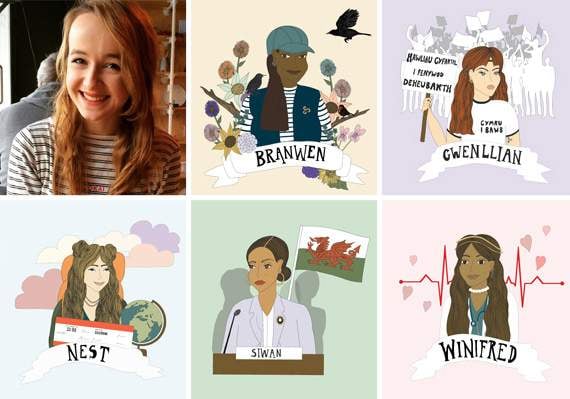
Cadw has revealed portraits of six historical heroines at Beaumaris Castle’s chapel to celebrate the publication of a feminist history book, entitled Welsh Women Making History, for children.
Efa Lois, an Aberystwyth-born illustrator, was asked by Cadw to create the 12 contemporary portraits of Wales’ most inspiring women, both historical and modern, to be included in the book.
Efa said: “I think it’s really important to learn about Welsh women, and the history of Welsh women. It’s been quite publicised now, but still we barely know anything about these women.

-with-her-son-Rufus-her-partner-and-younger-son-Noah.jpeg?width=209&height=140&crop=209:145,smart&quality=75)
“It was interested to reimagine them now and think about how empowering the project could be for children.”
Welsh Women Making History has been designed as part of Cadw’s Rediscover History campaign, which will shine a modern light on Welsh heritage and encourage young people to get out and experience the country’s castles, abbeys and historic houses during Wales’s 2020 Year of Outdoors.
Efa, 24, works as a place advisor for the Design Commission for Wales in Cardiff, but started illustrating in her spare time in 2016.
The former Ysgol Penweddig student usually illustrates for her blog. She said: “In my spare time, I run a blog documenting the forgotten women of Welsh history, called Prosiect Drudwen.
“Then I also have been looking at reimagining Welsh pop culture figures as modern women. So Cadw got in touch with me to mix them both.”
The book, which will be available in Cadw’s gift shops and online, has been designed to empower and engage young women across the country by raising the profile of some of Wales’s unsung female heroes.
The 12 women celebrated in the book emerge from various points in history, from the 4th century to the 21st, including Sarah Jane Rees.
Sarah, who was also known by her bardic name of Crangowen, was born in Llangrannog in 1839 and went on to become a pioneer in many fields.
Notably Cranogwen was the first woman to win a poetry prize at the National Eisteddfod.
For some of the women there were no pictures available for Efa to work from.
“With some of the women in the book there are photos, but for some of them I was allowed to imagine what they would look like,” said Efa.
“Cadw had some preconceptions and what their job would be, how their hair would be, so on. But with others, we had to think more about how dynamic women in those occupations dress and look now.
“Cadw decided what their occupations would be; for example Branwen is an ecologist and nature writer so that’s the sort of vibe I went for.
“For some of the women, Cadw knew exactly what they wanted, but for some they wanted more of a discussion.”
The portraits include Branwen Ferch Ll?r, Gwenllian, Princess Nest, St Winifred, St Elen and Siwan, Lady of Wales.
The portaits will be available to view at Beaumaris until the end of March.
Comments
This article has no comments yet. Be the first to leave a comment.