

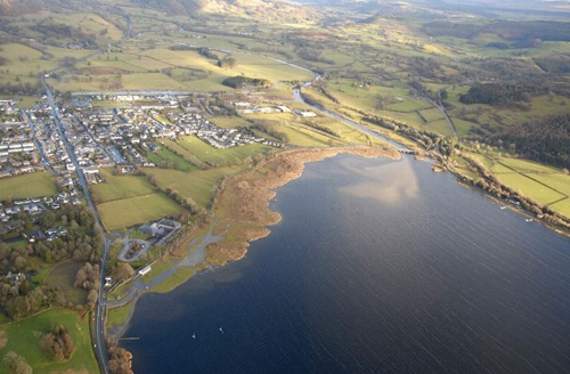
Natural Resources Wales has welcomed a decision by national park planners to approve its bid for major flood alleviation works at Llyn Tegid.
Last Wednesday, Snowdonia National Park Authority planning committee members were presented with an application to protect Bala from potential flooding after it was found trees had weakened embankments on the lake’s northern end.
Following the advice of officers, the plans were approved meaning major works can go ahead to remove most of the 290 trees found to have grown through or on top of the current embankments.
The deterioration of the embankments has resulted in the lakeside becoming more vulnerable to flood damage and strong winds. While many trees are known to be infected with Ash dieback, NRW says efforts will be made to retain those of “particularly high landscape and amenity value”.



Proposed work also includes upgrading the existing rock armour on the front (or wet) side of the lake, with mitigation measures to include planting approximately 900 new trees and 350m of hedgerow elsewhere, as well as enhancements to the authority’s foreshore car park and the rear of Penllyn Leisure Centre.
Some footpaths affected by the works will be upgraded, seating areas improved and new interpretation boards added.
“The lake’s embankments give vital protection from flooding to the town of Bala and we have a responsibility to make sure the town remains safe,” said Sian Williams, head of North West Wales Operations for Natural Resources Wales (NRW).
“We’ve been discussing ideas for mitigation and wider community opportunities.
"These will be developed alongside the lake safety works, including improving paths and creating new wildlife habitats.
“The removal of trees is unavoidable so we can strengthen the embankments. But we are fully committed to retaining as many as possible and will be planting three times more trees locally than we have to remove.”
SNPA planning officer Sara Thomas said: “It is regrettable the scheme involves the loss of trees that have established along the embankment, but we are confident mitigation measures which includes planting three trees for every one lost will, eventually, enhance the natural environment and create a new habitat for local wildlife.”
It’s expected that work would start this summer and take around two years to complete.
Comments
This article has no comments yet. Be the first to leave a comment.