

Retired detective and Borth county councillor, Hugh Hughes, will feature in a new 60 minute documentary into Australia’s most notorious serial killer.
Cllr Hughes flew to Australia last month to give evidence in a New South Wales Government enquiry into Unsolved Homicides and Missing Persons.
He presented evidence to the enquiry from the enquiries he has made on behalf of the family of Keren Rowland who went missing in February 1971 near Canberra.
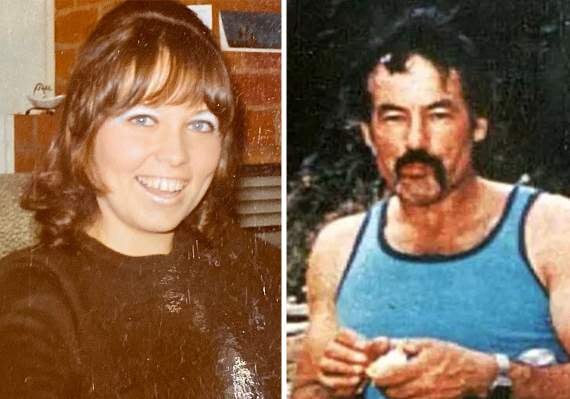
Her body was discovered some 13 weeks later in a pine plantation.
Keren is Hugh’s wife, Andrea’s first cousin.
During the hearing the head of New South Wales Police confirmed on public record that they had looked at Keren’s case in 1995 when conducting investigations into Ivan Milat, the backpacker killer, who became Australia’s most notorious serial killer.
Detective Superintendent Joe Doueihi confirmed that NSW Police considered it ‘Highly Likely’ that Milat may have been involved in Keren’s murder.
This is the first time in 55 years that the police have officially stated this to the family. Although the family are pleased with this outcome they are still waiting for the investigating force, ACT Policing to be open and honest with the family and to update the family on a review they have supposedly been carrying out since 2019.
The NSW enquiry has led to a 60-minute documentary being produced in Australia which is going to air this Sunday, it will be available in the UK via YouTube.

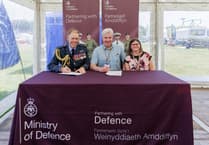
Whilst in Australia Hugh contributed to this documentary.
The work Hugh has been doing now raises questions regarding if the police could/should have caught Milat 1971. Hugh has found evidence that suggests that Milat should at least been a suspect in 1971 for Keren’s murder.
To date the ACT Police have failed to comment as to if he was looked at or not in 1971. Hugh maintains that information was available linking Milat with another allegation of kidnap and rape which should have led to him being at least questioned in 1971.
The ramifications if the ACT Police had failed to act on information in 1971 are serious. At least seven people, including two British backpackers, Caroline Clarke and Joanne Walters and possibly many more victims of Milat could well be alive today.
The full documentary will be available on YouTube in the UK from Monday.
Comments
We've recently changed our login process. If you have an account for commenting, you will need to re-register on the login window.
This article has no comments yet. Be the first to leave a comment.