

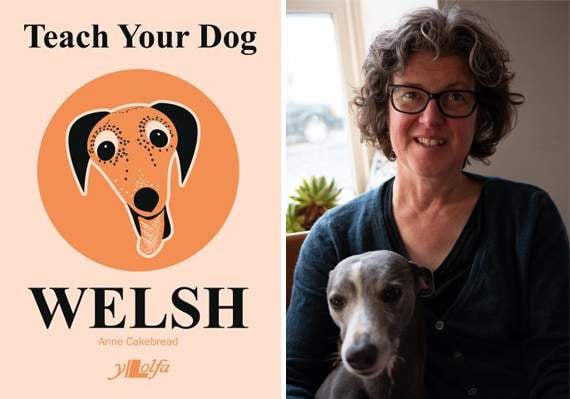
A new book for Welsh learners, inspired by rescue whippet who only understands Welsh, has hit the bookshelves.
The book, written by west Wales author Anne Cakebread, is for Welsh learners with a difference, because Teach Your Dog Welsh aims to help Welsh learners practise their Welsh with their dog.
Teach Your Dog Welsh, published by Y Lolfa, is full of appealing 1950s-style retro illustrations, with a picture and the expression it illustrates (in both Welsh and English) on every double page, as well as help with the Welsh pronunciation.
There are over 100 expressions to practise, from Paid â chrafu (‘Don’t scratch’) to Fydda i ddim yn hir (‘I won’t be long’). It’s a really fun introduction to learning Welsh for all ages – and most of the phrases can also be used in non-dog-related situations!
.jpeg?width=209&height=140&crop=209:145,smart&quality=75)

The inspiration for the book came to Anne after she rehomed Frieda, a rescue whippet.
Anne came to realise that Frieda would only respond to Welsh commands.
Slowly, whilst dealing with Frieda, Anne realised that she was overcoming her nerves about speaking Welsh aloud by talking to the dog, and her Welsh was improving as a result – this gave her the idea of creating a book to help other would-be learners whilst also using her skills as an illustrator.
The book has been awarded WHSmith Book of the Month for November and praised for its beautiful illustrations and quirky concept.
Comedian and writer Richard Herring said: “Anne Cakebread not only has the best name in the universe, she has also come up with a brilliantly fun book which will help humans and canines learn new languages.
"I am world renowned for doing the best Welsh accent ever, so it’s good to now also be able to speak some actual Welsh too. And more importantly, so can my dog.”
Originally from Cardiff, Anne and her partner moved to St Dogmaels. She wanted to improve her Welsh as it was important to her to become part of the lively Welsh-speaking community in the area.
“I first had to unlearn the Welsh I’d been taught in school as it’s nothing like the Welsh people speak here," she said.
"That’s why I’ve made the expressions in the book colloquial, as a large part of learning is listening to what people say around you.”
See this week’s south papers for the full feature, available in shops and as a digital edition now
Comments
This article has no comments yet. Be the first to leave a comment.