

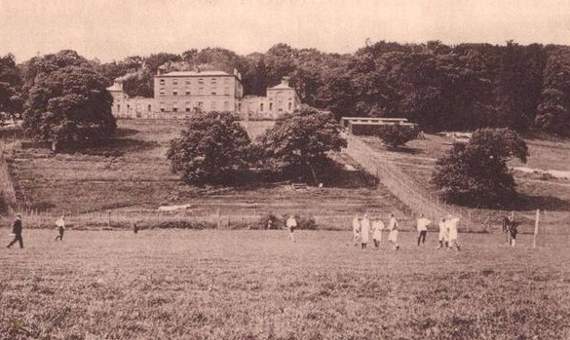
AN HISTORIAN is calling for help in finding a house in Machynlleth used as a prison for captured German soldiers during the First World War.
Jeff Spencer, an historic environment record officer at the Clwyd-Powys Archaeological Trust, which is funded by CADW, made the appeal for more information after a “tantalising” find while carrying out research at the National Archives in London.
Mr Spencer said he found evidence of a prisoner of war camp “five minutes walk from the station” in Machynlleth, where German soldiers captured by the British in Europe would have been sent to carry out manual labour in the surrounding area.
“It was a tantalising discovery because the record in the National Archives doesn’t state precisely where it was, but there are little clues,” Mr Spencer told the Cambrian News.

“I would like help solving this conundrum and it is just possible someone might have heard a rumour in the past and can pinpoint the house in question.”
Mr Spencer said he also found evidence the prison, opened in August 1918 and closed at the end of 1919 or start of 1920, was housed in a “private dwelling” in the town centre and kept 39 German infantry and naval prisoners.
He said: “I am looking for a disused prison centrally which could have had a fence up around the garden.
“The record quotes an official from Switzerland who said it was in a private dwelling in the town, five minutes walk from the station, and kept 32 soldiers and seven naval personnel.”
Asked what sort of work the prisoners would have carried out, Mr Spencer said he was certain they carried out manual labour on farms, in the forestry and in quarries.
“Their tasks would have been largely agricultural, including in forestry, and some quarrying,” Mr Spencer said.
“But definitely manual work, including perhaps road mending and land improvement.”
Despite the physically arduous work the German captives would have been carrying out, Mr Spencer said the general standard of living inside the prison “wasn’t bad at all,” and even suggested the prisoners would have been paid a wage.
“I have seen photographs of other house prisons and it wasn’t bad at all,” added Mr Spencer.
“They had to share rooms in the house but they were sleeping in beds and would have been eating rations similar to what they would have got in the army.
“They were given the core food such as potatoes, rice and sausage.
“But there was often a canteen where they could buy other things from better shoe polish, to smoked sausages, cigarettes and writing equipment — the little things.”
Anyone who believes they have information which could help with his research, should contact Mr Spencer by phone on: 01938 553670; or by e-mail at: [email protected]
Comments
This article has no comments yet. Be the first to leave a comment.