
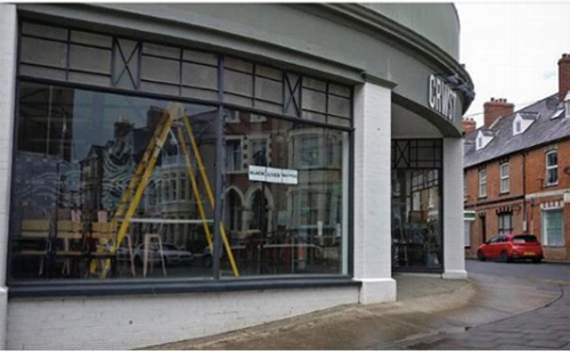
A CARDIGAN bakery have hit back at criticism of a Black Lives Matter poster in their window.
Crwst unexpectedly found themselves on the receiving end of a barrage of disapproval over their support of the worldwide movement which sprang up in the wake of the death of George Floyd in the United States.
Some Facebook posters suggested Crwst should take the view that all lives mattered and even threatened to boycott the business.
But Crwst have remained defiant and even posted some of the social media criticism they had received in a feisty tweet in response.

.png?width=209&height=140&crop=209:145,smart&quality=75)
“The reaction we get for putting up a #BLM poster in the window!!” they said. “The poster WILL stay up as we are proud supporters of the movement. The sooner people educate themselves, the better.”
And among those supporting Crwst’s stance is Aberystwyth-based county councillor Mark Strong, who took the opportunity to apologise for the involvement of a family ancestor in the suppression of a black uprising in Jamaica in 1831.
“There is plenty that should be said about these people giving Crwst a hard time,” he told the Cambrian News. “There is one word summing their behaviour – reprehensible.”
“Those who say the slave trade has nothing to do with us here in West Wales just don’t get it.
“Every one of us is likely somehow implicated in this nasty episode in history.
"Even in Ceredigion we, as people, are the descendants of those who somehow profited from black people’s misery.
“The opportunities we have in 2020 have been won on the advantage gained by our ancestors based on the cruelty of the British Empire.
“Even if the evidence of our ancestors’ activities no longer exists that does not excuse us from facing what happened.”
Cllr Strong added that mercantile ports such as Cardigan, New Quay, Aberaeron and Aberystwyth imported molasses, sugar and cotton from the West Indies while boats which sailed to the Caribbean were built along the Ceredigion coast.
And he revealed that his own ancestor, a Sheffield chemist called Joseph Hill Appleton, took part in the suppression of a black uprising in Jamaica in 1831.
“It wasn’t just the usual brutes from this time who were complicit in the brutal treatment of black people - it was also people like my ancestor who were social reformers on their own turf,” added Cllr Strong, “often fighting against the establishment.
“So even though Joseph Hill Appleton may have done a lot of good later in life, for me what he did earlier, and the way that profited him and his children, was achieved thanks to his experience and activities in Jamaica.
“He did not need to join the militia in 1831 to put down a black uprising; he had a choice. Besides, he stayed on until more or less the implementation of the 1833 Slavery Abolition Act.
“For my part, I apologise unreservedly for what my ancestor did. As an elected local representative it is, I feel, my duty to be open about who I am, where I have come from and add my voice to those calling for this country to face up collectively for what it has done.”
Comments
This article has no comments yet. Be the first to leave a comment.