

The latest community news from Tywyn.
Historical society
AT the April meeting Dr David Craik, the society’s president, gave an illustrated lecture on Our Backyard War, the contribution of west Meirionnydd to the war effort during the 1939-45 conflict.
His talk was based on the recently published book of the same name by Barmouth historian Les Darbyshire who was present at the meeting.


Dr Craik praised the depth of knowledge and research in the book which gave a vivid account of events locally during this period and what people had to endure.
Welsh people would have been severely endangered as a result of a German occupation, Dr Craik said. While Hitler respected the English as “brothers”, he regarded the Welsh as “subhumans” to be eliminated.
Following the outbreak of war, Meirionnydd received a large number of evacuees from Liverpool and Birkenhead. The arrival of the children initially caused panic among the church-going public on account of the cultural and linguistic difficulties. Despite these difficulties, one refugee from Birkenhead boasted: “We went back home knowing how to run a farm!”
Women played a vital part in the evacuation of refugees, not least in taking in and caring for the children. Members of the Barmouth branch of The Women’s Voluntary Service helped organise the evacuation of children from Birkenhead and were involved in signalling and other communication functions amongst many other, diverse activities.
Members of the Women’s Land Army in Meirionnydd also played a vital role in growing vegetables to feed the nation.Special recruitment adverts appeared in Welsh under the title ‘Beth amdani, ferched?’ (What about it, girls?)
Home Guard units existed in towns such as Harlech and Barmouth, and Commando Units were also trained in the area. One of these was 3 Troop 10 Commando, (‘X Troop’) consisting of mainly Jewish refugees from eastern Europe who wanted to fight Nazi oppression.
Wartime activities in west Meirionnydd attracted the attention of prime minister Winston Churchill in February 1944 when three youths broke into the Royal Marines armoury in Barmouth and stole three rifles and 400 rounds of ammunition. They climbed Dinas Oleu and began firing at rabbits and tin cans. Fears of an invasion and much consternation were finally allayed when the boys were arrested by the Marines.
Following a story in the press, Churchill wanted to know if the boys had shot at the Marines and demanded exemplary sentences. The culprits were tried and two were sent to Borstal.
The audience warmly applauded both David Craik and Les Darbyshire who signed copies of his book.
Harlech in Action
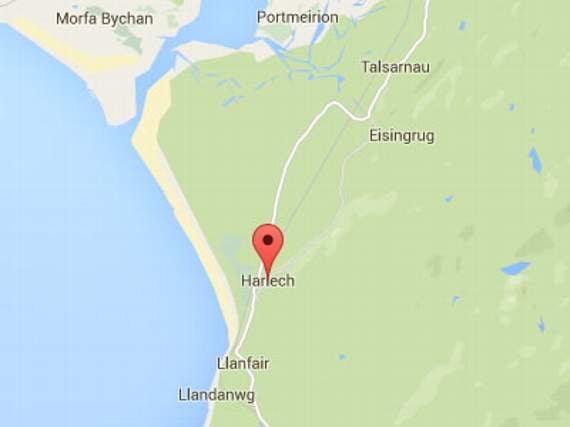
ADULT Learning Wales recently announced its decision to close courses at its Coleg Harlech site at the end of this academic year.The potential closure of this Grade II-listed building with its unique location and place in the history of Wales has extensive implications for education, arts and the community.
Harlech in Action is a local umbrella group spearheading action to regenerate Harlech, working with local and central government officers, key organisations and potential investors.
A very successful meeting was held last week, including representatives from Adult Learning Wales and Theatr Ardudwy.
It unanimously supported a proposed plan for the building: seeking private investment to develop serviced accommodation; continuing some adult learning on the site; and developing an arts-based Welsh-language social enterprise alongside the theatre.
A public meeting to present the outline plan to local communities and stakeholders will take place at 5.30pm on Tuesday, 2 May, at Theatr Ardudwy.
If you’re a member of a club, society or group, send your news to [email protected]
Comments
This article has no comments yet. Be the first to leave a comment.