

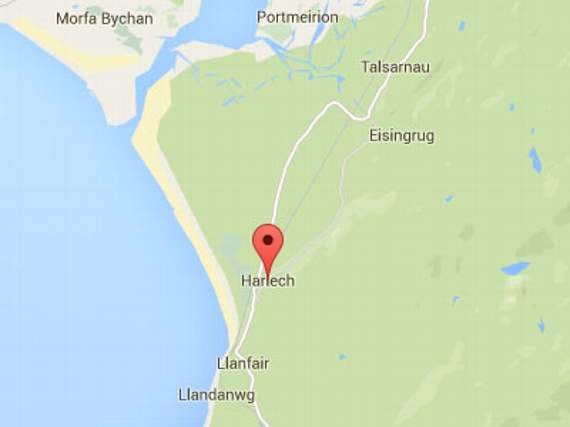
THE latest community news from Harlech
Historical Society
THE October meeting of the society enjoyed a masterful account from John Hirst of how the Victorians popularised the Cambrian Coast as a holiday destination.
The wild, romantic landscape was one of the area’s strengths but for middle class Victorians the search for health was a vital part of the seaside holiday and sea bathing was essential for this purpose.

Over the century, though, emphasis shifted to the healthful properties of air, sunshine and climate generally and resorts were desperate to be seen as healthy places.
As one report commented ‘the first concern of visitors, sometimes to a ridiculous extent, is the effectiveness of the drains.’
Thus guidebooks invariably referred to the purity of the water and the up to date nature of the sewerage systems.
As children and families featured more and more in resort advertising so the vexed question of mixed bathing arose.
In Criccieth, notices were issued segregating the sexes and requiring male bathers, ‘to wear suitable drawers to prevent indecent exposure of the person.’
Basic to any seaside town was a promenade and a pier. Both featured in the new developments with varying degrees of success.
Promenades were successfully constructed at Pwllheli and Tywyn but Barmouth’s prom was a constant source of complaint, being once described as ‘like the rocky road to Dublin.
Whilst in Aberdyfi visitors promenaded along a railway siding.
In Pwllheli there was talk about building a pier but it came to nothing, as also happened in Barmouth where some locals saw the railway bridge as a much better attraction.
A pier was built in Tywyn, but did not survive the storms of the following winter.
However other visitor attractions were established, particularly in Pwllheli, such as tennis and golf tournaments and sailing regattas and in Harlech the annual music festival.
By the end of the century all the resorts had golf courses.
But in the end the question of image was never resolved.
Promoting the region was also difficult not least because local authorities had no powers to spend money on advertising. So it fell to towns to promote themselves individually. This they did with considerable ingenuity with the help of the local press who provided cheap advertising, often with details of accomodation, transport and local services.
Press facility visits were organised to bring journalists from further afield to the area.
One in particular organised by Pwllheli involved the Cambrian Coast railway which provided special saloon carriages and a luncheon in Machynlleth on the way back.
Holiday traffic was a large part of its business and it was behind the formation of the Cambrian Resorts Association to promote the area as a whole and helped persuade local authorities to contribute to an advertising budget.
Arguably all these efforts were not completely successful. Pwllheli did not become the foremost watering place in Wales. Tywyn did not become a Trouville on the Cambrian shore and Barmouth, despite its unmatched climate did not become a leading winter resort. Yet by the end of the nineteenth century at least 250,000 visitors a year were being attracted to the area and the towns were visible small resorts.
The new industry did offset some of the job losses in the local economy and the men and women who promoted the area were astute in developing an image that would reflect its natural strengths and adapted to changing holiday fashion without compromising their own values.
If you’re a member of a club, society or group, send your news to [email protected]
Comments
This article has no comments yet. Be the first to leave a comment.