

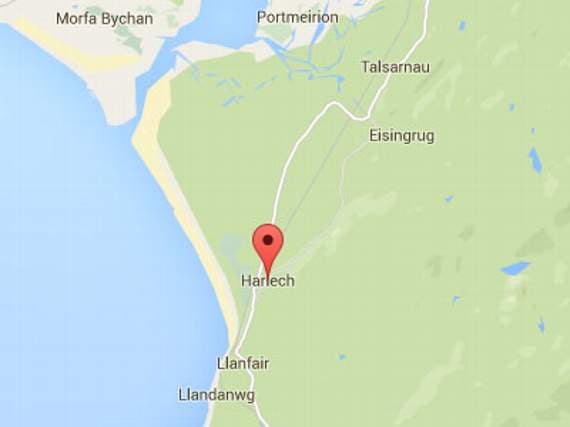
THE latest community news from Harlech
Historical Society
AT the April meeting of the society, the well-known local photographer and author Jean Napier graphically illustrated how the interpretation of history can be helped by studying the land and environment.
Her talk, ‘Drovers’ Roads and Other Stories of Merioneth’, was accompanied by stunning photography of the Rhinogydd, the mountainous spine running between Dyffryn Maentwrog and Dyffryn Mawddach, accompanied by a short, film which captured the atmosphere of this unique terrain.
One of the oldest discernible routes is the Bronze Age road from Llanfair to Trawsfynydd passing just to the south of Bryn Cader Faner, whilst the ancient London to Harlech road passes close to the remains of the Corsygeddol burial chamber, an area rich in settlement sites and workings.
Baldwin, Archbishop of Canterbury and Geraldus Cambrensis took this route in 1188 journeying on the west coast up to Llanfair, crossing the Mawddach by rowing boat probably near Penmaenpool.
Droving is thought to have started between Wales and England during Roman times as a means of paying taxes in kind.
The increase in the population of London in the 16th century created a demand for meat and by the mid 17th century the Welsh economy was dependent on the cattle trade with England.
The drive from Meirionnydd to London took about three weeks.
The northerly routes led towards Bala and on to Llangollen; the southerly routes led down to Dolgellau and on to Welshpool.
The average size of a drove was about 80 to 100 cattle and the head drover, or one of his men, would set off half an hour before the drove to check out the safety of the route ahead and to warn of their approach.
The cattle were corralled in ha’penny fields; so-called as this was the overnight charge per beast.
To aid navigation, Scots Pines were planted as landmarks along the routes at strategic points on high ground and also indicated an overnight stopping place at a farmhouse or inn.
The head drover would stay in the accommodation, the rest of the men bedding down with the cattle or in a barn.
Cattle and horses had to be carefully shod before the long journey and shoes – called cues – frequently had to be renewed en-route, so blacksmiths often travelled with the droves.
‘Criminals’ would be chained to the cattle in Harlech to be taken for trial at the Welshpool Assizes.
They would be imprisoned overnight in cells near Rhos Caerau, an overnight stopping place above Barmouth, while the drovers went to the pub.
Welsh Sheepdogs worked cattle by driving the animals instead of rounding them up like the black-and-white Scottish Border Collie.
After the sales in London the dogs would be sent home; it seems they had an unsurpassed homing instinct and there was a tradition in the Harlech district that when the dogs arrived home, the wives knew that their men would not be far behind.
On the return journey, the drovers were ‘the newspapers of the day’ and they were relied upon for both national and international news – and gossip.
Drovers worked under very difficult conditions and clothing had to be suitable for all weathers.
Their techniques to keep out the wet and prevent blistering and friction were passed down to future generations.
In 1953, the Everest Expedition wore long Welsh woollen stockings and also used the technique of applying soap to the feet to prevent friction, a tip picked up from shepherds whilst training in Snowdonia.
Jean was warmly applauded by a large and appreciative audience.
If you’re a member of a club, society or group, send your news to [email protected]
Comments
This article has no comments yet. Be the first to leave a comment.