
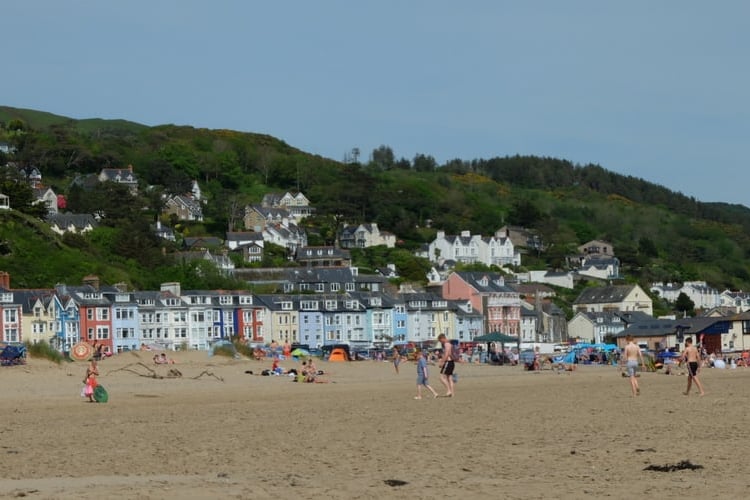
Gwynedd Council has agreed to delay its decision over the possible introduction of a ‘tourist tax’ for the county.
A consultation seeking views over proposals to introduce the Visitor Levy saw almost 7,000 responses – higher than in other council areas.
Initial analysis showed a “mixed picture” with residents slightly more in support and higher levels of opposition among visitors and businesses.
Cllr Medwyn Hughes presented a report on the consultation at full council on 24 September.
Council agreed to accept the report, and a further report “once analysis work and assessment” of the public consultation, which was carried out between May and July, was finally completed.
“The aim of the consultation was not only for us to understand the level of support or opposition to the proposal, but more importantly, the potential impacts on communities, businesses, the economy, environment, Welsh language and local services,” Cllr Hughes said.
“The response to the consultation has been significant, 7,000 responses received which was much higher than other consultations on the same topic in other areas.
“Among Gwynedd residents there was slightly more support for the levy. At the same time there were much higher levels of opposition among visitors and businesses,” he said.
“However, it is important to remember this consultation was not a vote or referendum, it was simply a consultation, its purpose to gather evidence and understand the potential impact of the proposal.”
A total of 6,856 responses were received, considerably higher when compared with the 2,000 responses received on Anglesey, and 1,300 in Conwy.
-have-renewed-the-Strategic-Pa.jpeg?width=209&height=140&crop=209:145,smart&quality=75)

Figures showed 48.7 per cent of Gwynedd residents supported the Visitor Levy proposal, with 43.5 per cent opposing the proposal.
Only 14.7 per cent of businesses had supported it, while 79.5 per cent had opposed and only 10.7 per cent of visitors had supported, whilst 79.9 per cent opposed.
When considering the overall response, including visitors, residents and businesses, 22.7 per cent supported the Visitor Levy proposal and 68.5 per cent had opposed.
The levy proposes a nightly charge for people staying overnight in visitor accommodation, such as hotels, B&B’s, self-catering accommodation, holiday caravans, campsites, hostels and shared accommodation.
Fees for hostels, shared rooms and tent pitches would be 75p + VAT (£0.90) per person per night, whilst most other types of accommodation would be charged at £1.30 + VAT (£1.56).
Exceptions would be given to visitors under 18 and staying in tent pitches or shared accommodation, and where a stay lasts more than 31 nights within a single booking, and where accommodation was emergency or temporary housing arranged by a local authority.
Money raised from the levy would be reinvested locally to support communities, culture, the Welsh language, the environment, facilities and infrastructure.
The Professional Association of Self-Caterers (PASC UK), which supports the self-catering, short-term lets and holiday lets sector in England and Wales, has welcomed moves by Conwy, Anglesey and Gwynedd to hold off on introducing a Visitor Levy, describing the decisions as “a victory for common sense, evidence-led policymaking and Wales’ visitor economy”.
Comments
This article has no comments yet. Be the first to leave a comment.