

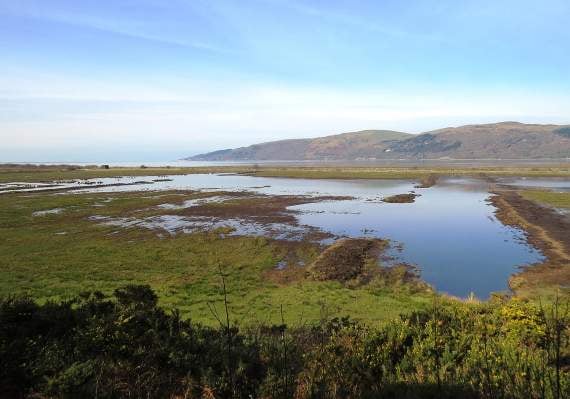
Budget cuts have led to wildlife sites ‘not being managed effectively’, RSPB Cymru has said, following the publication of a Natural Resources Wales report into the condition of nature spots across the country.
NRW’s Protected Sites Baseline Evaluation review, the first of its kind in 15 years, shows that 60 per cent of Sites of Special Scientific Interest are in an ‘unfavourable’ condition.
These include sections of a number of sites such as the Dyfi National Nature Reserve, which includes Cors Fochno near Borth and Ynyslas’ sand dunes; Ynys Enlli; Snowdonia; and the Rhinogydd mountains.
For around half of SSSIs, including parts of Llyn Tegid in Bala and the Mawddach Estuary, the majority of Cader Idris, and the entirety of Cors Caron near Tregaron, there is not enough information available for NRW to be able to?judge the condition they are in.



RSPB Cymru pointed to a 35 per cent cut in NRW’s budget from 2013 to 2020 as a reason for the poor management and monitoring of sites.
Katie-Jo Luxton, director of RSPB Cymru, which is responsible for management of RSPB Ynys-hir near Machynlleth, said: “This report is a damning indictment of protected site management and monitoring in Wales – these should be the premier league of places for nature in Wales.
“The wildlife that calls them home cannot survive and thrive if the sites are not in good condition. Repeated budget cuts from Welsh Government have resulted in Natural Resources Wales failing to deliver the management or monitoring needed and we are haemorrhaging wildlife as a result.”
RSPC Cymru also noted worries over the nature of the assessments.
“Worryingly, it has been a?desk-based exercise, ?meaning that?most of the?judgements of how well individual sites?and their features?are doing?have not even been?informed by?a?visit to see first-hand what is actually happening on the ground,” the charity claimed.?
NRW, which is responsible for regular monitoring?of SSSIs?and taking action to ensure they are being managed well for nature, said it “fully accepts that there are limitations” to the extent of their evidence.
It wants to see a “strong, all-Wales partnership approach” to ensure “the nation is to triumph over the interlinked challenges of climate change and the decline in biodiversity”.
Ruth Jenkins, head of natural resource management, said NRW is committed to “invest in, and to support others, to make improvements”.
The action plan required “will build on projects already under way but will crucially draw in the knowledge and invaluable expertise of our partners, landowners and those who live and work in these special places”, she added.
“But without funding for delivery, RSPB Cymru said it is “hard to see where the real change needed will come from”.
Ms Luxton added: “Nature needs more than warm words?and paper protections –?we need significant resources to make change?actually happen and a new sustainable farming policy which supports land managers to look after the special wildlife on their land.
“The Welsh Government must show it is serious about nature protection and recovery by?reversing the cuts to NRW’s budget, setting legally binding targets to improve the condition of protected sites and reverse biodiversity decline,?and making monitoring and management a clear priority?with?funding?to back it up.”
A Welsh Government spokesperson said: “The report highlights the scale of the task we all have to ensure our protected sites are restored to enable wildlife can deliver the many benefits.
“This year we’ll be investing an additional £12m to improve the condition and connectivity of our protected sites, and use the findings to inform the development and implementation of a multi-year programme which will recognise that reversing the decline in biodiversity requires sustained management and monitoring.”
Comments
This article has no comments yet. Be the first to leave a comment.