
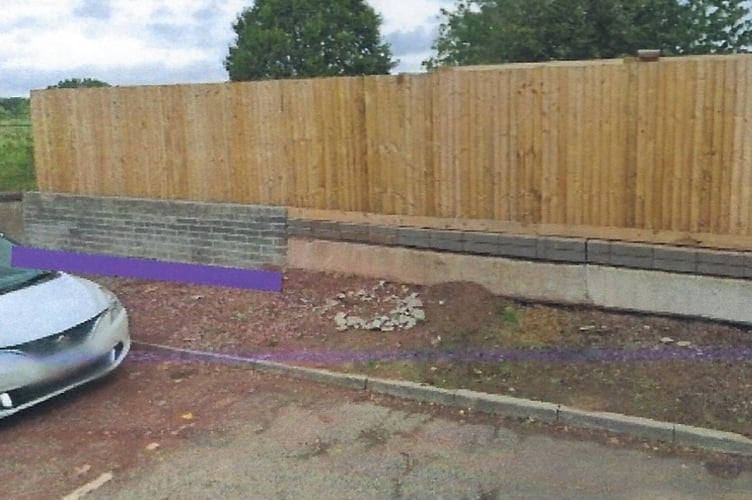
Homeowners across Wales are being urged to regularly inspect garden and boundary walls amid warnings that neglected masonry structures can collapse and cause serious injury or death.
While fences, walls and gates do not generally require Building Regulations approval, property owners remain responsible for ensuring they are structurally sound and properly maintained, according to building safety guidance.
Experts warn that garden and boundary walls are among the most common types of masonry structures to fail. In some cases, collapses have resulted in fatalities caused by falling masonry.
The advice comes as homeowners continue to make changes to gardens and boundaries, with seemingly minor alterations potentially affecting the stability of existing walls.
Property owners are being reminded that while Building Regulations do not apply to most fences, walls and gates, this should not be taken as a sign that maintenance can be ignored.
Walls can deteriorate over time through normal ageing and exposure to the elements. However, several factors can significantly increase the risk of structural failure.
These include increased wind exposure or driving rain following the removal of a nearby wall, the felling of mature trees which may previously have sheltered a structure, or the planting of new trees close to foundations.
Changes in traffic patterns can also increase the likelihood of accidental damage, while alterations such as raising the height of a wall, adding new structures or creating openings for gateways may weaken the original construction.
Insurance issues may also arise if a wall has been neglected and subsequently collapses, with homeowners warned that policies may not cover damage where poor maintenance is found to be a contributing factor.
Additional legal responsibilities can apply to certain shared boundary walls. If a garden wall is classified as a “party fence wall”, homeowners may need to notify adjoining landowners before carrying out some types of work under the Party Wall etc. Act 1996. The requirement does not apply to wooden fences.


Building safety specialists recommend carrying out periodic checks for signs of deterioration, including leaning sections, cracking, bulging masonry, loose coping stones and damaged mortar joints.
Guidance also advises householders to seek expert help if they are concerned about the condition of a wall, particularly where structures exceed recommended height limits for their thickness.
Authorities say regular inspections and timely repairs can help prevent potentially dangerous collapses and protect both property owners and members of the public from avoidable accidents.
If in doubt, check with your local authority.
Comments
We've recently changed our login process. If you have an account for commenting, you will need to re-register on the login window.
This article has no comments yet. Be the first to leave a comment.