
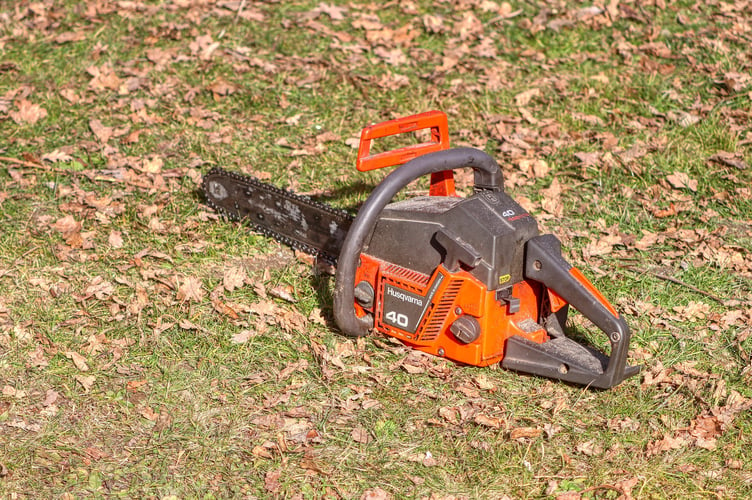
Landowners, agents and forestry contractors in Wales are being reminded to secure the correct licence before carrying out tree-felling work.
The warning applies to anyone responsible for the trees or organising the work, including timber merchants and contractors. Those involved must ensure a licence has been issued before felling begins, as cutting down certain trees without permission is an offence.
However, a number of exemptions mean a licence is not always required. Trees may generally be felled without one if they are in a garden, orchard, churchyard or public open space, such as a public garden.
Routine tree work including pollarding, pruning, crown lifting and crown reduction also falls outside the licensing requirement. In addition, up to five cubic metres of timber may be felled in a calendar quarter without a licence.
Dangerous trees can be felled without prior permission, but officials stress that the threat must be real and immediate rather than merely perceived. Fully windblown trees may also be removed if they are entirely on the ground and have not been intentionally destroyed.
A licence is still required for storm-damaged trees that remain standing, even at an angle, and may also be needed where trees are felled back to create a windfirm edge.
Other exemptions apply where planning permission has been granted, where felling is necessary to comply with an Act of Parliament or a formal notice from a highway authority, and where utility companies are working on or near gas, electricity or water services. Work required under a Statutory Plant Health Notice is also exempt.
Small trees are covered by separate size thresholds. Measured 1.3 metres above ground, a licence is not needed for trees with a diameter of 8cm or less. The limit rises to 10cm for thinning work and 15cm when cutting coppice.
People planning work are advised to establish whether an exemption applies before starting, rather than assuming the job is automatically permitted. Responsibility rests with those commissioning or undertaking the felling to check that the legal requirements have been met.
If you’re in doubt, check with your local county council or with Natural Resources Wales.



Where there is uncertainty, applicants should seek guidance before work begins. The rules are intended to ensure that woodland and tree cover are managed lawfully while allowing urgent safety work, routine maintenance and small-scale felling to proceed without unnecessary delay.
Comments
We've recently changed our login process. If you have an account for commenting, you will need to re-register on the login window.
This article has no comments yet. Be the first to leave a comment.