

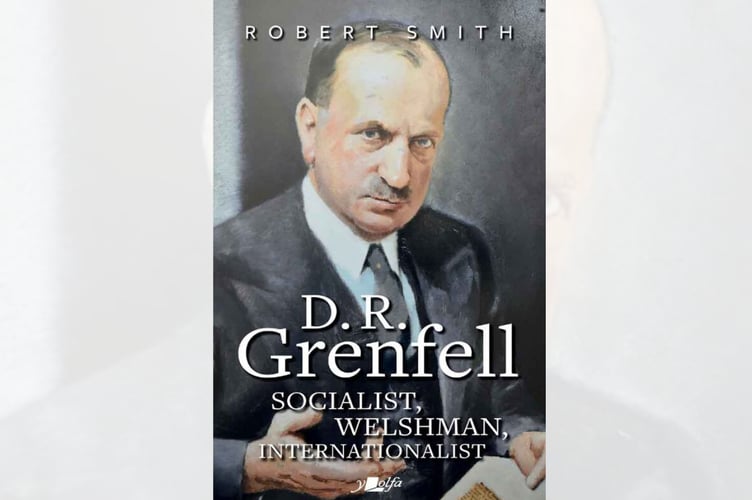
The life of a Welsh miner and MP who helped rescue dozens of refugees fleeing Nazi persecution is the subject of a biography by Robert Smith.
David Rhys Grenfell, known as D. R. (1881–1968), rose to prominence after Labour’s defeat in 1931 through his work in parliament and as a tireless campaigner in the country as Labour re-established itself as a credible opposition in the 1930s.
Biographer Robert Smith notes: “From the mid-1920s he warned of the dangers of fascism in Europe and watched with horror as its influence spread in the 1930s. He helped shape Labour policy in response to the Spanish Civil War, assisting Basque children and others to flee the country. He became Labour’s representative in Prague following the Munich agreement, where he helped opponents of the Nazis, including many from Vienna and the Sudetenland who had sought refuge in Prague, to escape to Britain.
“Appointed as Secretary of Mines in the wartime coalition government, he grappled with the deep-seated problems that blighted coal production in the difficult years of 1940–42. This brought him into direct conflict with many of Churchill’s ministers, including several who were to be prominent in the post-war Attlee government.”




Robert Smith discusses Attlee’s decision not to include D. R. in the post-war Labour government and charts D. R.’s subsequent career as a backbencher, loyal to his Labour principles but often at odds with the party leadership on questions affecting Wales and also on international policy.
He adds: “This book aims to shed light on the career of one of the forgotten figures of the Welsh Labour movement, a man who may not have been at the centre of the famous post-war Labour government but whose work was undoubtedly essential in laying the foundations for what it achieved.”
D. R. Grenfell, Socialist, Welshman, Internationalist, is published by Y Lolfa.
Comments
We've recently changed our login process. If you have an account for commenting, you will need to re-register on the login window.
This article has no comments yet. Be the first to leave a comment.