

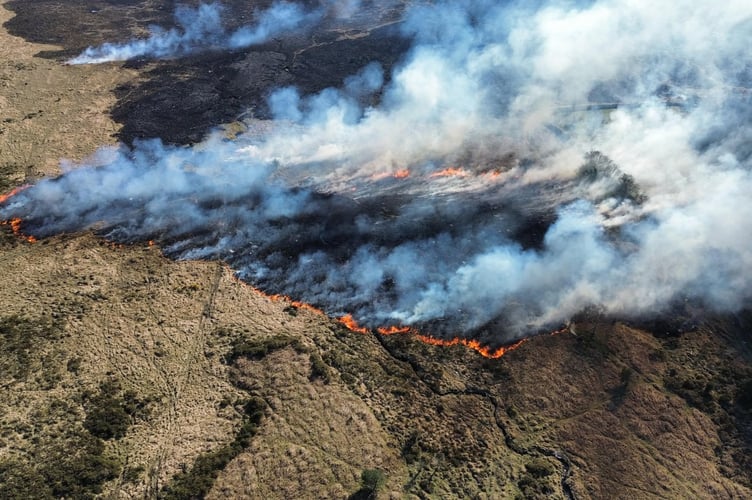
Drones and leveraging the upcoming Sustainable Farming Scheme are part of a plan being put forward by firefighters to tackle wildfires.
Mid and West Wales Fire and Rescue has held an engagement programme to ascertain the best way to tackle wildfires.
This has led to the creation of eight recommendations, which includes leveraging the upcoming SFS to embed wildfire prevention in everyday land management and to use satellites and drones to assess real-time risk awareness.
Other recommendations include more sharing of information and continuing with awareness campaigns, investing in firefighter equipment and establishing a specialist wildfire team using flexible vehicles.



MAWWFS says wildfires are increasing in frequency and severity, driven by climate change and land-use pressures. They pose significant risks to firefighter and community safety, damage ecosystems, and strain resources.
65 per cent of wildfires in Mid and West Wales are deliberate (10-year average).
Grass fire incidents have fluctuated significantly in recent years.
In 2022, there were 1,224 recorded fires, making it one of the worst years on record. Numbers then dropped to 671 in 2023 and 381 in 2024.
However, 2025 has already seen a sharp rise, with 1,257 incidents so far - surpassing 2022 and marking the highest total in recent years.
Vehicle accidents linked to wildfire response rose to 102 incidents in 2024/25, adding significant cost pressures.
Despite a 43% reduction in grass fires in 2024 due to wet weather, unmanaged vegetation increases future fuel loads, heightening risk during dry spells.
Iwan Cray, Deputy Chief Fire Officer for Mid and West Wales Fire and Rescue Service, said: “This process has shown the power of collaboration. By listening to our staff, partners, and communities, we’ve developed practical, innovative options that will strengthen our ability to prevent and respond to wildfires. Together, we can build a safer, more resilient Wales.”
Comments
This article has no comments yet. Be the first to leave a comment.