

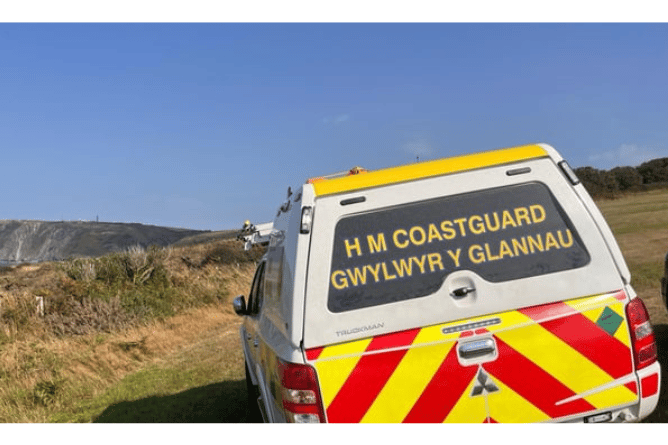
Concerns have been raised for the future of coastguard volunteers following the news they will no longer receive payments for emergency call‑outs.
The change follows a Court of Appeal ruling, which found that volunteer Coastguard Rescue Officers could be classed as workers when undertaking paid duties, prompting the Maritime and Coastguard Agency to move to a revised volunteer model, removing hourly remuneration for call‑outs.
Gwynedd is home to many busy and highly relied‑upon coastguard stations including Aberdaron, Abersoch, Bangor, Barmouth, Criccieth, Dinas Dinlle, Porthdinllaen, and Tywyn. Stations on Ynys Môn include Cemaes, Holyhead, Moelfre, Penmon, and Rhosneigr.
Dwyfor Meirionnydd MP Liz Saville Roberts warns the decision could have significant consequences for coastal communities across north-west Wales, with the potential exodus of trained responders and difficulties in recruitment. She is seeking opportunities to raise the matter in the House of Commons.



Ynys Môn MP Llinos Medi shared is also concerned. The pair said: “Coastguard volunteers provide an essential service to coastal communities, responding to a wide range of incidents and supporting public safety.
“Removing call‑out payments sends entirely the wrong message to dedicated individuals who give up their time and often their income to protect others.
“If we undervalue that commitment, we risk undermining the very foundations of the service.”
“In coastal areas like Dwyfor Meirionnydd and Ynys Môn and other parts of north and mid Wales, this is not an abstract policy change - it is a real, tangible threat to emergency response capacity.
“Many volunteers juggle full‑time jobs and family responsibilities, and that modest, below minimum wage payment has made it possible for them to step away from work at a moment’s notice.
“Take that away, and you are effectively asking people to choose between their livelihood and their duty to their community.
“That is not a sustainable model, and it is our communities that will ultimately pay the price. We cannot ignore the warnings coming directly from those on the frontline.
“We have spoken to experienced volunteers who are already saying this could push people away from the service, and that should set alarm bells ringing.
“What is especially worrying is the risk that we lose years - in many cases decades - of hard‑earned experience from within these teams.
“Along our coastline, where conditions can change quickly, the speed and expertise of that response plays a crucial role in keeping people safe.
“Weakening that capability, even unintentionally, is a risk we simply cannot afford to take.
“We urge Government and the MCA to listen carefully to the concerns being raised and to work with volunteers to find a solution that recognises the realities they face.
“If we want a strong, resilient coastguard service for the future, we must ensure those who step forward to serve are supported - not penalised.
“We will be raising this issue directly with Government at the earliest opportunity and pressing for urgent answers on how these changes will impact coastal communities like ours.
“It is vital ministers fully understand the realities on the ground in places like northwest and mid Wales.”
Comments
We've recently changed our login process. If you have an account for commenting, you will need to re-register on the login window.
This article has no comments yet. Be the first to leave a comment.