
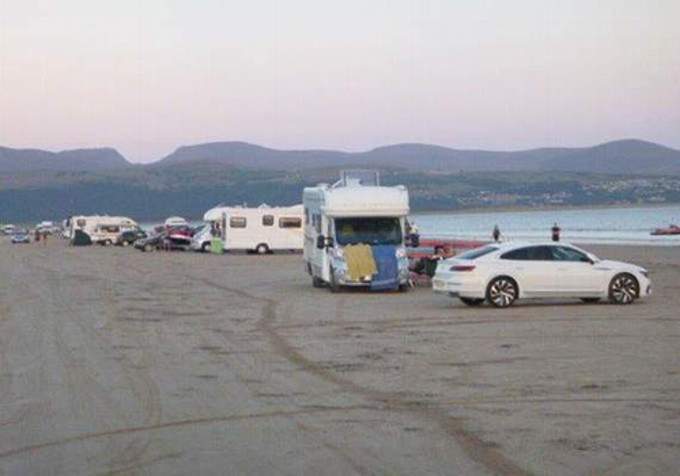
A visitor levy “risks” increasing the number of wild campers near beaches, lakes and lay-bys, a Cyngor Gwynedd committee has been told .
Wales’s new visitor levy was signed into law last September, giving Welsh councils the option to introduce a charge on overnight stays.
Councillors highlighted a raft of issues, from the impact on local businesses, to income raised, to policing camper vans and Airbnbs.
During a debate at the Cyngor Gwynedd education and economy scrutiny committee, Bro Dysnni councillor Beth Lawton was “not happy” at the charge being called a “visitor levy” so as not to deter tourists “who might go elsewhere” instead.
.jpeg?width=209&height=140&crop=209:145,smart&quality=75)
She feared its impact on the tourism sector and suggested “it might drive more people to wild camping”.
Gorllewin Porthmadog Cllr Gwilym Jones said he had received numerous complaints over the number of camper vans “parked all over the place” during the summer.
“I had several phone calls from local people complaining that they had camper vans right in front of their houses and windows.
“We also have a problem with camper vans going down on to the beach here at Black Rock Sands, at one point we had up to 100 at one time.
“They don’t want to pay for camping and they will not want to pay this tax either.”
He asked if it had been taken into consideration how to stop people accessing beaches: “At the moment the council has no power to get rid of them, we have to get some kind of legislation so they can’t camp overnightt on the beach.”
Corris a Mawddwy Cllr John Pughe Roberts said he was “not against the levy” but insisted “we do have to get the facts right and in place before going out to public consultation.
“How much money will come and who will pay, what does it entail? I have concerns, who will look at Airbnbs and the wild camping situation, places such as Llyn y Gadair are a honey pot.”
Camper vans were “everywhere” and he questioned how a levy could be collected if vans are parked up in lay-bys.
He went on to say money raised should be spent on “improving facilities” for tourists and “ring-fenced for tourism business only”.
Cllr Medwyn Hughes has described the tourism industry and visitor economy as “very important to Gwynedd”. He welcomed that the council was collaborating closely with Conwy and Anglesey over impact assessment research.
The meeting heard a levy could could raise anywhere between £2.4- £12 million.
Cllr Hughes said that, although getting data was “extremely challenging for Gwynedd”, the council estimated that “the impact of the levy would be considerably higher than £2.4m”.
Assistant head of economy and the community, Roland Evans said a public consultation “could help them get a better understanding” of the situation and the concerns of locals and businesses.
Committee chairman Cai Larsen said: “If the plan comes into existence that there would be a definite commitment to how money would be spent and that the areas of tourism and communities would be given priority.”
Comments
We've recently changed our login process. If you have an account for commenting, you will need to re-register on the login window.
This article has no comments yet. Be the first to leave a comment.