


Three of Gwynedd’s RNLI lifeboat stations have taken part in a joint training exercise.
Abersoch, Pwllheli and Porthdinllaen RNLI took part in the multi-casualty triage training exercise on 16 November, in Porth Meudwy, Aberdaron.
The Atlantic 85 B-Class inshore lifeboat from Abersoch, the Shannon Class all-weather lifeboat from Pwllheli and the Tamar Class all-weather lifeboat from Porthdinllaen and their crews met at 10.30am for a multi-team briefing, before details of the training rescue were issued.
The exercise simulated a cliff fall and landslide at Porth Meudwy, near Aberdaron, involving multiple mock casualties of different ages with a range of staged injuries. In the scenario, the access road was blocked by the landslide, meaning no Coastguard Rescue Team support could reach the area. The helicopter was also deemed unable to land or hover due to the simulated unstable cliff face, requiring all casualties to be evacuated by sea. Because of the location, only line-of-sight communications were assumed to be available. As part of the exercise, the Coastguard requested one of the all-weather lifeboats take on the role of On-Scene Commander (OSC).
-(1).jpeg?width=209&height=140&crop=209:145,smart&quality=75)
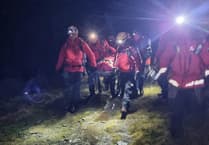

The exercise focused on OSC duties (using the Porthdinllaen Tamar-class lifeboat), casualty care and triage, deployment of the Y-class boat (used as a small tender from larger RNLI all-weather lifeboats), communications, stretcher handling, and search, locate and assist tasks.
The exercise was carried out using volunteer real life casualties onshore and ‘Dead Fred’ man-overboard rescue training dummies were used for all stretcher work.
Abersoch RNLI volunteer helm, Andy Gunby, who took part in the joint training exercise, said: “This was a very productive exercise bringing together the skills from all three stations with four different types of lifeboats plus a recently qualified coxswain Anton Hook from Pwllheli RNLI.
“Huge thanks to all of the casualty volunteers who helped us trial our transition from the RNLI multi-casualty triage to the adoption of the national ‘Ten Second Triage’ principles which will result in a more cohesive operation when working with partner agencies. Well done to all our crews, volunteers and casualties who took part in what was a very rewarding and worthwhile exercise.”
Ten Second Triage (TST) is a rapid, simplified method for prioritising casualties at a multi-casualty incident, designed to be used by all responders and consistent with the Joint Emergency Services Interoperability Principles (JESIP). JESIP is a framework for how different emergency services work together at major incidents, and TST provides a common, quick language for medical triage to improve a coordinated response.
Wayne Carter, lifeboat crew member from Pwllheli RNLI said: “The joint exercise was extremely useful for consolidating important skills and provided an excellent opportunity to refine casualty care and multi-agency coordination, ensuring we can work seamlessly with partner agencies to save lives at sea.”
Pwllheli’s newly-qualified coxswain Anton Hook said: “I’m proud of how well all three stations worked together. Huge thanks to the crews and volunteer casualties for giving up their time, it was a brilliant learning experience and will serve us well when we’re called to real emergencies.”
Comments
We've recently changed our login process. If you have an account for commenting, you will need to re-register on the login window.
This article has no comments yet. Be the first to leave a comment.